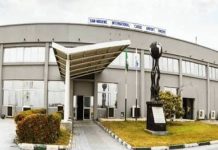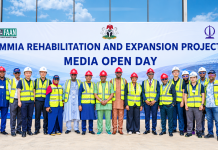




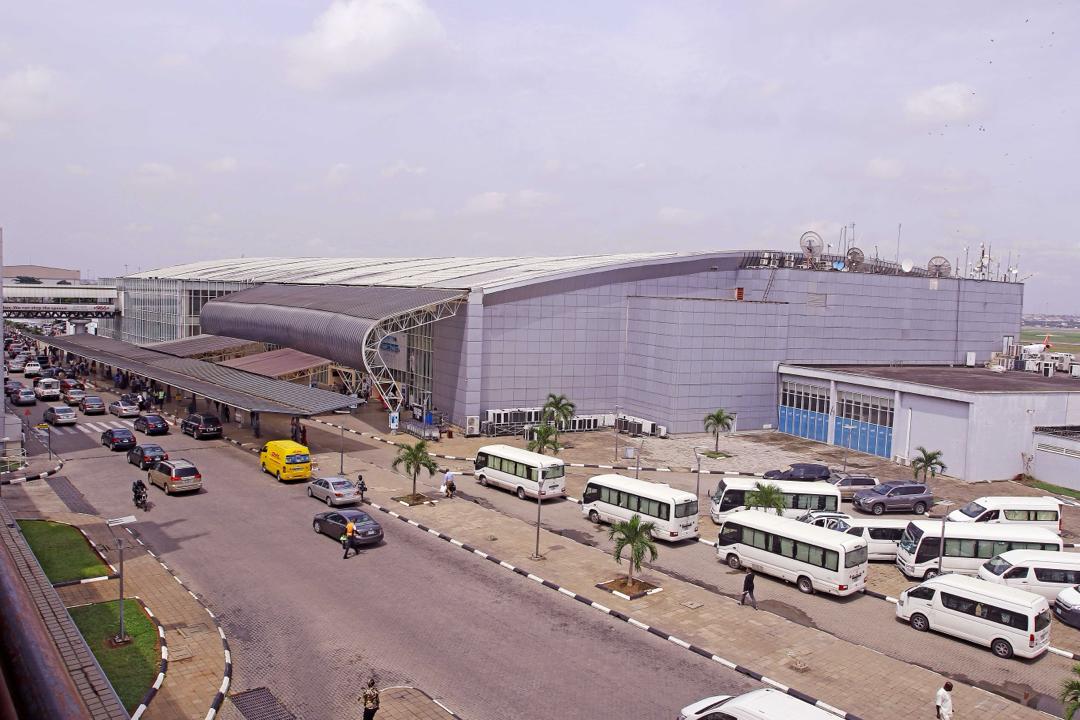
A long-running dispute between the Federal Government and Bi-Courtney Aviation Services Limited over the concession of the Murtala Muhammed Airport Terminal 2 has been formally resolved, with the company agreeing to write off a N132 billion judgment debt and both parties making significant concessions to end more than two decades of litigation.
The breakthrough, brokered by the Minister of Aviation and Aerospace Development, Festus Keyamo, received approval from the Federal Executive Council in Abuja, marking a decisive turning point in one of Nigeria’s most protracted aviation disputes.
At the heart of the agreement is Bi-Courtney’s decision to forgo the N132 billion Supreme Court judgment, including accumulated interest dating back to 2009. The debt arose from claims that the government failed to fully honour the original concession agreement, particularly the non-transfer of the General Aviation Terminal, which the company argued was part of its contractual rights.
In addition to relinquishing the debt, Bi-Courtney agreed to scrap the exclusivity clause embedded in the original concession, which had prevented the development of other private airports within a defined radius of Lagos. The clause had long been cited as a major obstacle to projects such as the proposed Lekki International Airport. The company also handed back control of the Murtala Muhammed Airport Terminal 1 to the Federal Government, restoring public oversight of a critical component of domestic aviation operations in the country’s busiest air hub.
In return, the government reinstated Bi-Courtney’s rights to complete and operate its long-delayed hotel and conference centre project located within the airport precinct. The project will now proceed under a revenue-sharing arrangement, with a 24-month completion deadline agreed by both parties.
The settlement also introduces operational changes aimed at maximising the capacity and commercial viability of MMA2. Regional flight operations are to be relocated to the terminal, while plans are in place to expand its apron to accommodate increased aircraft traffic. These measures are expected to boost passenger throughput and enable the Federal Government to begin earning revenue from the concession immediately, ending years of limited financial returns.
Originally awarded in 2003 under a Design-Build-Operate-Transfer model, the MMA2 concession led to the construction of Nigeria’s first privately funded airport terminal, which commenced operations in 2007. However, disagreements over the scope, duration, and implementation of the agreement quickly escalated into legal battles that persisted for years, culminating in a Supreme Court ruling in favour of Bi-Courtney.
Officials say the new agreement resolves all outstanding issues, clears legal bottlenecks that have hindered broader infrastructure development, and aligns with ongoing reforms in the aviation sector. Among these is the planned establishment of a private-sector-driven aircraft leasing company designed to improve Nigerian airlines’ access to modern fleets under more stable financing arrangements.
Keyamo described the outcome as a balanced resolution achieved through dialogue and mutual concessions, noting that both parties prioritised national interest over prolonged litigation. The agreement is widely regarded within the industry as a “win-win,” setting the stage for renewed investor confidence, improved infrastructure development, and stronger public-private collaboration in Nigeria’s aviation sector.