










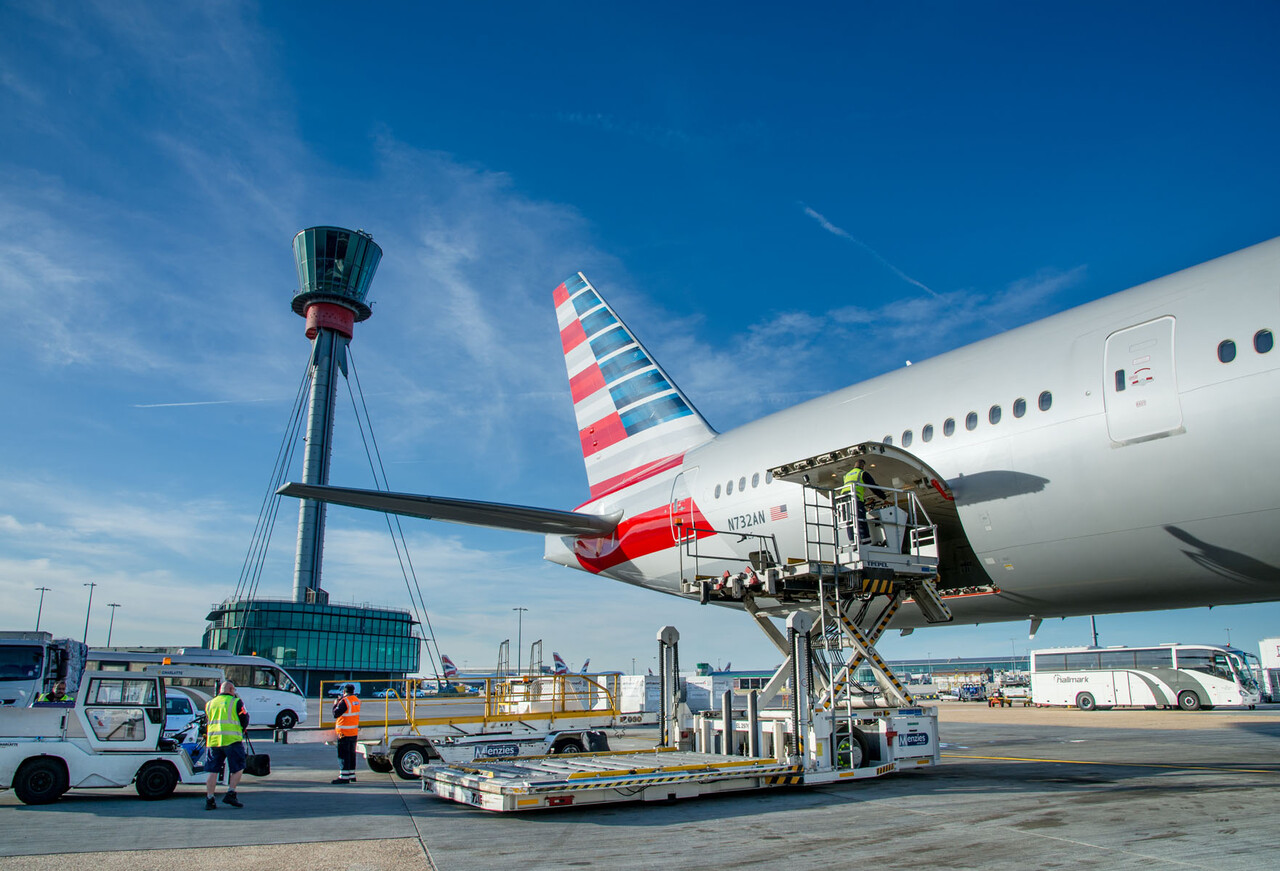
Heathrow Airport has reinforced its position at the heart of the United Kingdom’s economy, handling £293 billion worth of goods in 2025, more than a quarter of all UK trade by value, according to the latest government data, underscoring its role as the country’s most valuable port.
The scale of activity passing through Heathrow is immense, with more than 1.59 million tonnes of cargo transported over the year. This volume is equivalent to the weight of approximately 265,000 elephants or more than 130,000 London double-decker buses, illustrating the sheer magnitude of goods flowing through the airport. On average, each flight departing or arriving at Heathrow carries around £600,000 worth of cargo, which translates to roughly £3,500 in goods stored beneath every passenger seat onboard.
The figures highlight Heathrow’s critical function in enabling the rapid movement of high-value, time-sensitive goods that support both daily life and key industries across the UK. In 2025 alone, around £166 billion worth of goods were imported through the airport. These include fresh produce such as mangoes harvested in India and delivered swiftly to supermarket shelves, temperature-sensitive medicines and vaccines transported from pharmaceutical hubs across Europe and North America to hospitals and pharmacies, and high-value electronics like smartphones and semiconductors shipped from Asia to UK retailers and manufacturers. Luxury fashion items from cities including Milan and Paris are also flown into Heathrow and delivered to flagship stores on Bond Street within hours of arrival.
Beyond imports, Heathrow plays an equally vital role in supporting British exports, with approximately £127 billion worth of goods shipped out through the airport in 2025. Its extensive global connectivity enables UK businesses to reach international markets quickly and reliably, particularly for products that depend on speed to maintain quality. Companies such as Joe & Seph’s rely on Heathrow to export fresh gourmet popcorn to overseas retailers and distributors, while Yorkshire-based Cartwright and Butler exported more than 6,500 of its premium bakery products through the airport during the year.
As the UK’s only hub airport, Heathrow plays a unique role in linking British businesses to global markets, with more than 90 percent of its trade by value conducted with non-European Union countries. The airport also dominates the country’s air cargo sector, accounting for around 75 percent of all UK air cargo by value, further cementing its importance within national and international supply chains.
However, Heathrow is currently operating at full capacity, raising concerns about its ability to sustain and grow trade volumes in the future. Industry stakeholders argue that expansion is essential to maintaining the UK’s global competitiveness and unlocking further opportunities for trade, investment, and economic growth.
James Golding, Head of Cargo and Airline Partnerships at Heathrow, emphasized the airport’s central role in supporting exporters, manufacturers, and supply chains across the country, noting that it facilitates everything from life-saving medical imports to the global distribution of British products. He stated that expanding Heathrow’s capacity will be critical to enabling continued growth in trade links, supporting jobs, and ensuring the UK remains competitive in the global economy.
Echoing this sentiment, Adam Sopher, Co-Founder and CEO of Joe & Seph’s, highlighted how Heathrow’s international network allows the company to deliver its products efficiently to key markets such as Singapore and Hong Kong, driving the growth of its global business.
As global trade becomes increasingly fast-paced and interconnected, Heathrow’s role as a gateway for high-value goods continues to grow, positioning it as a vital engine of economic activity and a cornerstone of the UK’s international trade strategy.