







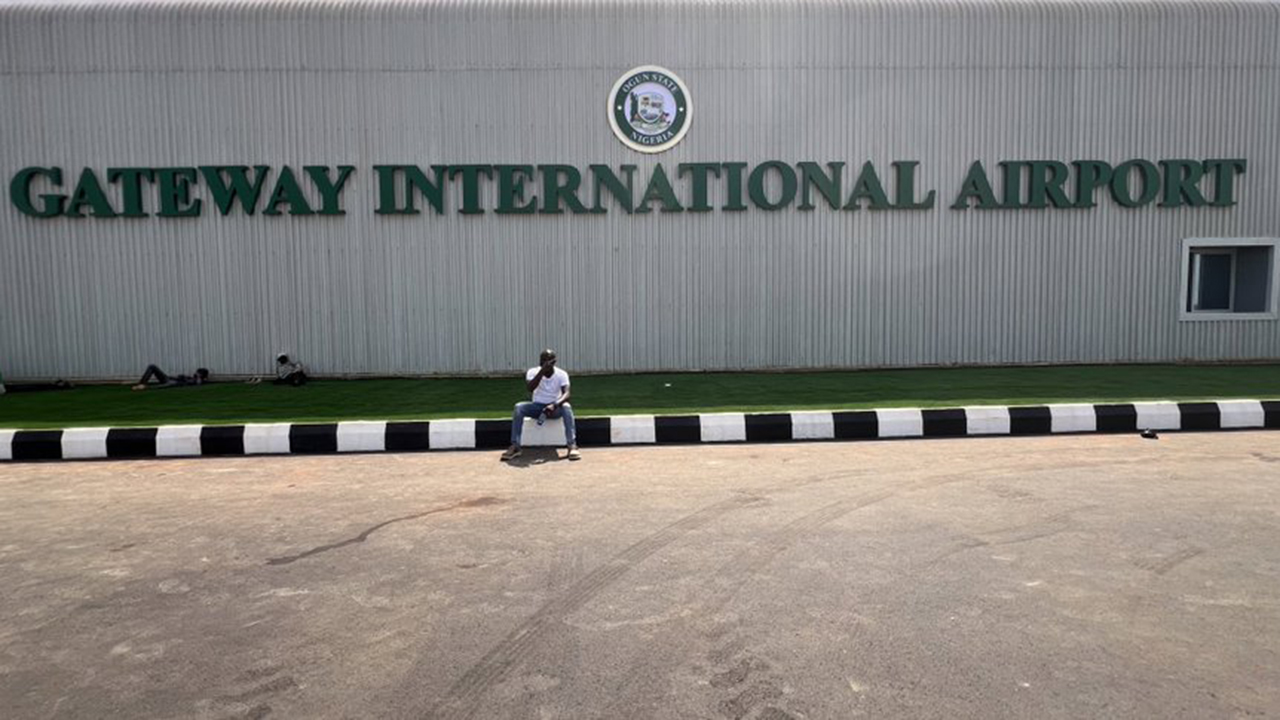
Hundreds of Ogun State pilgrims bound for Saudi Arabia for the 2026 Hajj were left stranded for several days at the newly commissioned Gateway International Airport, Iperu-Remo, after Saudi Arabian carrier, Flynas Airlines, reportedly declined to continue flight operations from the facility, forcing authorities to relocate subsequent departures to Lagos.
The disruption affected intending pilgrims who had gathered at the airport and the Ogun State Muslim Pilgrims Welfare Board ahead of their scheduled airlift to the Kingdom of Saudi Arabia.
The first batch of 345 pilgrims had earlier departed successfully on Sunday aboard a Max Air flight from Gateway International Airport. However, subsequent operations stalled after Flynas reportedly informed officials of the National Hajj Commission of Nigeria (NAHCON) and the Ogun State Muslim Pilgrims Welfare Board that it could no longer operate from the airport.
Although the precise reason for the airline’s decision was not officially disclosed, officials later cited technical concerns linked to operations at the newly inaugurated airport.
Following the development, the Ogun State Muslim Pilgrims Welfare Board directed stranded pilgrims to relocate to the Murtala Muhammed International Airport in Lagos for onward transportation to Saudi Arabia.
Many of the affected pilgrims expressed frustration over the prolonged delay, describing worsening welfare conditions after spending nearly five days waiting for updates on their departure.
Some pilgrims said they exhausted funds meant for the pilgrimage on feeding, medication, transportation and temporary accommodation while stranded at Iperu.
One of the pilgrims, identified simply as Fatimo, said many had already bid farewell to their families and were unable to return home during the uncertainty.
“I have almost exhausted all the money I have on me on food and drugs. We couldn’t go home because the plan was not for us to remain here this long, and nobody was saying anything to us,” she said.
Another pilgrim, who requested anonymity, criticised the handling of the situation and urged authorities to prioritise aviation safety and operational readiness.
“We are not kids. If the airline said they cannot land there, let us move to Lagos where they can operate from. We have been suffering here for days,” the pilgrim said, while also complaining about poor accommodation conditions and mosquito infestation at the waiting facility.
Tension among the stranded pilgrims eased after officials informed them through a WhatsApp message that all subsequent departures would now take place from Lagos instead of Iperu.
The second batch of pilgrims was eventually transported to Lagos on Thursday morning for onward departure.
Executive Secretary of the Ogun State Muslim Pilgrims Welfare Board, Taiwo Ajibola, confirmed that Flynas withdrew from operating at Gateway International Airport at the last minute.
According to him, the airline cited technical issues for its inability to land at the airport, prompting emergency adjustments to the airlift arrangements.
“As we speak, my pilgrims have been issued boarding passes, and my aircraft is on the ground now. Initially, our carrier, Flynas, said it could not fly from Iperu, so we had to arrange another aircraft, which is Max Air,” Ajibola explained.
He added that while Max Air handled the first batch of pilgrims from Iperu, Flynas later agreed to continue operations from Lagos.
The incident has raised fresh questions over the operational readiness of Gateway International Airport for international flight operations, barely weeks after the facility was commissioned as a major infrastructure project by the Ogun State Government.
The development also coincided with new Hajj-related health and crowd management directives from Saudi authorities.
The Saudi Arabian Ministry of Health and the Public Health Authority, Weqaya, launched a multilingual health awareness guide for the 1447 AH Hajj season to help pilgrims prevent heatstroke, respiratory infections and other health complications during the pilgrimage.
The guide was published in eight languages, including Arabic, English, French, Urdu, Persian, Indonesian, Turkish and Malay, as part of the Kingdom’s broader health sector transformation initiative under Saudi Vision 2030.
Meanwhile, NAHCON also warned Nigerian pilgrims that access to the Rawdah, the sacred section within the Prophet Muhammad’s Mosque in Madinah, would now depend strictly on approved bookings and available space due to crowd control measures introduced by Saudi authorities.
The commission urged pilgrims to remain patient and orderly, stressing that visiting the Rawdah, while spiritually significant, is not a compulsory condition for the validity of Hajj rites.