








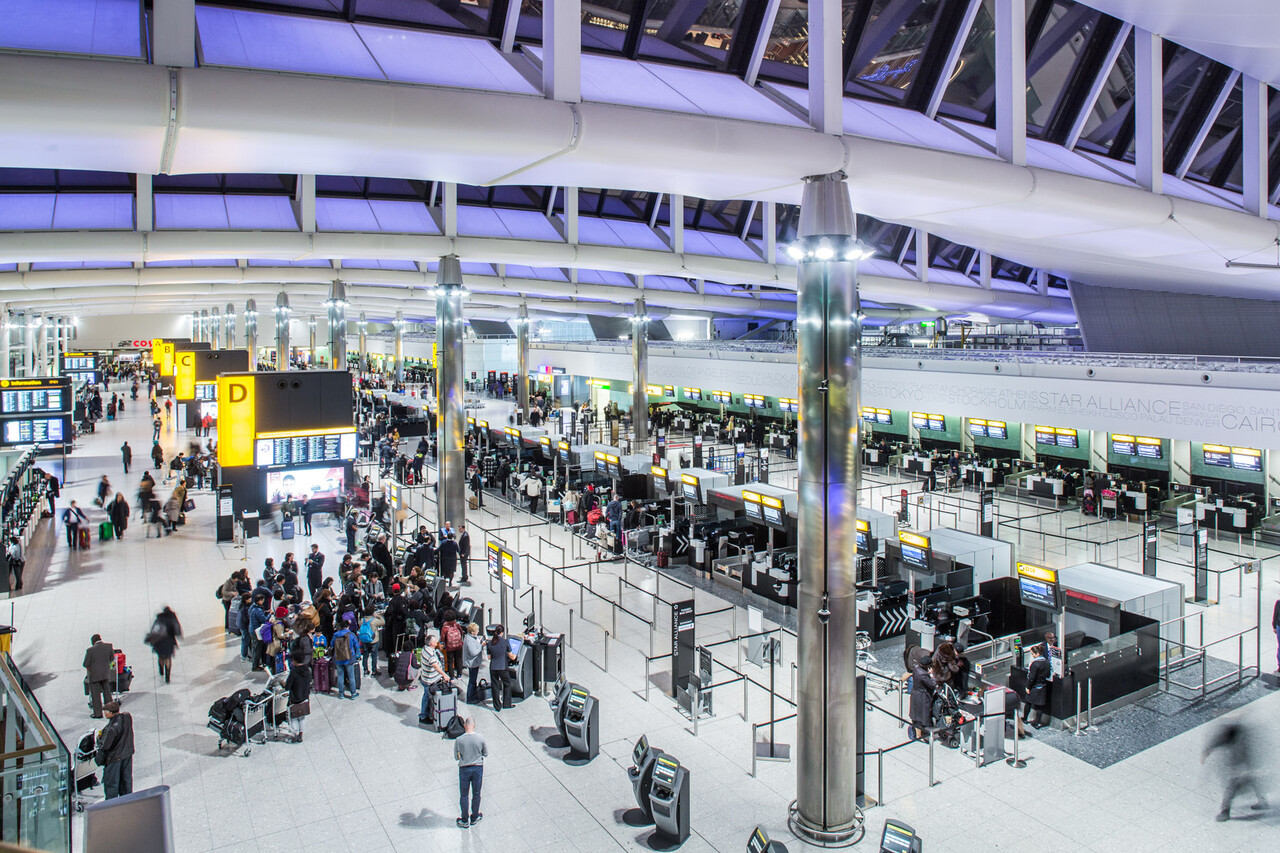
Heathrow Airport is stepping up efforts to support airlines and passengers amid ongoing airspace closures across the Middle East, as shifting travel patterns drive a surge in demand through the UK’s busiest hub. The airport has recorded a 10 percent increase in transfer passengers as airlines reroute operations and travellers adjust their journeys in response to the disruption.
Despite the evolving situation, Heathrow reported year-on-year growth in March, handling 6.6 million passengers as demand redistributed across its long-haul network. While the airport has temporarily absorbed traffic diverted from affected regions, its ability to scale further remains constrained, with runway slots already at full capacity. This limitation has resulted in slower growth compared to some European Union competitors with greater available capacity.
The outlook for the coming months remains uncertain as the Middle East conflict continues to impact global aviation. However, Heathrow has indicated that, so far, the knock-on effects on global supply chains, including fuel availability, have not disrupted its core operations. The airport said it will continue to closely monitor developments while working in coordination with government authorities and airline partners to safeguard passenger journeys and maintain operational stability.
Amid these headwinds, passenger experience at Heathrow has remained strong. At the March Skytrax awards, travellers ranked the airport as the best in the world for shopping and third globally for security screening, while also moving it up five places in the overall global airport rankings, reinforcing its reputation for service quality even during periods of disruption.
The developments come as Heathrow marks a historic milestone, celebrating 80 years since its first flight on March 25, 1946, when an aircraft named Starlight departed for Buenos Aires. Over the decades, the airport has grown into a global aviation hub, welcoming more than 2.9 billion passengers and supporting British exports, including nearly £300 billion worth of trade in the past year alone. It has also served as the backdrop to defining moments in British history, from royal arrivals to sporting triumphs, while featuring prominently in film and television.
Commenting on the current situation, Thomas Woldbye said the airport is doing everything possible to support airlines and passengers as travel trends continue to shift in response to the crisis. He noted that while Heathrow’s long-haul network helped absorb demand in March, uncertainty remains over how the situation will evolve in the months ahead. He also expressed pride in the airport’s workforce, highlighting their ability to adapt quickly and maintain high service standards despite challenging conditions.
As global aviation continues to navigate geopolitical disruptions, Heathrow’s response underscores both the resilience of major international hubs and the constraints they face when operating at full capacity in an increasingly unpredictable environment.