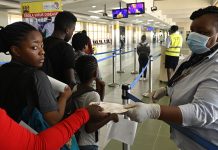

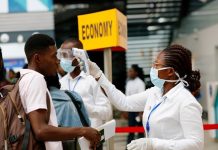







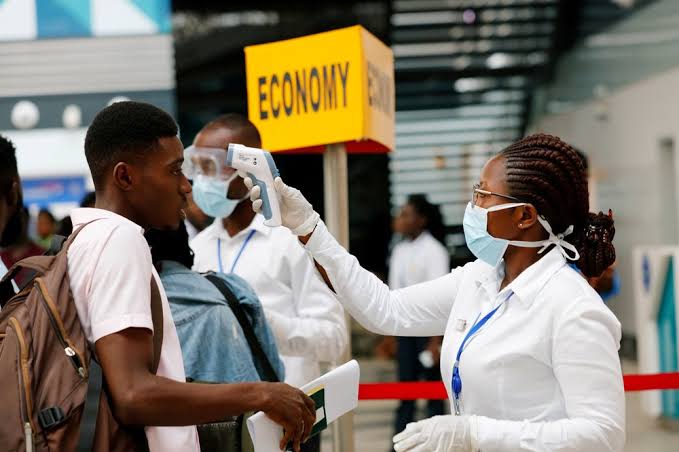
Nigeria has tightened health screening measures for international travellers following confirmation of an Ebola case in the Federal Capital Territory, directing airlines to ensure that all passengers and crew complete mandatory health declaration forms before boarding flights to the country.
The Nigerian Civil Aviation Authority (NCAA) warned that international airlines that allow travellers to board without completing the prescribed form would face sanctions under existing laws and Nigeria Civil Aviation Regulations.
In a circular to international carriers, the authority said the directive followed updated guidance from the Nigeria Centre for Disease Control and Prevention (NCDC), developed in collaboration with the World Health Organization (WHO) and the United States Centers for Disease Control and Prevention.
The requirement applies to all travellers scheduled to arrive in Nigeria, including diplomats, legislators, adults, children and aircrew. The NCAA also directed airlines to implement the measure immediately, adding that arriving passengers and crew could undergo additional health screening where deemed necessary by health authorities.
The revised directive follows the NCDC’s decision to expand the health declaration requirement after confirming an Ebola infection caused by the Bundibugyo virus in the FCT on October 20. The agency had previously limited the requirement to travellers arriving from selected countries associated with the outbreak, including Uganda and the Democratic Republic of the Congo.
Speaking at a media briefing in Abuja on Sunday, NCDC Director-General Jide Idris said the agency had reversed the earlier restriction and was working with aviation authorities to strengthen surveillance and preparedness at Nigeria’s points of entry.
The NCDC has issued advisories to the NCAA and the Federal Airports Authority of Nigeria (FAAN), with Port Health Services coordinating with aviation, immigration and customs officials to improve screening at international airports in Lagos, Abuja, Enugu, Kano and Port Harcourt.
Idris said collaboration with aviation agencies was necessary because the NCDC does not independently control airport operations. He also acknowledged challenges at Lagos airport arising from ongoing construction and said the agency would engage the relevant authorities to address issues affecting Port Health Services.
The confirmed case involves a 42-year-old Ugandan woman who travelled to Nigeria from Uganda on October 3, developed symptoms three days later and subsequently tested positive for the virus.
Health authorities have identified 53 primary contacts linked to the case, including people associated with the healthcare facilities where she received treatment, household members and personnel involved in collecting samples. Contact tracing and monitoring are continuing.
Officials are following up with identified contacts for 21 days, corresponding to Ebola’s maximum incubation period. The NCDC has urged those contacted by health officials to cooperate, stressing that being identified as a contact does not mean a person has contracted the disease.
The agency is also strengthening infection prevention and control measures in healthcare facilities, supporting laboratory capacity and providing public health information to counter misinformation as Nigeria intensifies its response to the outbreak.