










Nine African creators have emerged winners in gaming, video and music at the 2026 Creative Africa Nexus (CANEX) Create-thon, following a live pitch finale held during Afreximbank’s Creative Africa Nexus Weekend (CANEX WKND) in Lagos.
The finale, held on November 6 at the Wole Soyinka Centre for Cultural and Creative Arts, brought together emerging creators, industry judges and technology leaders to showcase how artificial intelligence can support the development of Africa’s creative economy.
Powered by Gebeya and organised under the African Export-Import Bank’s (Afreximbank) CANEX programme in partnership with the Afreximbank Innovation Lab, the competition challenged participants to transform African-inspired concepts into digital products using Gebeya’s Dala Studio. Through the platform, creators developed games, videos and music with AI-powered tools, supported by computing resources and technical guidance.
According to Gebeya, approximately 6,000 creators from 43 countries participated in the competition, submitting 792 projects across the three categories. The nine finalists, comprising the top three entries in gaming, video and music, presented their projects before a panel of industry judges at the Lagos finale.
In the gaming category, Feven Birhanu secured first place, followed by Micheal Nomyongo in second place and Angulu Paul Otoroza in third. Racheal Ifeoma Ogugua emerged winner in video, with Hassan Ahmed taking second place and Temilorun Okediji finishing third. In music, Ndaya Victoria Mulidiki claimed the top position, while David AMA and Nadia Eman Ibrahim placed second and third respectively.
The competition featured a total prize pool of US$50,000, with first-, second- and third-place winners in each category eligible for awards of US$7,000, US$3,500 and US$1,500 respectively. Additional awards were also available to qualifying creators from the top 20 African countries.
The event also marked the official launch of the Afreximbank Innovation Lab, reinforcing the bank’s efforts to connect technology, innovation and creative enterprise with broader opportunities for African economic development.
Opening the session, Temwa Gondwe, Director of Creatives and Diaspora at Afreximbank, said Africa’s growing creative influence must translate into greater ownership and economic returns for its creators. He highlighted the need for affordable computing resources, accessible creative tools, effective distribution channels and stronger intellectual property protection.
“The question is not whether Africa will participate. The question is how much value Africa will create and own and retain,” Gondwe said.
He stressed that access to technology must be matched by opportunities for creators to connect with investors, buyers and audiences, enabling them to develop sustainable businesses rather than simply produce digital content.
Gebeya Chief Executive Officer and Co-Founder, Amadou Daffe, similarly encouraged young Africans to move beyond experimenting with artificial intelligence and focus on developing products and services with commercial potential.
“Knowledge is in the pocket. The question is, what do you do with it?” Daffe said.
Drawing on Gebeya’s experience, he pointed to the importance of local-language capabilities and local-currency payment options in making digital platforms and creative technologies more accessible to African users.
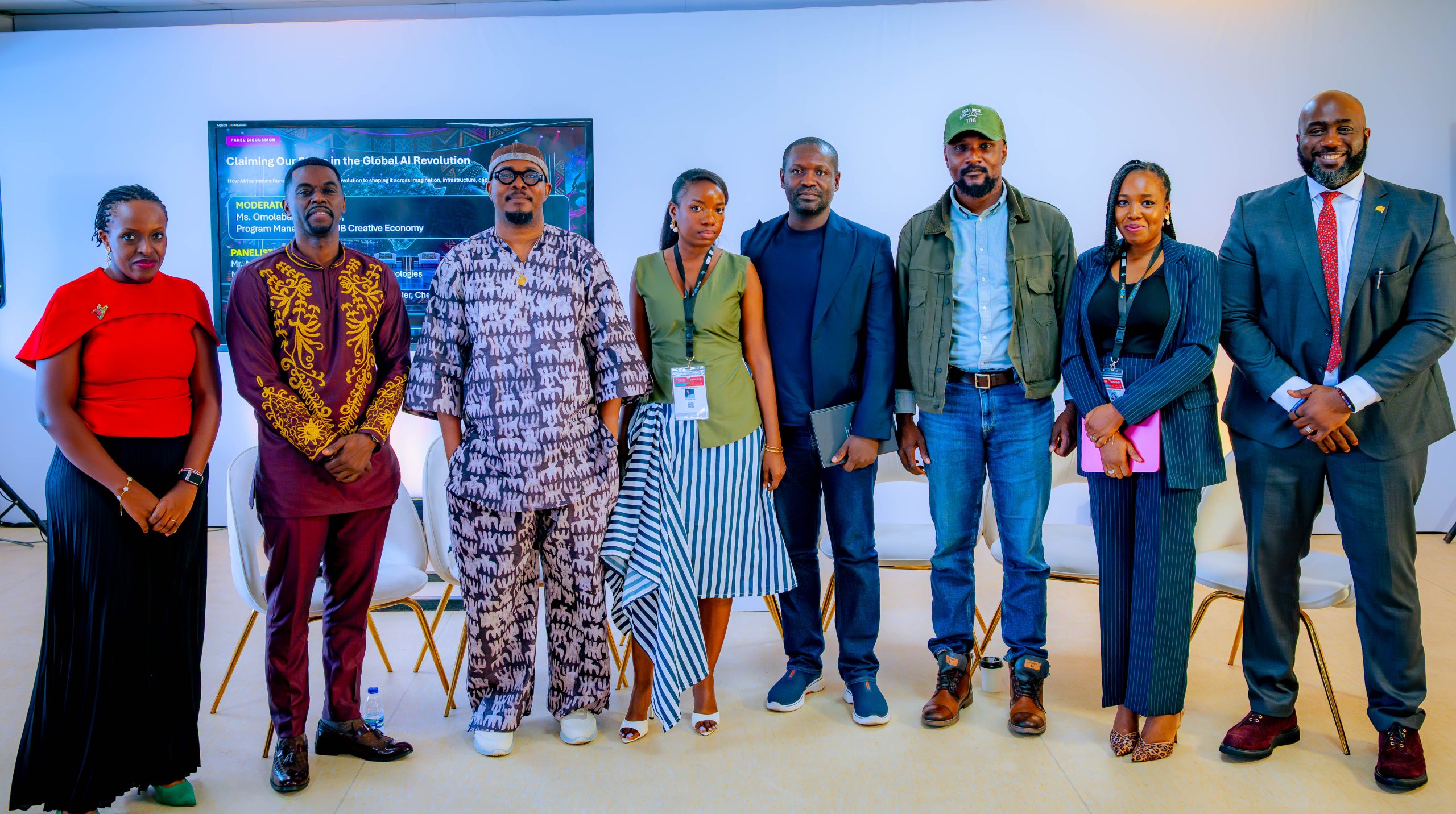
The programme also featured a panel discussion themed “Claiming Our Stake in the AI Revolution”, which examined the opportunities and challenges artificial intelligence presents for Africa’s creative industries. Moderated by Omolabake Olagunju, Programme Manager at CcHUB Creative Economy, the discussion brought together Daffe, Malik Afegbua, Founder of Slick City Media; Uchechi Arinze, Creative Director and Founder of CHéCHI; Ibrahim Tsado Yisa, Africa Director at Udu Technologies; and Oo Nwoye, Founder of TechCircle.
Conversations focused on how AI is changing the creation and consumption of digital content, while raising important questions about ownership, originality, cultural representation and algorithmic bias. Panellists also considered the cost of accessing digital tools and the need for African creators to retain control over the stories and cultural identities represented in their work.
The live pitch judging panel comprised Oluwasemilore Oludipe, Programmes Manager at Co-creation HUB (CcHUB); Mayenzeke Baza, Chief Investment and Development Officer at CEEIT; and Miebaka Anga, Strategic Partner Manager at YouTube.
Emeka Onyia, Afreximbank’s Director of Digital Business and Innovation, described the session as an inaugural activity of the Afreximbank Innovation Lab. He noted that artificial intelligence was lowering some of the equipment and production barriers traditionally faced by creators, while emphasising that skills and the effective application of technology remained essential.
He also outlined the Lab’s ambition to bring innovators together to develop ideas and technologies that can support African trade.
By combining access to AI tools with mentorship, financial incentives and exposure to industry leaders, the CANEX Create-thon provided participants with an opportunity to demonstrate the commercial potential of African creative ideas. Gebeya also acknowledged IREX’s support for the initiative.
The competition forms part of Afreximbank’s wider CANEX programme, which seeks to strengthen and commercialise Africa’s creative and cultural industries by connecting talent with technology, investment and market opportunities. Through initiatives such as the Create-thon, the bank is seeking to help African creators move beyond content production towards building competitive businesses and retaining greater economic value from their intellectual property.