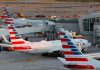

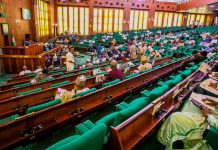
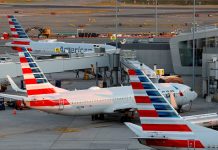




The Senate has called for stricter coordination of aircraft movements during Very Important Persons (VIPs) operations, warning that prolonged airborne delays at Nigerian airports could expose passengers and crew to avoidable safety risks.
The resolution followed a motion of urgent national importance sponsored by Senator Isah Jibrin (APC, Kogi East), who raised concerns that commercial aircraft scheduled to land at some Nigerian airports were sometimes forced to remain in holding patterns for extended periods when landing operations were suspended to accommodate VIP movements and other security-related activities.
According to the lawmakers, some of these delays reportedly exceed an hour, increasing fuel consumption and potentially reducing the operational reserves available to aircraft. They also warned that prolonged holding could expose flights to deteriorating weather, air traffic congestion, limited diversion options and crew duty-time constraints, with the risks becoming more serious when several aircraft are held simultaneously.
The Senate acknowledged that security arrangements for the President and other protected officials are necessary, but maintained that they should not compromise the safety and efficiency of commercial aviation. It also noted that international flights have sometimes been diverted to alternative airports when access to their intended destinations was temporarily restricted.
Jibrin argued that foreseeable landing restrictions should be communicated to airlines and aviation authorities ahead of time, allowing flight schedules and departure clearances to be adjusted before aircraft leave their originating airports.
He said ground-based measures, including revised departure slots and coordinated traffic sequencing, would be safer than allowing aircraft to take off only to remain airborne while waiting for landing operations to resume.
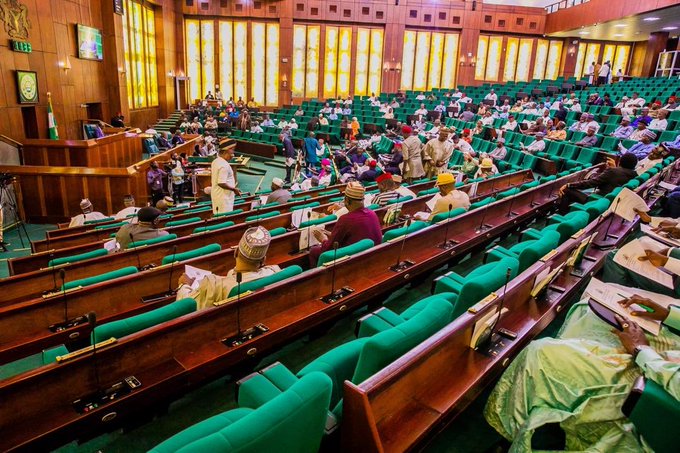
Several senators supported the motion during the debate. Senator Diket Plang (APC, Plateau Central) questioned why airlines were permitted to depart when authorities were aware that VIP movements could disrupt landing operations, warning that poor airspace coordination could result in a major accident. Senator Abdul Ningi (ADC, Bauchi Central) also criticised the disruption of flight operations, describing delays and cancellations as persistent problems requiring stronger regulatory oversight.
The Senate consequently urged the Nigerian Civil Aviation Authority (NCAA), Nigerian Airspace Management Agency (NAMA) and Federal Airports Authority of Nigeria (FAAN) to enforce procedures requiring advance coordination and timely notification of planned restrictions. It specifically called for foreseeable disruptions to be managed at points of origin through ground delays and revised departure arrangements, rather than exposing aircraft already airborne to prolonged holding.
The lawmakers also directed the Senate Committee on Aviation to engage the relevant agencies, including the Nigerian Safety Investigation Bureau (NSIB), on the proposed measures and ensure compliance. The committee is expected to report back to the Senate within two weeks.
The debate comes amid longstanding concerns within the aviation industry over the operational impact of VIP movements. Under the Nigeria Civil Aviation Regulations 2023, aircraft carrying a head of state, head of government or an equivalent dignitary may receive air traffic priority where practicable and following a pilot’s request. Such priority is also provided for ambulance and mercy flights, search and rescue operations, and civil defence or police emergencies. Aircraft in distress, however, retain priority over other traffic, while landing aircraft take precedence over departing flights.
Nigeria has previously acknowledged that VIP flight protocols involve coordination between civil and military aviation authorities, depending on the status of the official concerned. However, the practical effect of temporary restrictions on commercial schedules has remained a source of concern for airlines and industry stakeholders.
In April 2023, airline operators warned that holding commercial aircraft in the air while awaiting clearance could increase fuel costs and create avoidable operational risks. Former NAMA Managing Director Roland Iyayi subsequently proposed dedicated air corridors for VIP movements as a way of limiting disruption to scheduled flights. The issue had also attracted legislative attention in December 2017, when the House of Representatives considered concerns over commercial aircraft being prevented from landing at short notice.