










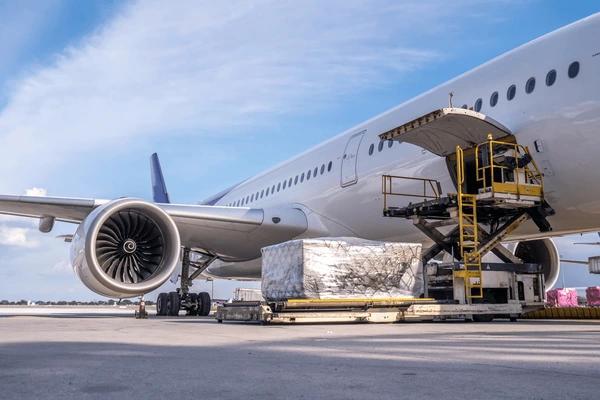
African airlines recorded a 4.7% year-on-year increase in air cargo demand in June 2026, even as available cargo capacity declined by 7.1%, according to the latest data from the International Air Transport Association (IATA).
The performance placed Africa ahead of Latin America and the Caribbean, which recorded the weakest regional demand growth at 3.5%, but behind all other major aviation regions. The sharp decline in capacity suggests that African carriers transported more cargo despite operating with significantly less available cargo space.
The growth in African air cargo came against a backdrop of stronger global demand. Worldwide, cargo demand increased by 8.5% year-on-year in June, while international demand rose by 9.6%. Global capacity grew by just 4.4%, meaning demand outpaced capacity across most regions.
North American carriers recorded the strongest growth, with demand rising 13.1%, followed by Asia-Pacific at 7.9%, Europe at 6.9% and the Middle East at 5.6%. Latin American and Caribbean carriers posted 3.5% growth, while African airlines recorded 4.7%.
The capacity trend across Africa stood in contrast to most other regions. While African airlines reduced available cargo capacity by 7.1%, capacity increased by 6.2% in North America, 4.3% in Asia-Pacific, 3.7% in Europe and 2.5% in the Middle East. Latin America and the Caribbean recorded the highest capacity growth at 9.8%.
IATA Director General Willie Walsh said the global air cargo market showed strong momentum in June, with demand growth exceeding capacity growth and remaining positive across all regions.
“Air cargo demand grew 8.5% year-on-year in June. While North America was the strongest contributor to growth, demand in all regions was in positive territory compared to last year,” Walsh said.
He noted that cargo demand was also growing faster than global trade, supported by high-value technology products and urgent shipments. However, he warned that geopolitical tensions in the Middle East and renewed US attention on tariffs could pose risks to the industry’s performance during the second half of the year.
Global trade increased by 5.2% year-on-year in June, while jet fuel prices fell by 20% compared with May but remained 45.8% higher than the same month a year earlier. Manufacturing activity remained supportive of air cargo demand, although global export orders weakened.
The Global Manufacturing Output Purchasing Managers’ Index fell by 0.5 points to 53.0 in June, while the New Export Orders Index remained below the 50-point threshold for the fourth consecutive month at 49.4. IATA said this indicates that air cargo growth was being driven by specific trade flows rather than a broad-based expansion in global exports.
Trade lane performance also varied significantly during the month. The Asia-North America corridor recorded the strongest growth, followed by intra-Asia, Europe-Asia and Africa-Asia routes, highlighting the continued importance of Asian markets to global air freight activity.
However, Gulf-linked trade corridors remained affected by disruptions associated with the conflict in the Middle East, adding uncertainty to cargo flows through a region that serves as a major global aviation and logistics hub.
For African carriers, the combination of rising cargo demand and falling capacity highlights both the resilience of the continent’s air freight market and the potential pressure on available cargo infrastructure and fleet capacity as trade volumes continue to grow.