










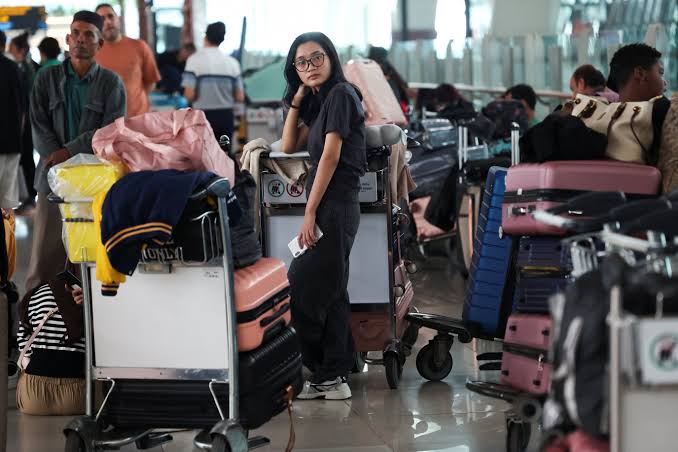
Indonesia has reopened five airports following a two-day shutdown triggered by volcanic ash from Mount Anak Krakatau, easing an air travel disruption that stranded more than 340,000 passengers and affected nearly 3,000 flights.
Soekarno-Hatta International Airport in Jakarta, the country’s main aviation gateway, resumed operations at 00:30 local time on Tuesday after being closed since Sunday morning. Four other airports, including Halim Perdanakusuma in the Jakarta area and Husein Sastranegara in Bandung, also resumed operations, according to the Transport Ministry.
The closures followed renewed activity from Anak Krakatau, located in the Sunda Strait between Java and Sumatra. The volcano began erupting late Friday, producing lava fountains and sending ash towards Jakarta, Lampung and parts of western Java.
Authorities said volcanic ash reached altitudes of up to 6,000 metres on the Java side and 15,000 metres on the Sumatra side. The Geological Agency warned on Monday that the possibility of further eruptions remained high, while weather conditions continued to make it difficult to determine when the activity would subside.
The disruption caused significant congestion at airports, with thousands of passengers forced to wait for updates, seek refunds or make alternative travel arrangements. At Soekarno-Hatta, more than 240 domestic and international flights were cancelled or delayed on Monday alone, affecting nearly 30,000 passengers.
Transport authorities had prepared six alternative airports for aircraft originally scheduled to land in Jakarta as airlines began working through the backlog of stranded passengers. Although several airports have reopened, airlines still face the challenge of rescheduling disrupted services and returning passengers to their destinations.
Transport Minister Dudy Purwagandhi said authorities had been monitoring conditions at affected airports through regular assessments to determine whether volcanic ash was spreading or clearing.
Authorities have also maintained a 3km exclusion zone around Anak Krakatau, restricting access to the area and prohibiting ships from entering the corresponding zone in the Sunda Strait. No tsunami warning has been issued in connection with the latest volcanic activity.
Anak Krakatau, meaning “Child of Krakatoa,” emerged from the sea in the caldera created by the catastrophic 1883 eruption of Mount Krakatoa. The volcano remains intermittently active and gained renewed attention in December 2018 when part of its structure collapsed, triggering a tsunami that killed more than 400 people along the coasts of Java and Sumatra.
The reopening of the five airports provides some relief to Indonesia’s aviation sector and thousands of affected travellers, although further disruptions remain possible if volcanic activity and ash emissions intensify.