






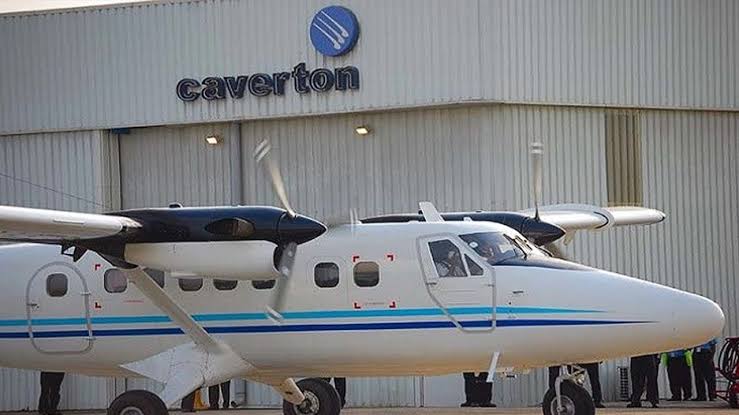
Caverton Offshore Support Group Plc recorded a 1.4 per cent increase in revenue to ₦20.74 billion for the nine months ended September 30, 2026, as growth in its marine operations helped offset the loss of income from a major helicopter contract that ended in August 2025.
The company’s revenue rose from ₦20.45 billion in the corresponding period of 2025, with its marine business now contributing almost a third of group earnings, reflecting a gradual shift in its operations as it pursues diversification and seeks to strengthen its financial position.
However, the modest revenue growth was accompanied by a higher loss after tax of ₦13.79 billion, compared with ₦4.63 billion recorded a year earlier. Caverton attributed much of the increase to ₦5.9 billion in non-cash depreciation charges arising from the revaluation of its assets in 2025, as well as the absence of a one-off gain of ₦5.3 billion recognised in the previous year’s results.
The group recorded some improvement in its financing position, with net finance costs declining by 16 per cent, representing a year-on-year reduction of ₦2.19 billion. It also reported a net foreign exchange gain. The results were approved by the company’s board on October 28, 2026.
Group Chief Executive Officer, Olabode Makanjuola, said Caverton was undergoing a transition, with its marine operations increasingly becoming a major revenue driver.
He noted that the business, which contributed minimally to group revenue a year earlier, now accounts for almost a third of earnings through its local marine activities and international shipping operations.
One of the key developments in the period was the progress of OMIBUS, Caverton’s indigenous electric ferry platform, which has completed sea trials on Lagos waterways. During a full-load trial, the ferry transported passengers across 12.6 nautical miles between Falomo and the Ikorodu ferry terminal.
The company plans to commence commercial passenger services on shorter, high-demand routes connecting CMS, Falomo, Victoria Island and Lekki, with longer routes, including Ikorodu, expected to follow as charging infrastructure and battery performance are further established.
Caverton is also constructing 10 electric ferries for the Lagos State Government at its marine facilities, including its Naval Dockyard operation in Victoria Island. The project combines local vessel construction with propulsion technology supplied by its original equipment manufacturing partner, ExploMar of Shanghai, China.
Beyond the electric ferry programme, the group is expanding its international marine activities through its position in the Stena Sonangol Suezmax Pool, in which it holds charter positions in three tankers operating in the global crude oil shipping market. The business provides foreign-currency earnings and strengthens the group’s presence in international maritime operations.
Caverton is also involved in the establishment of Unity Shipping Worldwide, a joint venture being developed by the Nigerian National Petroleum Company Limited, Stena Bulk and Caverton to combine international tanker expertise with local marine capacity.