








Emirates Group has reported its strongest financial performance ever, posting a record profit before tax of AED 24.4 billion (US$6.6 billion) for the 2025-26 financial year, despite major disruptions to global aviation operations during the final month of the reporting period.
According to the Group’s newly released annual report, revenue rose to a record AED 150.5 billion (US$41 billion), while cash assets climbed 12 percent to AED 59.6 billion (US$16.2 billion), reflecting the resilience of the business and sustained global demand for travel and logistics services. EBITDA reached AED 41.1 billion (US$11.2 billion), underlining the Group’s strong operational profitability.
The Group’s flagship carrier, Emirates, retained its position as the world’s most profitable airline during the reporting year, delivering a record profit before tax of AED 22.8 billion (US$6.2 billion), up seven percent from the previous year. Airline revenue increased to AED 130.9 billion (US$35.7 billion), while cash reserves rose to AED 54.9 billion (US$15 billion). After accounting for the UAE’s increased corporate tax rate under the Pillar Two tax rules, the Emirates Group recorded a net profit after tax of AED 21 billion (US$5.7 billion).
Chairman and Chief Executive of Emirates airline and Group, Ahmed bin Saeed Al Maktoum, described the results as evidence of the Group’s resilience, strong business model, and long-term investment strategy. He noted that for most of the financial year, strong customer demand and sustained investments in products, technology, people, and brand positioning drove consistent growth before military activity in the Gulf region disrupted global commercial aviation in late February.
Despite the challenges, Emirates and its ground handling subsidiary dnata maintained operations, supported affected customers, and gradually restored services through Dubai International Airport. The Group declared a dividend of AED 3.5 billion (US$1 billion) to its owner, the Investment Corporation of Dubai.
The Group continued to invest heavily in expansion and modernization, spending AED 17.9 billion (US$4.9 billion) on new aircraft, technologies, facilities, and equipment during the year. Its workforce also grew by eight percent to more than 130,000 employees globally, including over 4,000 UAE nationals.
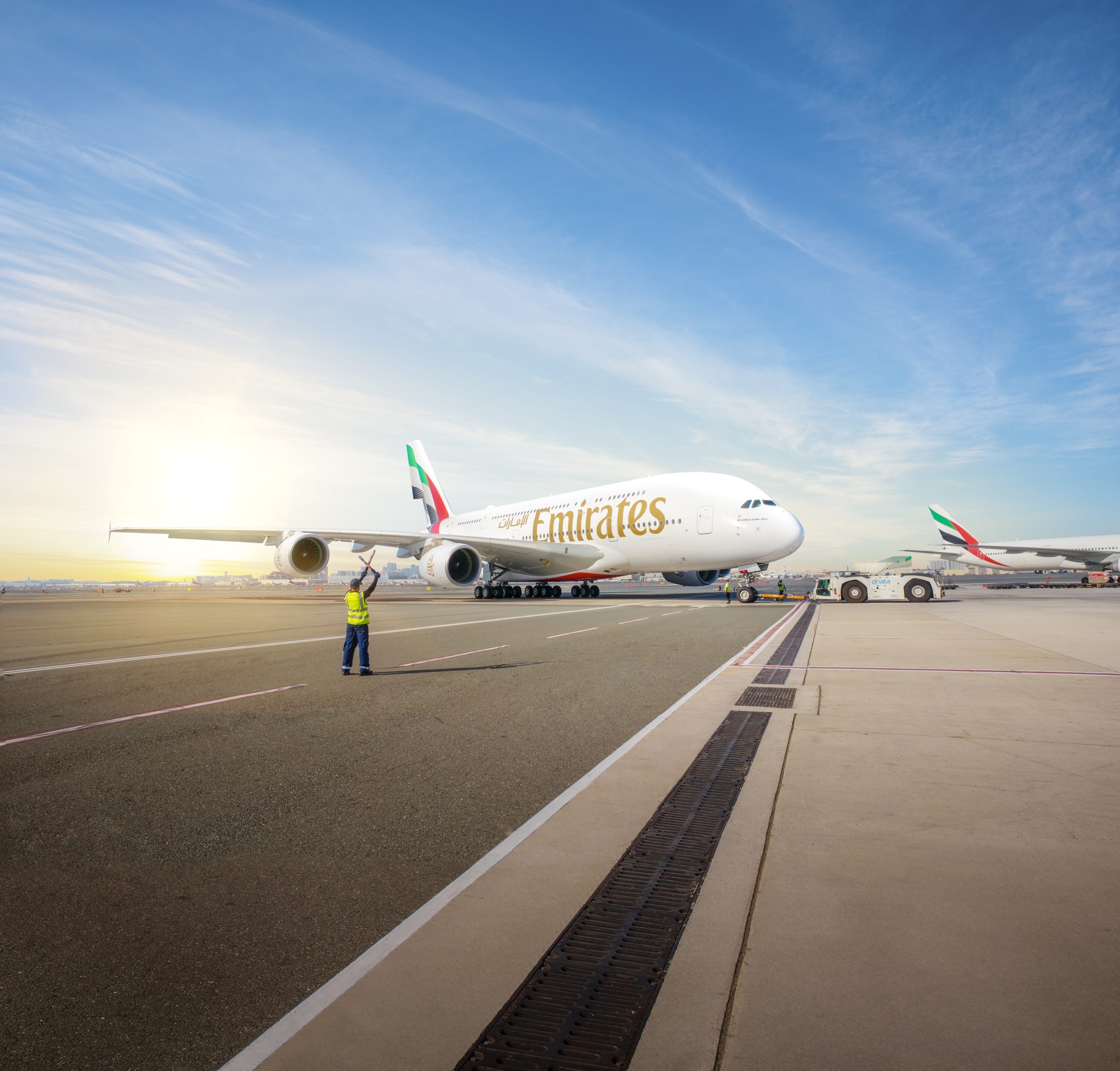
Operationally, Emirates expanded its global network to 152 destinations across 80 countries, launching new routes to Da Nang, Hangzhou, Siem Reap, and Shenzhen, while strengthening partnerships with 32 codeshare and 117 interline partners, giving passengers access to more than 1,700 cities worldwide. The airline also added 15 Airbus A350 aircraft to its fleet and continued its US$5 billion cabin retrofit programme, with 91 aircraft already upgraded to include its latest inflight products, including Premium Economy.
Emirates carried 53.2 million passengers during the year and maintained strong passenger demand, achieving a seat factor of 78.4 percent. The airline also accelerated the rollout of Starlink onboard Wi-Fi, with 21 aircraft already equipped by the end of March.
Cargo operations also delivered strong results, with Emirates SkyCargo transporting 2.4 million tonnes of freight and generating AED 16.2 billion (US$4.4 billion) in revenue. The division expanded its freighter network and introduced new logistics solutions, including Emirates Courier Express and specialist aerospace cargo services.
Meanwhile, dnata recorded a profit before tax of AED 1.6 billion (US$437 million), supported by strong performances in airport operations, catering, and travel services. Revenue increased 12 percent to AED 23.6 billion (US$6.4 billion), driven by increased flight activity and travel demand across major markets including Australia, Europe, the UAE, the UK, and the United States.
Looking ahead, Sheikh Ahmed said the Group remains cautious amid geopolitical uncertainties but emphasized that Emirates enters the 2026-27 financial year with strong cash reserves, stable fundamentals, and a clear strategy for growth. He noted that aircraft deliveries, infrastructure investments, and customer experience enhancements will continue as planned, while the Group remains focused on maintaining its position as a global leader in aviation and travel services.