






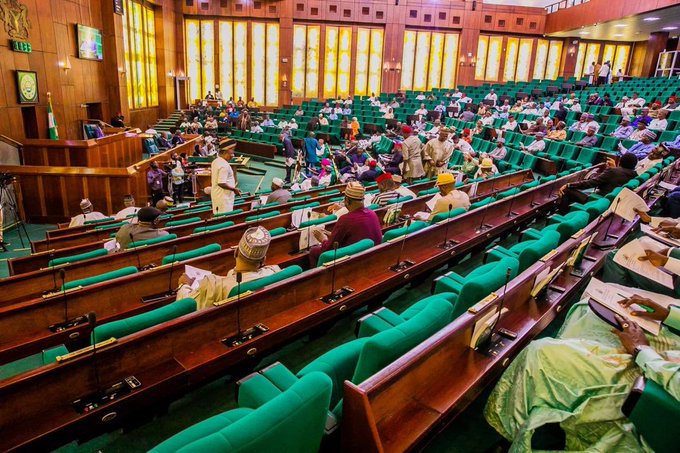
Nigeria’s House of Representatives has called for immediate government intervention to address the escalating cost of aviation fuel, warning that domestic airlines are facing mounting financial strain that could trigger widespread disruption across the sector.
The resolution followed the adoption of a motion of urgent public importance moved during plenary by Paschal Agbodike, who represents Ihiala Federal Constituency of Anambra State. Lawmakers expressed concern that Aviation Turbine Kerosene (ATK), also known as Jet A1, now accounts for between 40 and 60 per cent of airlines’ total operating costs, placing significant pressure on already fragile balance sheets.
Agbodike noted that operators are struggling to sustain operations while maintaining service standards, citing a combination of surging fuel prices and foreign exchange constraints affecting the procurement of aircraft parts and maintenance services. He warned that several airlines have already begun reducing flight frequencies or grounding aircraft, leading to shrinking capacity across domestic routes.
The House cautioned that continued volatility in jet fuel pricing could push major carriers toward collapse, with far-reaching implications for employment, economic activity, and regional connectivity. Lawmakers stressed that failure to act swiftly could deepen the crisis and erode confidence in Nigeria’s aviation industry.
As part of its resolutions, the House urged the Federal Government, through the Ministry of Petroleum Resources and the Nigerian National Petroleum Company Limited, to establish a price-stabilisation framework with airline operators to ensure more predictable and sustainable fuel pricing. It also directed the Minister of Aviation and Aerospace Development, Festus Keyamo, to present an emergency roadmap within two weeks outlining measures to reduce aviation fuel costs.
In addition, the House mandated its Committees on Aviation, Petroleum Resources (Downstream), and Finance to investigate the persistent rise in jet fuel prices and report back within the same timeframe. Lawmakers further called on the Central Bank of Nigeria to prioritise foreign exchange allocation to airlines in order to ease operational pressures and support maintenance requirements.
The intervention comes against the backdrop of sustained increases in aviation fuel prices, driven by global crude oil volatility, limited domestic refining capacity, deregulation of the downstream petroleum sector, and persistent foreign exchange shortages. Industry operators say these factors have forced airlines to raise fares, cut routes, and, in some cases, suspend operations, raising concerns about the long-term sustainability of the sector.