





The Federal Airports Authority of Nigeria (FAAN) has completed the final concrete pouring for the landside bridge connecting Terminals 1 and 2 of the Murtala Muhammed International Airport (MMIA), Lagos, bringing the project closer to its planned December opening.
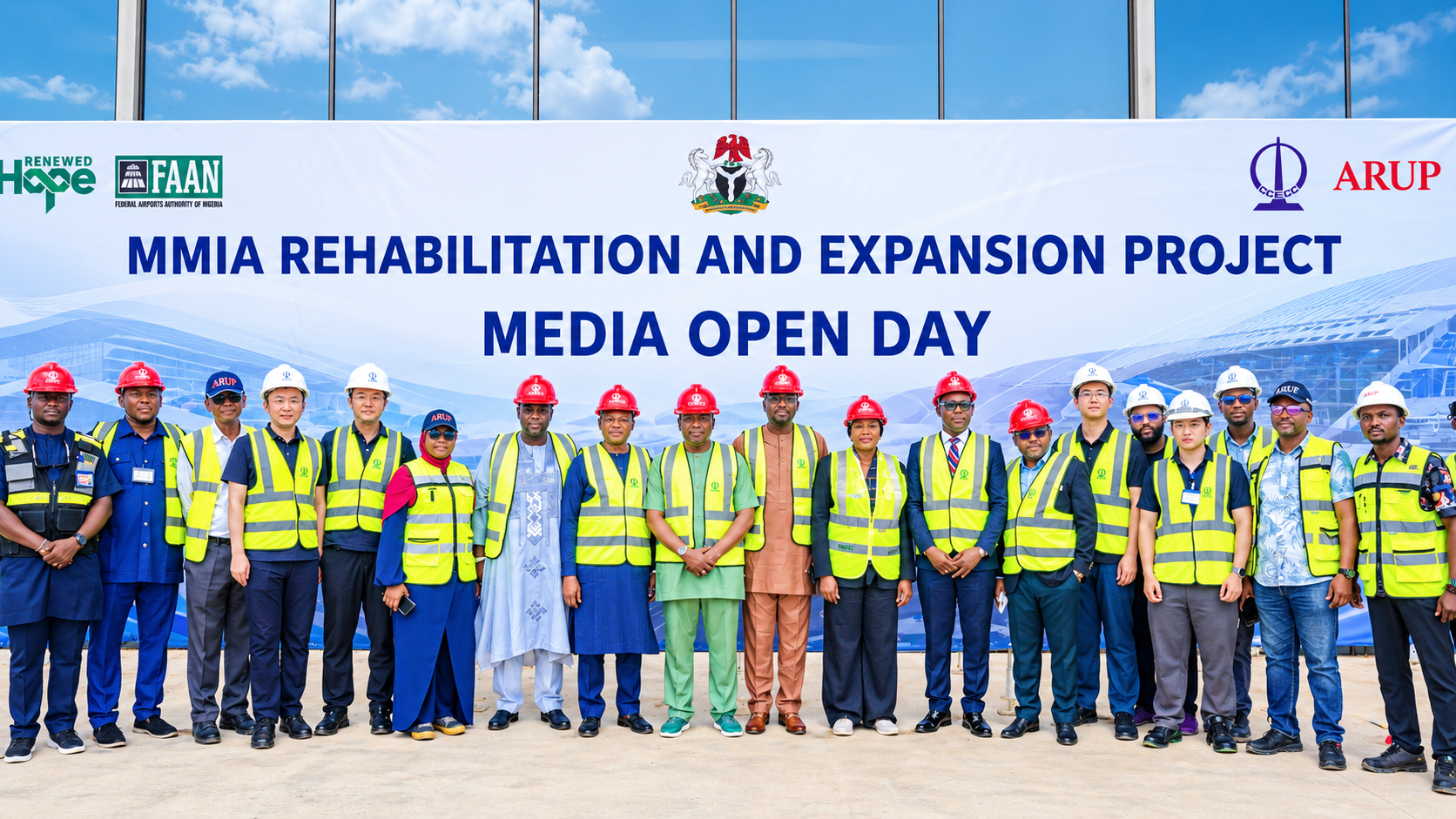
The milestone was marked on Tuesday during an inspection involving FAAN management, the China Civil Engineering Construction Corporation (CCECC), project consultants ARUP and other members of the engineering team.
FAAN Managing Director and Chief Executive Officer, Olubunmi Kuku, said the completion of the concrete works represented a significant step towards putting the bridge into operation, particularly ahead of the expected increase in passenger traffic during the December peak travel period.
“This was the last concrete pouring for the overhead bridge that would allow us to link T1 and T2,” Kuku said, while acknowledging the frustration caused by ongoing construction and traffic restrictions around the airport.
She said the bridge is expected to be ready for use within the next couple of months, subject to the completion of curing, lighting, façade and other finishing works. FAAN has indicated that the landside bridges are expected to become operational in December 2026.
The agency clarified that the completion of the concrete works does not mean the bridge can immediately be opened to motorists or passengers. The newly poured concrete must first undergo the required curing period, while lighting and other finishing works will be completed before commissioning.
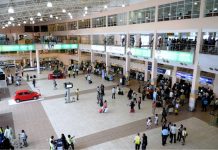
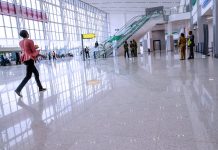
The bridge forms part of the wider rehabilitation and modernisation of MMIA Terminal 1, which also includes the expansion of Terminal 2 fingers, apron works and the development of a transit hub.
Kuku said substantial progress had also been made on the bridge’s canopy and structural works, while façade and canopy installation is continuing on the section of Terminal 1 featuring the airport’s distinctive eagle design.
Beyond the bridge, FAAN is reviewing the technology, baggage handling systems, check-in facilities and retail areas that will support the refurbished terminal. Kuku said the objective is to ensure that the upgrade delivers improvements in passenger movement and the overall airport experience.
Accessibility is also being incorporated into the project. FAAN has introduced two ambulifts at the airport, while a ground handling company has provided another, to support passengers with reduced mobility while some existing aerobridges remain affected by construction.
The upgraded terminal is also expected to include wheelchair-accessible ramps and elevators, while improvements to the flight information display system will provide enhanced audio and visual information for passengers with special needs.
Kuku said the terminal layout was being redesigned to provide clearer separation between arriving and departing passengers and improve movement through the facility.
She appealed to passengers to remain patient with the ongoing disruption, noting that MMIA had operated for decades without a major comprehensive upgrade.
“Passengers have been extremely patient with us,” she said, adding that the inconvenience caused by the works was intended to deliver a more functional and modern gateway for travellers and the country.
FAAN has also urged passengers to follow directional signs and use designated access routes, particularly during peak periods. Kuku advised travellers to arrive three to four hours before their flights and said additional personnel would be deployed to assist passengers as traffic increases.
The FAAN chief also expressed appreciation to President Bola Ahmed Tinubu and Minister of Aviation and Aerospace Development, Festus Keyamo, for their support for the project.
The Terminal 1 rehabilitation is part of the Federal Government’s broader effort to modernise airport infrastructure and improve passenger experience at Nigeria’s major international gateways. With the bridge now entering its final stages, FAAN expects the new connection to help ease traffic and improve movement between the terminals when it becomes operational.