




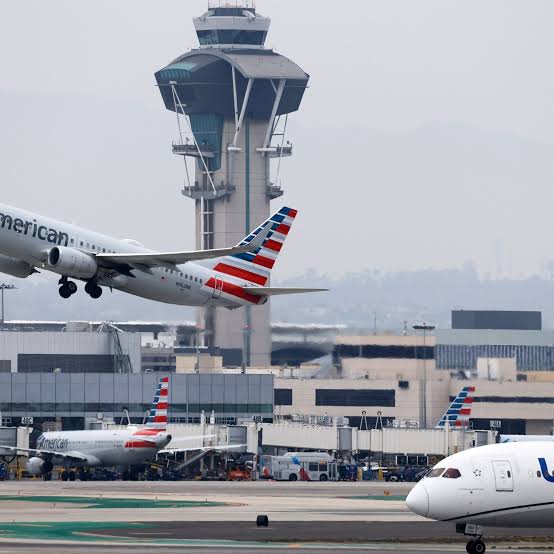
The United States has begun restoring normal air travel following a nationwide ground stop imposed by the Federal Aviation Administration (FAA) on November 13 after technical problems disrupted communications and radar systems used by air traffic controllers.
The restriction, which halted departing flights across the country for almost five hours, was lifted at approximately 8:15 p.m. Eastern Time on Friday. However, widespread cancellations and delays continued over the weekend as airlines worked to reposition aircraft and crews and clear the backlog.
The FAA initially ordered the ground stop at about 3:30 p.m. Eastern Time, citing extraordinary circumstances and safety concerns. The disruption affected 17 of the country’s 22 Air Route Traffic Control Centres, with instability spreading to several Terminal Radar Approach Control facilities.
US Transportation Secretary Sean Duffy said the communication and radar problems prompted the agency to suspend departures as a precaution. More than 3,500 aircraft were in the air when the restriction was imposed, but controllers and pilots were able to bring them safely to their destinations.
The FAA subsequently disclosed that its legacy telecommunications equipment became unstable after an unusually high volume of data flooded its network, generating about 1,000 connection attempts every four to five seconds. The disruption affected aircraft communications and radar feeds, although some radio frequencies and radar systems remained operational throughout the incident.
Preliminary findings pointed to network equipment at facilities in El Dorado, Arkansas, and Amarillo, Texas. The FAA said its contractor, L3Harris, had been carrying out routine maintenance at the Arkansas facility, including the installation of a new router, when the network instability emerged.
The agency and the contractor are continuing to investigate the root cause. The FAA said it had isolated the affected locations and disabled the relevant functionality on the originating routers, as well as on about 60 similar devices across its network, as a precaution.
Officials have also said there is no indication so far that the disruption resulted from a cyberattack or deliberate external interference.
The impact on airline operations extended beyond Friday. According to Reuters, more than 11,500 flights were cancelled or delayed across the United States on Sunday, November 15, including about 2,100 cancellations and 9,400 delays. Transportation Secretary Duffy said he expected operations to return to normal by Monday, although airlines continued working through the disruption.
The FAA’s November 15 update also reported approximately 12,462 flight cancellations on Friday, including 9,082 by major airlines, while stressing that not all cancellations were directly attributable to the ground stop.
The incident has renewed scrutiny of the age and reliability of the US air traffic control infrastructure. Duffy said the affected routers were purchased in 2001 and had become obsolete, highlighting the challenges of maintaining a system that handles extensive domestic and international traffic.
The Transportation Department has called for $50 billion to support a comprehensive modernisation of the air traffic control system, increasing an earlier funding request of about $30 billion. Congress approved $12.5 billion for upgrades in 2025, although Democratic lawmakers have questioned the request for additional funding, noting that a substantial portion of the earlier allocation remains unspent.
The FAA said the system had stabilised and that flights were operating again, while acknowledging that recovery would take time. The agency has maintained that safety procedures remained in place throughout the incident and that all aircraft landed safely.