








Caverton Offshore Support Group Plc is targeting a recovery in its aviation business in the second half of 2026 as stronger marine operations and improved quarterly performance provide support for the group’s broader turnaround strategy.
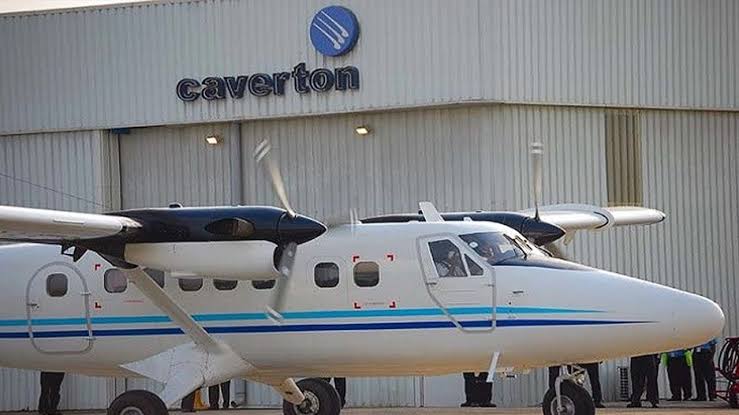
The company said its aviation recovery would be driven by the restructuring of its charter operations through its partnership with NHV, a Belgium-based international helicopter operator, while it seeks to increase revenue from its Maintenance, Repair and Overhaul (MRO) facility and Caverton Aviation Training Centre.
The group’s aviation business remained under pressure in the first half of the year, with helicopter charter revenue falling to N1.01bn from N3.51bn in the corresponding period of 2025. Revenue from helicopter and airplane contracts also declined to N4.36bn from N7.62bn.
However, helicopter maintenance revenue more than doubled to N4.27bn from N2.12bn, providing some offset to the weaker charter business.
Caverton said the restructuring of its aviation charter operations with NHV was expected to take effect in the second half of 2026, while efforts were also underway to unlock greater value from its existing aviation infrastructure.
Its unmanned aerial vehicle business, developed in partnership with the National Agency for Science and Engineering Infrastructure, also continued to expand from a relatively small base.
Beyond aviation, the group’s marine business emerged as a significant contributor to its improved quarterly performance. Vessel agency service revenue surged to N3.28bn in the first half of 2026, compared with N52.4m a year earlier.
Through its relationship with Stena Bulk, Caverton participates in three Suezmax tankers operating internationally, providing the group with foreign-currency revenue. The partnership is also being expanded through Unity Shipping Worldwide, a joint venture involving Caverton, the Nigerian National Petroleum Company and Stena Bulk.
The group is also developing its inland-water transport business through its OMIBUS platform, developed with Shanghai-based electric-propulsion manufacturer Explomar. A prototype battery-electric passenger ferry is already operating, while Caverton has an order from Lagos State for 10 vessels.
The stronger marine performance helped drive a sharp improvement in Caverton’s second-quarter numbers. Revenue increased 41.2 per cent to N8.59bn in Q2 from N6.09bn in Q1, while its quarterly loss narrowed to N3.75bn from N4.96bn.
For the six months ended June 30, 2026, however, revenue declined to N14.68bn from N16.68bn a year earlier, while the group reported a loss of N8.69bn, compared with a profit of N2.04bn in the first half of 2025.
Net finance costs remained a major constraint, although they fell to N8.37bn from N9.50bn in the prior-year period. Interest on debt and borrowings accounted for the bulk of the finance burden.
Caverton said it had reworked its remaining dollar-denominated bank facilities as part of its debt restructuring programme, with the aim of improving the sustainability of its balance sheet and reducing foreign-exchange exposure.
Operating profit before administrative expenses stood at N7.33bn in the first half, while higher administrative expenses and other operating costs resulted in an operating loss after those costs.
The company’s Chief Executive Officer, Olabode Makanjuola, said the improvement in quarterly performance showed that its recovery strategy was beginning to gain traction.
“The first half of the year tested us, but the direction of travel is now visible in the numbers,” Makanjuola said, noting that the company was focused on building revenue and narrowing losses.
He said the marine businesses were scaling while the aviation relaunch remained on track for the second half of the year.
“There is distance still to travel, but Caverton is moving from stabilisation to recovery, and we intend to finish 2026 with that momentum intact,” he said.
Caverton’s first-half results therefore present a mixed picture, with aviation still undergoing restructuring and overall earnings under pressure, but with stronger marine activity and an improving second-quarter performance providing potential foundations for recovery.
The group’s ability to translate the planned aviation relaunch, growing marine operations and debt restructuring into stronger cash generation will remain critical to its return to sustainable profitability.