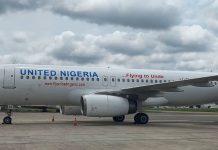







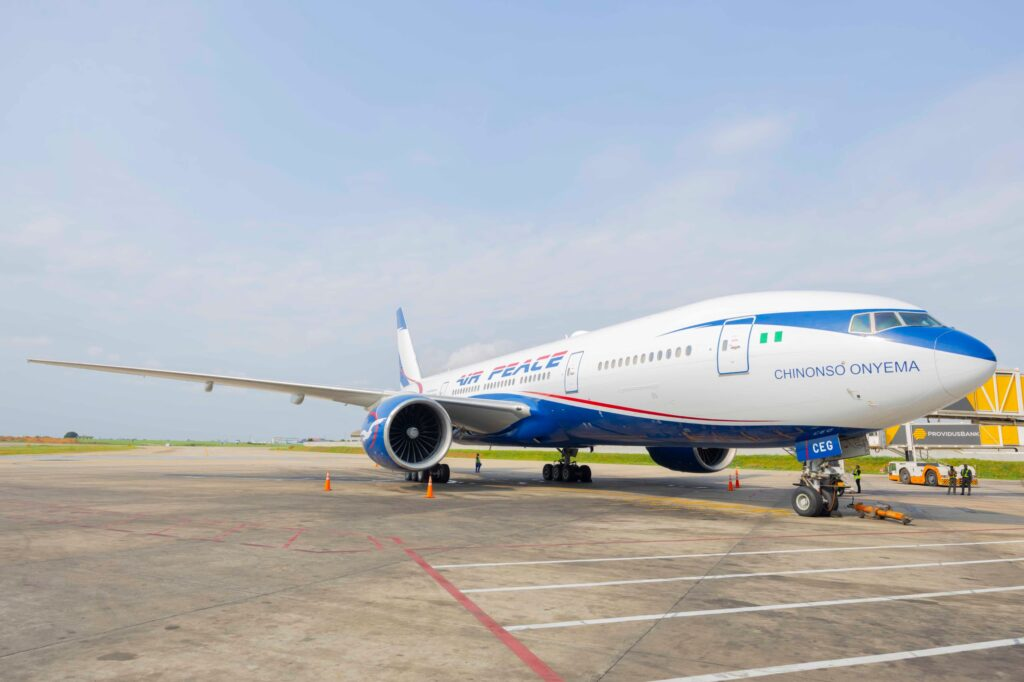
Air Peace and United Nigeria Airlines accounted for 42.8 per cent of domestic flights operated by Nigeria’s 10 leading carriers in the first half of 2026, highlighting the growing concentration of flight activity among the country’s largest airlines as soaring aviation fuel costs put pressure on smaller operators.
According to figures published by MoneyCentral, citing a September 2026 investor presentation by United Nigeria Airlines, the 10 carriers operated a combined 33,995 flights between January and June. Air Peace led the ranking with 7,687 flights, followed by United Nigeria with 6,852.
Together, the two airlines operated more flights than the next four carriers combined. United Nigeria’s flight count was approximately 89 per cent of Air Peace’s total and 1.8 times that of ValueJet, which ranked third. The four leading airlines accounted for 64.5 per cent of the flights recorded in the presentation.
The figures point to a domestic market in which a handful of airlines account for much of the scheduled activity, even as operators contend with rising costs and operational constraints. The investor presentation, however, does not identify the original source of the flight data.
Domestic Market Faces Capacity Constraints
Despite Nigeria’s population of more than 200 million, the country’s domestic aviation market remains relatively limited in scale. The flight figures in the presentation translate to an average of about 187 flights daily across the 10 airlines during the six-month period.
Separately, Nigeria’s Civil Aviation Authority recorded 7,961 domestic flights across 15 carriers in August, equivalent to approximately 257 flights daily.
The presentation also reported that Nigerian airports handled 17.9 million passengers in 2025, representing annual growth of 5.9 per cent, with domestic travel accounting for about 73 per cent of passenger traffic.
However, Nigerian carriers continue to have a limited presence in international markets. Data from the NCAA cited in the report show that five Nigerian airlines carried 285,023 international passengers in 2024, representing 6.89 per cent of the market. Foreign operators, including Qatar Airways and Ethiopian Airlines, accounted for substantially larger shares.
The figures underline the gap between the importance of domestic aviation to Nigeria’s air transport market and the relatively small international footprint of its homegrown airlines.
Fuel Costs Put Pressure on Airlines
The industry’s operating environment deteriorated sharply in the first half of 2026 as aviation fuel prices surged. Jet A1 reportedly rose from about ₦900 per litre in late February to as much as ₦3,300 by mid-April following the escalation of conflict involving the United States, Israel and Iran.
The increase prompted Nigerian airline operators to threaten a nationwide shutdown from April 20, citing the unsustainable cost of fuel. Air Peace founder Allen Onyema said the fuel bill for a flight that previously cost about ₦3 million had climbed to between ₦12 million and ₦13 million.
Operators responded with fare increases and capacity adjustments. Air Peace reportedly parked several of its Boeing aircraft and increased reliance on its smaller Embraer fleet, while Rano Air suspended some routes. On certain domestic routes, one-way economy fares also rose above ₦200,000, compared with about ₦150,000 four months earlier.
Although Dangote Petroleum Refinery subsequently reduced its Jet A1 price to ₦1,650 per litre, the reported rate remained well above the pre-crisis level, leaving airlines exposed to elevated operating costs.
Growth Comes with Financial Risks
United Nigeria Airlines’ performance illustrates the financial pressures facing carriers attempting to expand during a period of high fuel prices. The airline carried more passengers in the first half of 2026 than it did throughout 2025, but recorded a loss of ₦13.35 billion over the six-month period, according to its investor presentation.
Its borrowings also rose to ₦115.5 billion as it invested in additional aircraft, highlighting the financing requirements associated with fleet expansion.
The combination of rising passenger demand, high operating costs and limited capacity presents a difficult balancing act for Nigerian airlines. While Air Peace and United Nigeria have established substantial positions in the domestic market, sustaining their operations and growth will depend on their ability to manage fuel expenses, financing obligations and aircraft availability.
This report is based on figures and reporting published by MoneyCentral, including data contained in United Nigeria Airlines’ September 2026 investor presentation.