









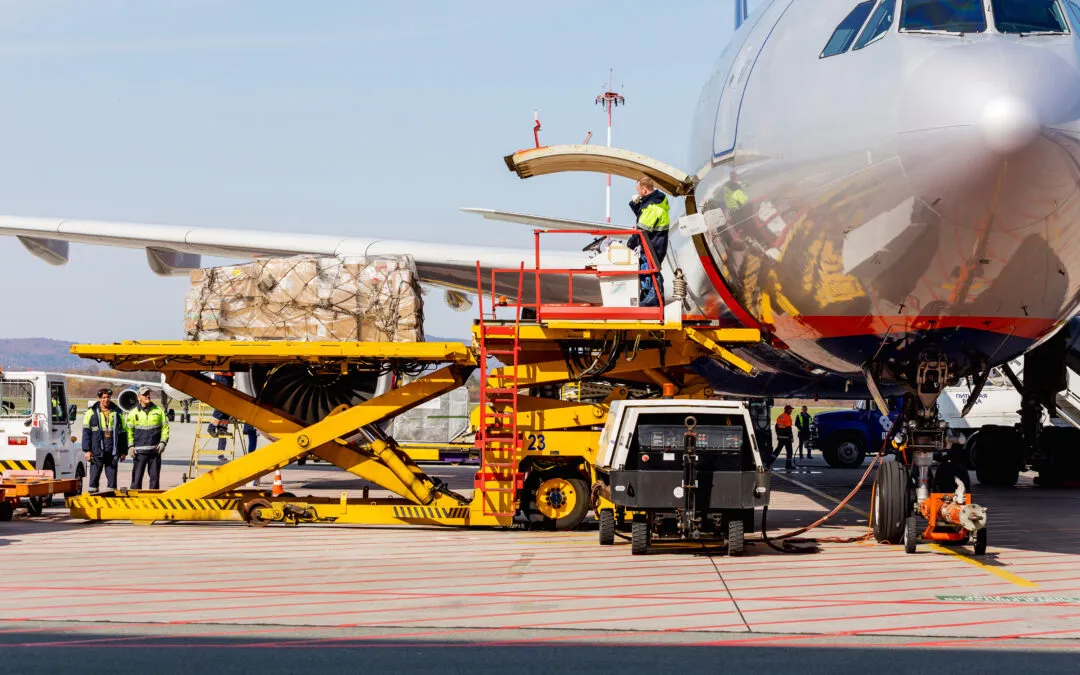
Global air cargo demand strengthened in August, but the latest figures from the International Air Transport Association (IATA) reveal a market in which rising freight volumes are unfolding alongside high fuel costs, uneven capacity trends and continuing uncertainty across the aviation industry.
Worldwide demand, measured in cargo tonne-kilometres (CTK), increased by 4.4 per cent year-on-year, while international demand rose by 5.3 per cent. At the same time, available cargo capacity fell by 0.1 per cent, suggesting that airlines were able to carry more freight without expanding the overall supply of cargo space.
The combination helped support higher load factors and offered airlines an opportunity to recover some of the additional costs associated with fuel. According to IATA, cargo yields also rose month-on-month for the first time since April, providing a further positive signal as the industry approaches its year-end peak season.
However, stronger demand does not necessarily mean that airlines are operating in a more comfortable financial environment. Jet fuel prices increased by 8.3 per cent in August and were 79.2 per cent higher than a year earlier. That creates a difficult balancing act: carriers need to capture higher freight revenues while controlling the cost of operating cargo aircraft and carrying freight in passenger-aircraft belly holds.
The regional figures show how differently airlines are navigating this environment. North American carriers recorded the strongest demand growth, at 6.6 per cent, despite reducing capacity by 2.5 per cent. European airlines reported a 4.1 per cent increase in demand while capacity fell by 3.5 per cent. In both regions, demand rose as available capacity contracted, a combination that can help support aircraft utilisation and pricing, although actual profitability depends on costs and the rates carriers secure.
Asia-Pacific airlines recorded demand growth of 4.3 per cent, with capacity up 1.2 per cent. Latin American and Caribbean carriers saw demand rise by 5.1 per cent, while capacity increased by 3.3 per cent. In the Middle East, demand grew by just 1.0 per cent against a 3.3 per cent increase in capacity, making it the weakest-performing region in August.
Africa presented a different challenge. Demand increased by 3.0 per cent, but capacity expanded by 14.0 per cent. The disparity highlights the risk of adding cargo space faster than freight volumes grow, potentially placing pressure on load factors and yields if the additional capacity is not absorbed by the market.
Beyond airline capacity decisions, the wider economic indicators suggest that the foundations for air cargo demand remain relatively supportive. Global trade grew by 6.0 per cent year-on-year in July, marking 33 consecutive months of annual expansion. Manufacturing output and new export orders also strengthened in August, with both corresponding global purchasing managers’ indices above the 50-point threshold that separates expansion from contraction.
These indicators matter because air cargo is closely tied to international supply chains and the movement of high-value, time-sensitive goods. Manufacturers, retailers and exporters rely on air freight when speed and reliability outweigh the higher cost of transport, particularly during periods of inventory replenishment and seasonal demand.
The approach of the year-end peak season could therefore provide further support for cargo volumes. But airlines will have to manage the opportunity carefully. Elevated fuel prices can erode the benefits of higher freight rates, while geopolitical tensions, disrupted trade routes and changes in global economic activity can alter demand and operating costs quickly.
The August results also underline the growing importance of capacity discipline. Airlines that match available space to actual demand may be better positioned to protect yields, while operators expanding aggressively will need to secure enough freight volumes to justify the additional capacity.
For the wider aviation industry, air cargo remains an important source of resilience at a time when passenger markets and operating conditions vary considerably by region. The latest figures point to healthy freight demand and a potentially stronger peak season, but the central test is whether airlines can translate that growth into sustainable returns.
With fuel costs still elevated, success will depend not simply on moving more cargo, but on doing so efficiently, pricing capacity appropriately and responding quickly to shifts in trade and supply-chain demand.