





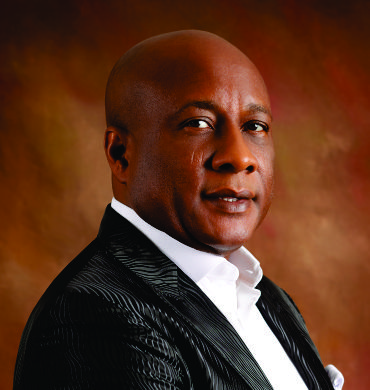
The Chairman and Chief Executive Officer of Air Peace, Allen Onyema, has called for urgent government intervention in Nigeria’s aviation sector, warning that mounting operating costs, multiple taxes, high interest rates and soaring aviation fuel prices are pushing domestic airlines to the brink of collapse.
Speaking during an interview on ARISE Television, Onyema described the challenges facing Nigerian carriers as part of a broader global aviation crisis triggered by geopolitical tensions and rising operational costs. However, he argued that Nigerian airlines are facing a far harsher operating environment than many of their international counterparts.
According to him, the ongoing tensions involving the United States, Israel and Iran have disrupted the global aviation industry, forcing airlines around the world to reduce capacity and cut thousands of flights. While international carriers are grappling with fuel cost increases of between 30 and 40 per cent, Onyema noted that Nigerian operators have had to contend with far steeper increases.
“What is happening to Nigerian aviation is global. It’s a global crisis in the aviation industry. It’s not just limited to Nigeria alone,” he said.
“Since the advent of the US-Israel and Iran war, the aviation world has been adversely affected. Airlines have been cutting flights and struggling to survive. However, in Nigeria, aviation fuel has risen by more than 250 per cent. At one point, it increased from about ₦900 per litre to over ₦3,300 per litre.”
Onyema said the sharp rise in fuel costs has significantly altered airline economics, with operators now spending between ₦12 million and ₦13 million on fuel for flights that previously required about ₦3 million.
Despite the difficult conditions, he commended Nigerian airlines for their resilience, noting that many operators continue to rely heavily on borrowing to sustain operations.
“No Nigerian airline is smiling now. We have all borrowed billions just to buy fuel and keep flying,” he said.
The Air Peace boss also highlighted the challenge of expensive financing, noting that while airlines in developed economies often access loans at single-digit interest rates, Nigerian carriers face borrowing costs of between 29 and 33 per cent.
He warned that the combination of high fuel prices, costly financing and multiple statutory charges has severely weakened the financial position of local airlines.
“The Nigerian airline is actually dead on arrival,” Onyema declared, adding that many carriers have been forced to reduce flight frequencies in a bid to control costs and remain operational.
Onyema urged the Federal Government to review the tax and regulatory burden imposed on airlines, particularly the five per cent Ticket Sales Charge collected by the Nigerian Civil Aviation Authority (NCAA). He argued that aviation should be treated as a strategic economic enabler rather than a source of government revenue.
According to him, more than 70 airlines have collapsed in Nigeria over the years, giving the country one of the highest airline failure rates globally.
He called on President Bola Tinubu to establish an Aviation Taxes and Charges Review Committee comprising government officials, aviation experts and airline operators to examine existing charges and develop measures to improve the industry’s sustainability.
While acknowledging recent efforts by the government to support the sector, Onyema maintained that additional reforms are necessary to prevent further airline failures and protect jobs across the aviation value chain.
He also defended local carriers against what he described as unfair criticism, stressing that safety remains the highest priority for airlines. Referring to recent operational disruptions experienced by Air Peace, he said the airline would never compromise safety standards regardless of public pressure.
Onyema further praised the Dangote Refinery for helping to moderate fuel supply challenges in Nigeria, arguing that the facility has reduced the country’s exposure to international fuel market shocks.
He maintained that the long-term survival of Nigerian airlines will depend on lower operating costs, access to affordable financing, regulatory reforms and stronger government support.
“If those charges are not reviewed, airlines will continue to struggle and more carriers could disappear,” he warned.