










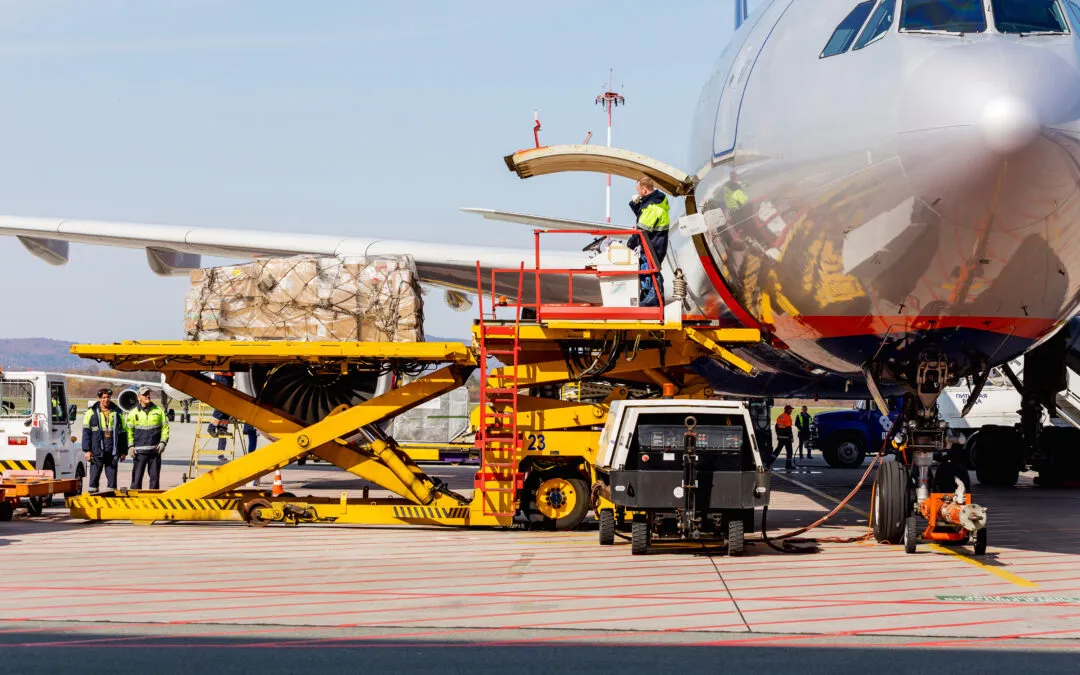
The strong finish recorded by the global air cargo industry in December 2025 is reinforcing the urgency of Nigeria’s ongoing airport cargo reforms, as the country positions itself to capture a greater share of rising international trade flows.
Data released by the International Air Transport Association (IATA) shows that global air cargo demand grew by 4.3 per cent year-on-year in December 2025, while capacity expanded by 4.5 per cent. The improved performance capped a resilient year for the sector, with full-year demand rising by 3.4 per cent despite geopolitical tensions, tariff uncertainties and shifting global trade routes.
For Nigeria, the rebound underscores the strategic importance of efficient airport cargo infrastructure at a time when global supply chains are recalibrating and emerging markets are increasingly seen as alternative sourcing and distribution hubs.
Industry analysts say the improved global outlook places Nigeria’s airport system under renewed pressure to modernise cargo operations, streamline processing and strengthen revenue sustainability—issues at the heart of recent policy actions by the Federal Airports Authority of Nigeria (FAAN).
FAAN has argued that outdated airport charges, some of which have remained unchanged for nearly two decades, have constrained its ability to invest in cargo infrastructure, safety systems and operational efficiency. With global air cargo stabilising and yields remaining over 37 per cent above pre-pandemic levels, airport authorities worldwide are moving to align tariffs with modern cost-recovery models.
The December data also reflects a more balanced supply-demand environment globally, as airlines adjusted capacity deployment and redesigned networks to respond to changing trade patterns. According to IATA, carriers front-loaded shipments ahead of new tariffs and redirected capacity towards faster-growing corridors, including intra-regional trade and emerging markets.
This shift has direct implications for Nigeria, where air cargo plays a critical role in non-oil exports such as perishables, pharmaceuticals, manufactured goods and time-sensitive e-commerce shipments. Analysts note that without sustained investment in cargo terminals, cold-chain infrastructure, apron access and security systems, Nigeria risks missing opportunities created by the global rebound.
FAAN has maintained that recent operational reforms—particularly tighter revenue controls and improved oversight at cargo terminals—have already delivered measurable gains, even in periods of lower cargo throughput. The authority says this validates its position that system stabilisation must precede tariff adjustments, ensuring that any new revenue translates directly into infrastructure upgrades and service improvements.
With IATA projecting moderate but steady growth of 2.4 per cent for global air cargo in 2026, Nigeria’s ability to compete will depend on how quickly its airport ecosystem can scale up efficiency, compliance and capacity. Stakeholders argue that aligning airport charges with international best practices, while maintaining transparent engagement with airlines and freight forwarders, will be critical to unlocking growth.
As global air cargo enters a more predictable phase after years of volatility, Nigeria’s challenge is no longer whether demand exists, but whether its airport infrastructure and regulatory framework are ready to support it. In this context, FAAN’s reform agenda is increasingly being viewed not as a cost burden, but as a necessary foundation for Nigeria’s participation in the next phase of global trade expansion.