







The debate over competition, consolidation and regulation in the U.S. airline industry took centre stage in Washington as members of the House Judiciary Subcommittee on the Administrative State, Regulatory Reform, and Antitrust examined the impact of mergers, acquisitions and government policies on consumers and market competition.
The hearing, titled “The 30,000-Foot View: Competition and Regulation in the U.S. Airline Industry,” brought together industry leaders, legal experts and policymakers to assess the current structure of the airline sector and the role of government oversight in shaping competition.
Among those who testified were Airlines for America President and Chief Executive Officer Chris Sununu, Kristian Stout, Director of Innovation Policy at the International Center for Law and Economics, and Timothy Ravich, Senior Counsel at Tressler LLP.
Opening the hearing, Subcommittee Chairman Congressman Scott Fitzgerald said the U.S. airline industry has undergone a dramatic transformation since the Airline Deregulation Act of 1978, which removed many government controls and opened the market to greater competition. He noted that passenger traffic has nearly quadrupled over the past five decades, while consumers now enjoy a broader range of travel options through legacy, low-cost and ultra-low-cost carriers.
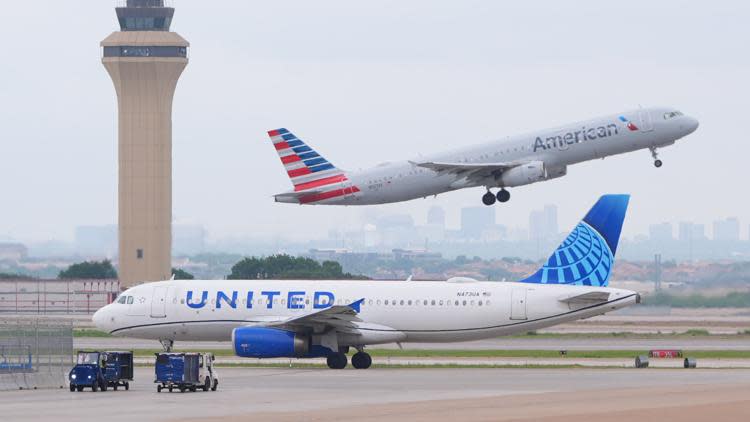
However, Fitzgerald argued that while deregulation increased competition and reduced fares, it also triggered a wave of bankruptcies, mergers and acquisitions that reshaped the industry. According to him, 162 airlines filed for bankruptcy between 1978 and 2005, while today’s market has become increasingly concentrated, with the four largest carriers- American Airlines, United Airlines, Delta Air Lines and Southwest Airlines, controlling nearly 80 per cent of domestic air travel.
The hearing comes amid renewed attention on airline consolidation following reports earlier this year that United Airlines Chief Executive Officer Scott Kirby had explored a potential merger with American Airlines. Although the proposal did not advance after being rejected by American Airlines, the idea reignited discussions about whether another major airline merger could gain regulatory approval in the United States.
Lawmakers also examined the collapse of ultra-low-cost carrier Spirit Airlines, which ceased operations in May after efforts to secure new investment and strategic partnerships failed. The carrier’s financial struggles intensified following rising fuel costs and the collapse of a proposed merger with JetBlue Airways, which was blocked by regulators.
Fitzgerald cited the failed Spirit-JetBlue transaction as an example of what he described as excessive regulatory intervention. He argued that preventing the merger may have eliminated an opportunity for a stronger competitor to emerge against the industry’s dominant carriers.
Beyond mergers, lawmakers discussed structural barriers facing new entrants, including airport slot allocation systems controlled by the Federal Aviation Administration and long-term gate lease agreements at major airports. Fitzgerald maintained that such arrangements often favour established airlines and make it difficult for new competitors to gain access to key markets.
According to him, consumers ultimately benefit when airlines can compete freely, innovate and expand without unnecessary regulatory constraints. He stressed that antitrust enforcement should promote genuine competition rather than simply preserve existing market structures.
The hearing highlighted the growing policy debate over how best to balance competition, consumer protection and industry stability in a sector that remains critical to the U.S. economy. As airline consolidation, airport access and regulatory oversight continue to shape the market, lawmakers signalled that further scrutiny of the industry’s competitive landscape is likely in the months ahead.