









Africa’s aviation leaders have renewed calls for sweeping reforms across the continent’s air transport sector, urging governments and industry stakeholders to tackle infrastructure deficiencies, deepen integration, and ease the financial burdens that continue to hinder growth.
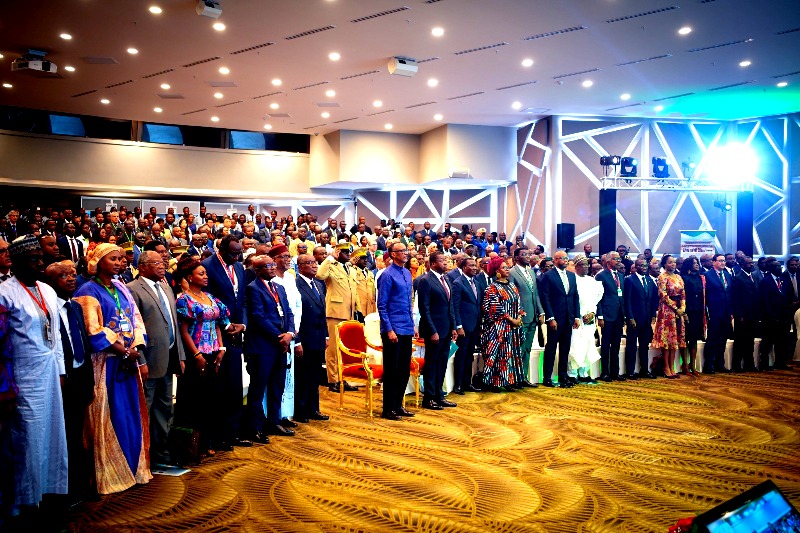
At the just concluded African Air Transport & Convention Expo which held in Lomé, Togo, policymakers and industry advocates stressed that unlocking the full potential of African aviation will require coordinated action on both physical development and policy reforms.
Representing the Chairperson of the African Union Commission, Mahmoud Ali Youssouf, MME Lerato Mataboge underscored the urgent need to upgrade aviation infrastructure across the continent. She noted that Africa must position its airports, air navigation systems, and supporting facilities to accommodate rising passenger volumes and expanding cargo operations.
According to her, building a more connected continent will depend on creating an integrated airspace capable of supporting seamless movement across borders. She also highlighted the importance of accelerating digital transformation throughout the aviation value chain, arguing that technological advancement must be matched by deliberate investment in human capital.
“As aviation continues to evolve technologically, Africa’s workforce must be equipped with the skills needed to thrive in a rapidly changing environment,” she said, calling for immediate action to develop the industry’s talent pipeline.
While infrastructure and modernization dominated one side of the conversation, affordability emerged as another major concern.
Rwandan President Paul Kagame and former Nigerian President Olusegun Obasanjo challenged African governments to rethink the heavy taxes, charges, and fees imposed on air travel, warning that excessive costs are slowing the growth of the sector and limiting connectivity within the continent.
President Kagame argued that infrastructure investments alone would not deliver the desired transformation if air travel remains financially out of reach for many Africans. He observed that the cost of flying within Africa remains disproportionately high, discouraging travel and reducing the competitiveness of African airlines and destinations.
He pointed to Rwanda’s visa-on-arrival policy as an example of how removing barriers can stimulate movement, trade, and economic activity, while advocating stronger regulatory cooperation among African states to make intra-African travel easier and more efficient.
Obasanjo echoed similar sentiments, maintaining that the continent’s aviation industry cannot achieve sustainable growth if passengers are priced out of the market. He urged governments to view lower travel costs as an economic enabler rather than a revenue sacrifice, noting that affordable air transport generates broader benefits through tourism, commerce, investment, and job creation.
Both leaders emphasized that a stronger aviation sector is essential to the success of continental integration efforts, including the movement of people, goods, and services under Africa’s broader economic agenda.
The discussions in Lomé reflected a growing consensus among African aviation stakeholders that the future of the industry’s growth will depend on two critical priorities: modern infrastructure that supports a connected continent and policy reforms that make air travel accessible to more Africans.