










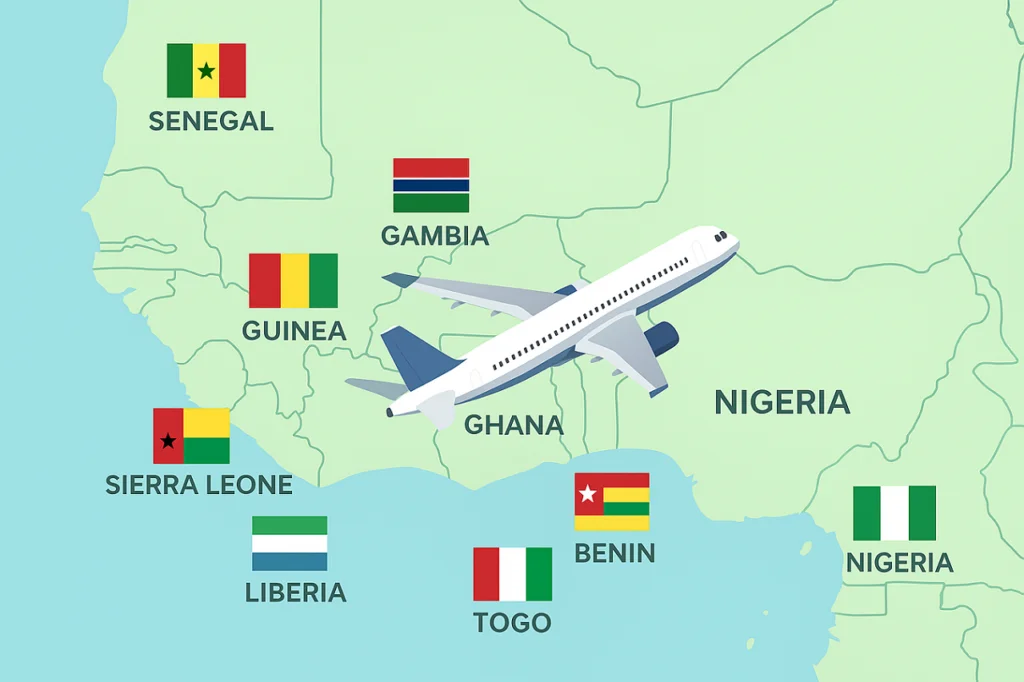
The International Air Transport Association (IATA) has called on member states of the Economic Community of West African States (ECOWAS) to fully implement the bloc’s landmark aviation tax reform aimed at lowering airfares and improving regional connectivity.
Speaking on the sidelines of the 82nd IATA Annual General Meeting and World Air Transport Summit in Rio de Janeiro, Brazil, IATA’s Regional Vice President for Africa and the Middle East, Kamil Al-Awadhi, praised ECOWAS for adopting a policy that reduces aviation-related taxes, fees and levies by up to 25 per cent, describing it as one of the most significant reforms undertaken in the region.
However, he expressed concern that only one member state has so far implemented the directive, despite its potential to transform regional air travel.
“ECOWAS did an amazing job with the 25 per cent reduction in taxes, fees and levies. It is a smart decision that recognises the value of aviation to economic growth and regional integration. Unfortunately, only one country has adopted it so far,” Al-Awadhi said.
The ECOWAS aviation reform, officially adopted through a supplementary act that took effect in January 2026, seeks to align regional aviation charges with international standards and remove a range of taxes considered unrelated to the direct provision of air transport services.
The initiative was designed to tackle one of West Africa’s most persistent aviation challenges: high ticket prices driven by excessive taxes and government-imposed charges. Industry studies have shown that non-aviation levies can account for as much as 60 to 70 per cent of the total cost of a regional airline ticket.
Under the policy, member states are expected to eliminate several statutory travel taxes while reducing passenger service and security charges by a quarter.
Aviation stakeholders believe full implementation could significantly reduce travel costs, stimulate passenger demand and strengthen trade and tourism links within the region.
Al-Awadhi warned that isolated implementation by a few countries would limit the policy’s effectiveness, stressing that aviation operates as a network and requires harmonised action across borders.
He also criticised the introduction of additional charges by some African countries, arguing that such measures undermine efforts to improve affordability and connectivity across the continent.
Industry leaders say broader adoption of the ECOWAS framework could serve as a model for the rest of Africa as governments seek ways to support the objectives of the African Continental Free Trade Area and improve intra-African mobility.