




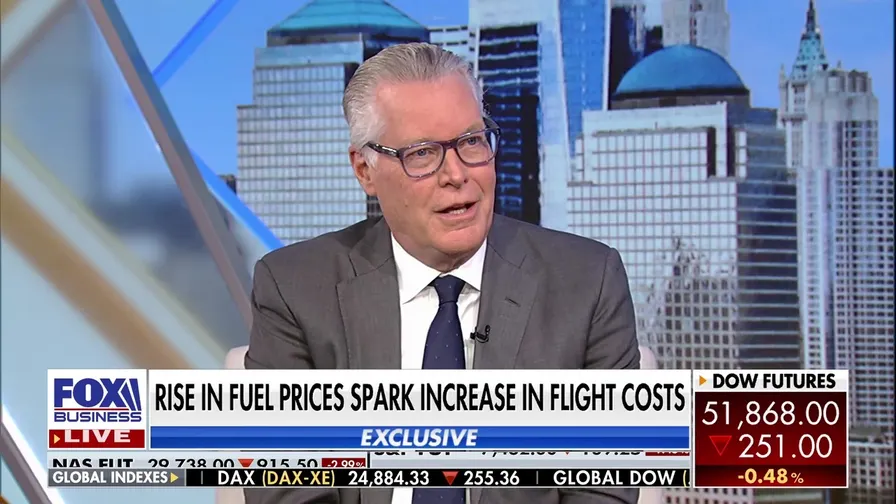
Delta Air Lines Chief Executive Officer, Ed Bastian, says airline ticket prices are unlikely to decline until the aviation industry can increase flight capacity, stressing that easing airspace congestion and improving air traffic management are just as critical as lower fuel prices in reducing fares.
Speaking in an interview on FOX Business’ Mornings with Maria, Bastian explained that the industry’s ability to lower fares is currently constrained by supply rather than demand, noting that airlines are unable to add enough flights because of congestion within the air traffic control system.
“People ask me all the time what’s happening with prices. Prices will come down when we can fly more, when there’s more supply. It’s a supply-and-demand issue. Right now, we’re kind of logjammed,” Bastian said.
According to him, expanding air traffic capacity and improving the efficiency of airspace management would enable airlines to operate more flights, improve connectivity and ultimately place downward pressure on ticket prices.
“There isn’t a lot of supply we can bring in because the air traffic control system is congested. As you open up the skies and improve the flow, that will help bring pricing down and enable us to carry more people to more places,” he added.
His comments come as global airlines continue to recover from months of elevated fuel prices triggered by the conflict involving Iran and disruptions to shipping through the Strait of Hormuz. While oil prices have since moderated following diplomatic efforts to ease tensions, Bastian said the initial shock forced airlines across the industry to raise fares by between 10 and 15 per cent.
“I think the initial shock pushed prices up about 10 to 15 per cent, not just at Delta but across the airline industry. Oil prices have come down now, so I think we’re in a much better position,” he said.
Despite the recent easing in energy prices, Bastian disclosed that the fuel crisis added nearly $2 billion to Delta’s operating costs, leaving the airline with little option but to increase fares.
“We had no choice,” he said, noting that the surge in fuel costs had a significant impact on the airline’s financial performance.
Beyond fuel costs, the Delta chief argued that continued investment in aviation infrastructure and regulatory reforms would have a more lasting impact on airfare affordability. He praised recent efforts to reduce operational bottlenecks in the United States, describing the progress made over the past 18 months as the most significant in decades.
“We have seen more progress being made to eliminate those bottlenecks and allow aviation to flow more smoothly in the last year and a half than we have had in decades,” Bastian said, adding that investing in modern air traffic management would not only improve safety but also increase flight capacity and lower costs for travellers.
Bastian also highlighted Delta’s strong financial position, saying the airline has regained investment-grade ratings from all three major credit agencies, welcomed back Berkshire Hathaway as a major shareholder and continued expanding its maintenance business through Delta TechOps into a multibillion-dollar enterprise. He expressed confidence that Delta is on course to build what he described as a “fortress balance sheet” over the next few years while continuing to invest in technology, international expansion and customer experience.