






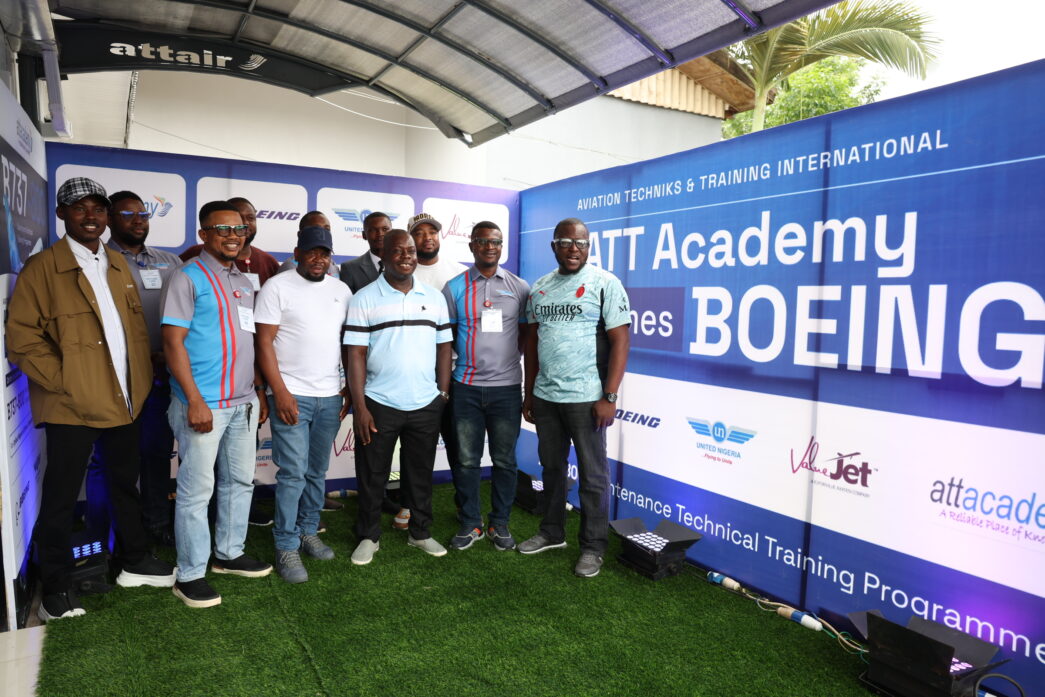
Nigeria’s aviation sector has received a significant capacity-building boost as Boeing commenced an advanced technical training programme for Nigerian airline engineers, while industry stakeholders renewed calls for the establishment of a Boeing flight simulator in the country to reduce foreign exchange outflows and strengthen operational safety.
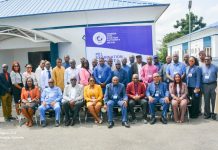
The six-week Boeing Technical Maintenance Training Programme, hosted by Aviation Techniks and Training (ATT) Academy in Lagos, is training engineers from United Nigeria Airlines and ValueJet. The initiative stems from a Memorandum of Understanding signed between Boeing and the Federal Ministry of Aviation and Aerospace Development in 2024 and forms part of broader efforts to deepen technical expertise within Nigeria’s aviation industry.
Managing Director and Chief Executive Officer of ValueJet, Capt. Omololu Majekodunmi, described the programme as a major milestone, noting that conducting such specialised training locally has significantly reduced costs and foreign exchange expenditure for participating airlines.
According to him, the next logical step would be for Boeing to establish a flight simulator facility in Nigeria, a move he said would make recurrent pilot training more accessible, improve safety standards and reduce the need for airlines to send personnel abroad for simulator sessions.
“We have saved foreign exchange that would otherwise have been spent abroad. Our engineers can now receive the same quality of training here in Nigeria. What we would like to see next is a Boeing simulator in Nigeria so airlines do not have to continue spending scarce foreign exchange overseas. It is also a safety issue because access to simulator training becomes easier and more frequent when it is available locally,” Majekodunmi said.
He further expressed optimism that Nigeria could eventually develop sufficient technical capacity to support aircraft assembly operations in the future.
Speaking at the event, Minister of Aviation and Aerospace Development, Festus Keyamo, represented by his Senior Special Adviser on Foreign Direct Investment and Capital Improvement Programmes, Samuel Bajomo, said the partnership reflects the growing confidence of global aviation stakeholders in Nigeria’s aviation reforms.
He explained that beyond infrastructure development, the government remains focused on human capital development, technology transfer and strengthening technical competencies across the industry.
Executive Sales Director for Boeing Commercial Airplanes in Africa, Moore Ibekwe Jr., said the collaboration is part of a broader nine-pillar agreement signed with Nigeria in 2024. He noted that the arrangement covers technical support, safety enhancement, airport infrastructure development and workforce training.
According to Ibekwe, Africa is projected to require about 1,200 new aircraft and more than 77,000 aviation professionals over the next two decades, making investments in training and maintenance capabilities critical to the continent’s aviation growth.
Chief Executive Officer of Aviation Techniks and Training International Limited, Odutola Joshua Olawale, described the programme as a major achievement for Nigeria’s aviation industry, noting that local access to world-class training would accelerate skills development and reduce dependence on foreign training centres.
Also speaking, the United States Consul General in Lagos, Rick Swart, said Boeing’s continued investment in aviation workforce development demonstrates its long-term commitment to Nigeria’s aviation sector. He added that strengthening technical capacity would enhance aviation safety, improve operational efficiency and support the sustainable growth of the industry.
Managing Director of United Nigeria Airlines, Prof. Obiora Okonkwo, welcomed the initiative, noting that a training programme of such calibre would ordinarily have been conducted outside the country. He said bringing the programme to Nigeria represents a significant step towards building indigenous aviation expertise and reducing operational costs for local carriers.