




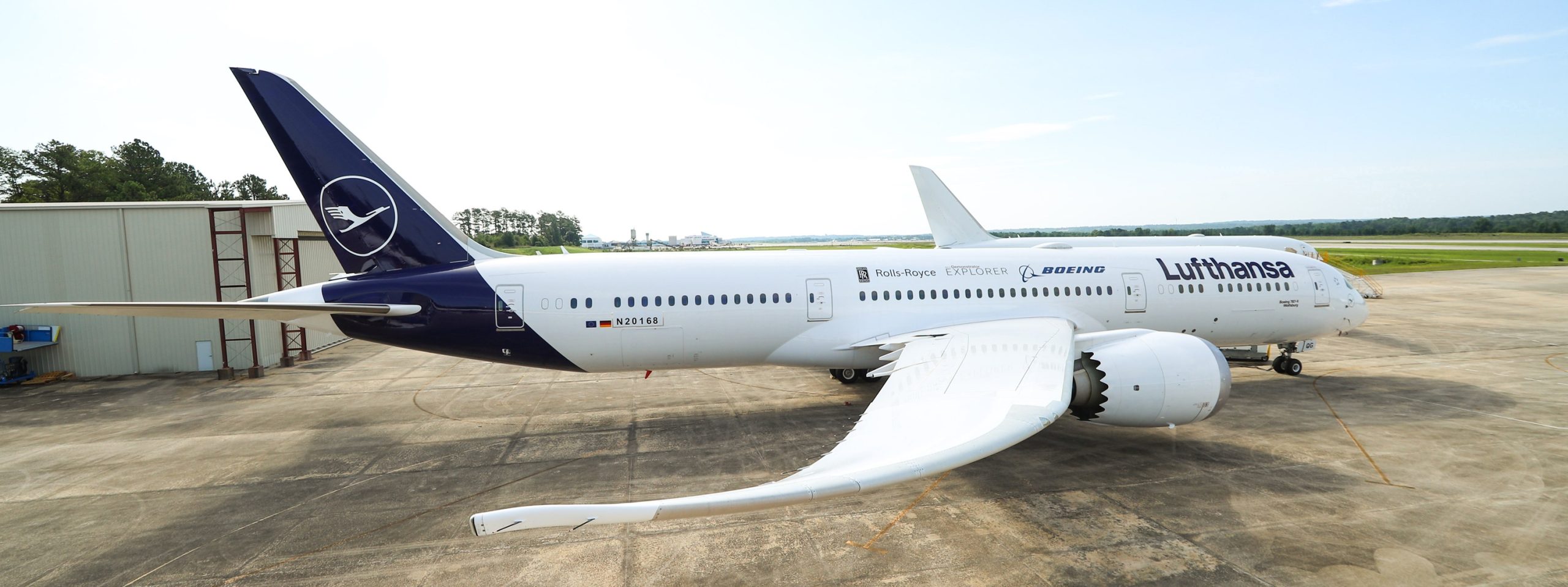
Boeing, Lufthansa Group and Rolls-Royce are set to begin a series of flight tests aimed at advancing next-generation aviation technologies designed to improve fuel efficiency, reduce aircraft noise and support more sustainable air travel.
The flight-test campaign, scheduled to commence later this month at Boeing’s facility in Glasgow, Montana, will use a Boeing 787-9 Dreamliner serving as the company’s 2026 ecoDemonstrator Explorer aircraft. The aircraft, powered by Rolls-Royce Trent 1000 engines, is expected to be delivered to Lufthansa after the completion of the programme, which will run through mid-August.
Among the technologies being evaluated is the Next Generation Inlet, an advanced reduced-length engine inlet featuring innovative acoustic treatments. The design is intended to support the integration of more fuel-efficient engines on future aircraft while reducing engine weight and aerodynamic drag without compromising noise performance.
The programme will also assess modified departure and arrival procedures using Intelligent Operations flight paths. Generated through advanced algorithms and multiple operational data sources, the optimized flight paths are designed to improve fuel efficiency while reducing aircraft noise experienced by communities surrounding airports.
Boeing Chief Technology Officer Lane Ballard said the programme reflects the manufacturer’s commitment to developing innovations that deliver greater value to customers and industry partners.
“Boeing works tirelessly to deliver the aerospace innovations of today and tomorrow. The more efficient inlet and Intelligent Operations flight paths we’re evaluating on this year’s ecoDemonstrator Explorer are among the many promising concepts we’re developing. These enhancements have the potential to make our airplanes even more valuable to our partners, including customers like Lufthansa and suppliers like Rolls-Royce,” Ballard said.
Lufthansa Group Chief Technology Officer Grazia Vittadini described the initiative as another milestone in the long-standing collaboration between the three companies.
“Lufthansa Group and Boeing share a long-standing partnership in aviation. We are pleased to support this year’s Boeing ecoDemonstrator Explorer programme alongside Rolls-Royce. Together, we aim to help advance aviation’s transformation by testing technologies with the potential to improve fuel efficiency, reduce noise and demonstrate their value in real-world operations,” she said.
For Rolls-Royce, the programme represents the culmination of more than a decade of collaborative research focused on improving aircraft efficiency and environmental performance.
Director of Research and Technology, Alan Newby, said the flight tests will validate years of engineering work under operational conditions.
“This programme is the culmination of a decade of collaboration with Boeing, built on a shared ambition to reduce noise, improve efficiency and unlock more sustainable flight. Together with Boeing and Lufthansa, we are testing these technologies where they matter most—in real-world airline operations—to demonstrate the benefits they can deliver for customers and the wider aviation industry,” he said.
The technologies form part of Phase III of the U.S. Federal Aviation Administration’s Continuous Lower Energy, Emissions and Noise (CLEEN) programme, a public-private initiative that supports the development of cleaner, quieter and more efficient aircraft technologies.
Julie Marks, Executive Director of the FAA’s Office of Environment and Energy, said the programme demonstrates how collaboration between government and industry accelerates the integration of advanced technologies into current and future aircraft.
Since its launch in 2012, Boeing’s ecoDemonstrator programme has tested more than 260 technologies in operational environments, helping accelerate innovations that improve aircraft safety, fuel efficiency, emissions, noise reduction, operational performance and passenger experience.
Boeing Vice President of Sustainability, Allison Melia, said advancing these technologies will help airlines modernise their fleets while supporting long-term sustainability objectives.
“The Boeing ecoDemonstrator programme helps us continue delivering improved products that meet our customers’ needs through better fuel economy and lower noise emissions. Advancing these technologies is critical to supporting fleet modernisation strategies, sustainability goals and the continued growth of resilient aviation,” she said.