







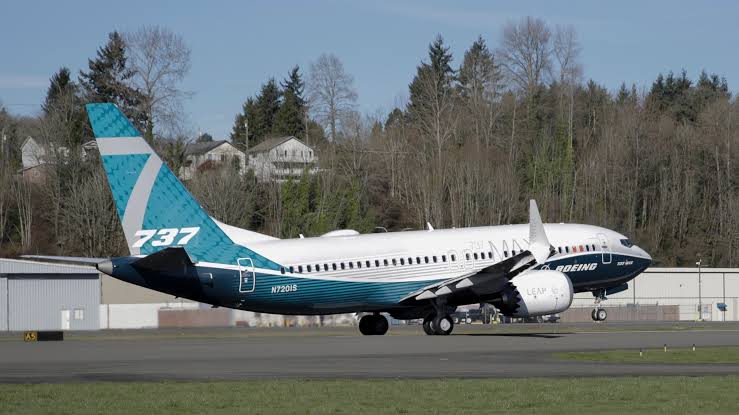
The United States Federal Aviation Administration (FAA) has certified Boeing’s 737 MAX 7 for commercial service, marking a major milestone for the aircraft manufacturer nearly a decade after the smallest member of the 737 MAX family was unveiled and following years of heightened regulatory scrutiny.
The approval clears the way for Boeing to begin deliveries of the aircraft to customers, including launch operator Southwest Airlines, and represents another step in the company’s effort to restore confidence in its bestselling narrow-body aircraft programme after years of safety, quality and production challenges.
The certification follows an extensive review process during which the FAA required Boeing to complete additional testing, implement significant design modifications and address recommendations arising from investigations into the two fatal 737 MAX 8 crashes in Indonesia and Ethiopia in 2018 and 2019 that claimed 346 lives.
As part of the certification process, Boeing was required to update the aircraft’s flight-control software, improve cockpit alert systems for pilots and redesign the engine anti-ice system to eliminate the risk of overheating. The FAA said the aircraft met all applicable safety requirements before approval was granted.
The regulator stressed that its oversight of Boeing would continue beyond the certification, noting that safety inspectors will remain at the manufacturer’s production facilities to monitor manufacturing processes, observe its Safety Management System and assess the company’s overall safety culture.
The approval comes after years of delays that pushed certification well beyond Boeing’s original target. The programme also faced additional scrutiny following the January 2024 mid-air cabin panel blowout involving a nearly new Alaska Airlines 737 MAX 9, which prompted tighter regulatory oversight of Boeing’s production and quality control systems.
Stephanie Pope, President and Chief Executive Officer of Boeing Commercial Airplanes, described the certification as the result of years of work by engineers and flight-test teams navigating technical challenges, the COVID-19 pandemic and a more rigorous certification framework.
Preparations are now underway for the aircraft’s entry into commercial service. The 737 MAX 7, which accommodates between 135 and 160 passengers, is designed primarily for short- and medium-haul routes and offers approximately 10 per cent greater range than earlier variants in the MAX family.
Southwest Airlines, the launch customer for the aircraft, welcomed the approval and said it looks forward to introducing the jet into its fleet in the coming months, although the model has not yet been incorporated into the carrier’s published schedule through March 2027.
The certification is also expected to accelerate work on the larger 737 MAX 10, which remains under FAA review. Boeing has indicated that lessons learned during the MAX 7 certification process are already being applied to the MAX 10 programme and the development of its next-generation aircraft.
The manufacturer has already built around 30 MAX 7 aircraft and several MAX 10s awaiting certification and delivery. The FAA has also recently eased production restrictions on the 737 MAX programme after determining that Boeing had demonstrated more consistent manufacturing quality, allowing the company to gradually increase monthly output.
For Boeing, the approval of the 737 MAX 7 represents not only the completion of a lengthy certification process but also another significant step in rebuilding regulatory confidence and strengthening its position in the highly competitive single-aisle aircraft market.