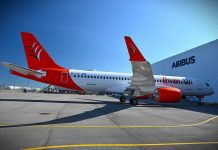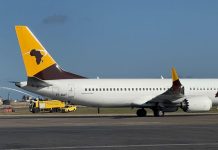









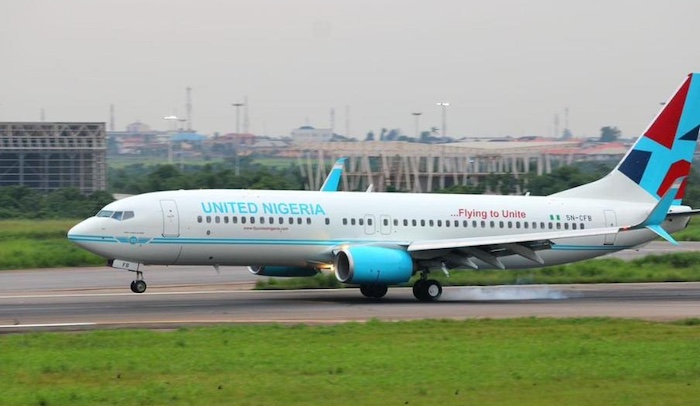
United Nigeria Airlines (UNA) has unveiled an ambitious regional and international expansion strategy aimed at reducing the dominance of foreign airlines on routes serving Nigerian travellers while strengthening the country’s position in African air connectivity.
The airline’s Chief Commercial Officer, Adedayo Olawuyi, disclosed the plan in Lagos, saying the carrier intends to expand its network across West and Central Africa before launching services to selected long-haul destinations, subject to aircraft deliveries and regulatory approvals.
Olawuyi said foreign airlines currently dominate many international routes from Nigeria, largely because indigenous carriers have not developed strong regional networks. He noted that passengers travelling within Africa are often forced to transit through foreign hubs to reach neighbouring countries, increasing travel time and costs.
He cited the example of passengers travelling from Lagos to Dakar, many of whom currently connect through Lomé, Abidjan or Banjul instead of flying directly. According to him, Nigerian airlines must compete more aggressively by establishing direct regional services.
As part of its expansion strategy, United Nigeria Airlines plans to launch flights to Monrovia, Banjul, Dakar, Abidjan, Conakry, Douala, Libreville and Johannesburg. The airline is also evaluating future services to the United Kingdom, the United States, Canada, Turkey, Dubai and Saudi Arabia.
Olawuyi, however, identified airport infrastructure and transit procedures as major obstacles to Nigeria’s ambition of becoming a regional aviation hub. He said inadequate transit facilities, immigration bottlenecks and visa requirements for connecting passengers discourage airlines from routing traffic through Nigeria.
He noted that successful aviation hubs such as those in the United Arab Emirates and Qatar have benefited from seamless transit processes and modern airport infrastructure, adding that Nigeria could achieve similar success by improving its passenger experience.
The airline welcomed ongoing airport infrastructure projects across the country, expressing optimism that new terminals would enhance connectivity and operational efficiency.
According to Olawuyi, the carrier is also assessing Abuja and Asaba as potential future hubs as it strengthens its domestic network ahead of its international expansion.
He stressed that domestic growth remains the foundation of the airline’s long-term strategy, noting that United Nigeria Airlines is currently the country’s second-largest airline by passenger traffic and capacity. He added that the expansion will be supported through a combination of fleet acquisition, aircraft leasing, interline partnerships and code-share agreements to improve network reach and commercial viability.