










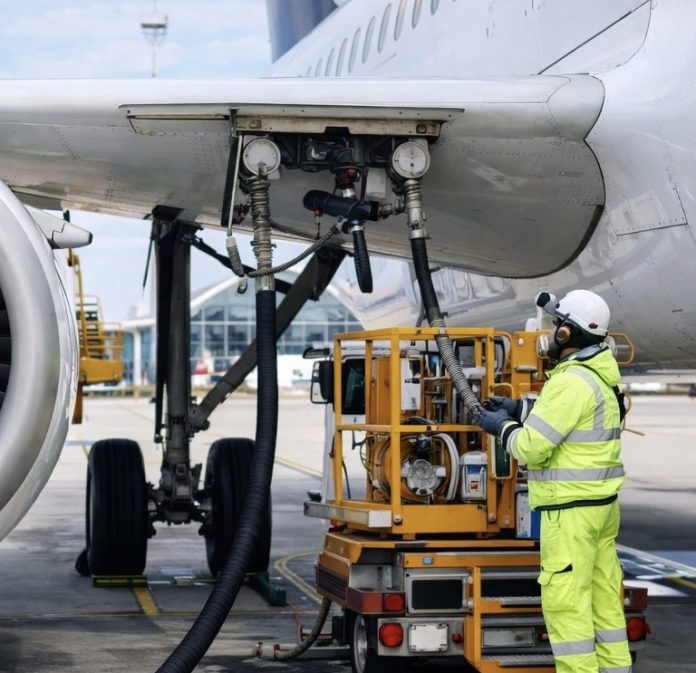
The International Air Transport Association (IATA) has warned that the ongoing geopolitical crisis in the Middle East has exposed a critical weakness in Africa’s aviation ecosystem: inadequate jet fuel storage infrastructure.
Speaking during the 82nd IATA Annual General Meeting and World Air Transport Summit in Rio de Janeiro, Brazil, IATA’s Regional Vice President for Africa and the Middle East, Kamil Al-Awadhi, said the disruption of fuel supply routes through the Strait of Hormuz has underscored Africa’s heavy dependence on imported aviation fuel and its limited capacity to withstand global supply shocks.
The Strait of Hormuz, through which a significant share of the world’s petroleum products and refined aviation fuel passes, has experienced major disruptions following escalating regional tensions. According to Al-Awadhi, tanker movements through the corridor have dropped sharply, creating pressure across international fuel supply chains and exposing vulnerabilities in markets that rely heavily on imports.
For many African countries, where aviation fuel is sourced largely from Gulf producers, the impact has been immediate. Alternative supply routes have become more expensive and time-consuming, while rising insurance costs and shipping delays have added further pressure to already stretched logistics networks.
Al-Awadhi noted that the continent’s biggest challenge is not necessarily an immediate shortage of fuel but the absence of substantial reserve capacity that could cushion airlines and airports during periods of disruption.
“The problem with Africa is that it did not need large storage facilities because fuel from the Gulf Cooperation Council countries could reach the continent within days. This situation has demonstrated the importance of increasing storage capacity in case such disruptions occur again,” he said.
While no African country has officially reported a fuel shortage, industry experts warn that airports across the continent remain vulnerable to future supply interruptions because most operate with limited reserves.
IATA Director General Willie Walsh has also stressed the need for stronger fuel resilience measures, arguing that governments, refiners and airlines must work together to establish strategic fuel reserves, diversify supply sources and reduce dependence on a single region for aviation fuel supplies.
The association believes Africa’s long-term solution lies not only in expanding storage capacity but also in developing local refining capabilities and accelerating investments in Sustainable Aviation Fuel (SAF).
According to IATA estimates, Sub-Saharan Africa possesses significant potential to become a major supplier of SAF feedstock by 2050. Industry leaders argue that developing domestic production could strengthen energy security while reducing the continent’s exposure to geopolitical disruptions.
As passenger traffic across Africa continues to grow, aviation stakeholders warn that addressing fuel infrastructure gaps will be critical to ensuring the sector’s long-term stability and competitiveness.