








Nigeria has taken a major step toward reducing aviation emissions with the inauguration of a National High-Level Sustainable Aviation Fuel (SAF) Steering Committee to coordinate the country’s transition to cleaner aviation fuel and position it as a future production hub for sustainable aviation fuel in Africa.
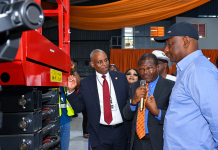
The seven-member committee, inaugurated by the Federal Government in Abuja, will provide strategic direction for the implementation of Nigeria’s Sustainable Aviation Fuel Programme, strengthen collaboration across key sectors and oversee policies aimed at decarbonising the country’s aviation industry.
The committee comprises the Minister of Aviation and Aerospace Development, the Minister of Innovation, Science and Technology, the Minister of Agriculture and Food Security, the Minister of State for Petroleum Resources, the Director-General of the Nigerian Civil Aviation Authority (NCAA), the Director-General of the National Council on Climate Change and the Managing Director of NNPC New Energy Limited.
The inauguration took place during a high-level meeting on Sustainable Aviation Fuel implementation organised by the NCAA in partnership with the International Civil Aviation Organization (ICAO), the European Union (EU) and the European Union Aviation Safety Agency (EASA).
The event also featured the presentation of Nigeria’s National Sustainable Aviation Fuel Feasibility Study and the launch of the ICAO-supported Sustainable Aviation Fuel Business Implementation Study, both of which are expected to provide the technical and commercial framework for developing a domestic SAF industry.
Represented by the Director of Air Transport Management, Alhaji Mohammad Tijani, the Minister of Aviation and Aerospace Development, Festus Keyamo, described the initiative as another milestone in Nigeria’s effort to build a resilient, competitive and environmentally sustainable aviation sector.
He said while aviation remains a key driver of economic growth, trade, tourism and regional integration, the industry must also contribute to global efforts to reduce greenhouse gas emissions. According to him, the steering committee will coordinate implementation of the national programme, promote collaboration among government agencies, the private sector, financial institutions, researchers and development partners, and provide the policy direction needed to accelerate the adoption of sustainable aviation fuel.
Keyamo noted that Nigeria’s abundant feedstock resources, including cassava and agricultural residues, present a significant opportunity to develop a thriving SAF industry capable of attracting investment, creating jobs, strengthening energy security and supporting economic diversification.
He explained that the feasibility study provides an evidence-based assessment of the country’s production potential, while the Business Implementation Study will identify viable commercial models and investment opportunities capable of attracting both local and international investors.
The minister reaffirmed the Federal Government’s commitment to establishing the regulatory framework, incentives and enabling policies required to support investment in sustainable aviation fuel production, while maintaining Nigeria’s obligations under the Carbon Offsetting and Reduction Scheme for International Aviation (CORSIA) and other global climate initiatives.
Director-General of the NCAA, Capt. Chris Najomo, said the feasibility study was developed under ICAO’s Assistance, Capacity-building and Training for Sustainable Aviation Fuels (ACT-SAF) Programme with financial support from the European Union and technical assistance from EASA.
He said the study provides a practical roadmap for converting Nigeria’s agricultural and industrial feedstock into commercially viable sustainable aviation fuel, adding that the NCAA, as secretariat of the steering committee, will continue coordinating stakeholders to ensure successful implementation of the national programme.
Representatives of ICAO, the European Union, the Federal Ministry of Innovation, Science and Technology, the Ministry of Agriculture and Food Security, the Ministry of Petroleum Resources, the National Council on Climate Change and NNPC New Energy Limited also pledged continued collaboration to support Nigeria’s transition to cleaner aviation fuel and strengthen its ambition of becoming a regional leader in sustainable aviation fuel production.