










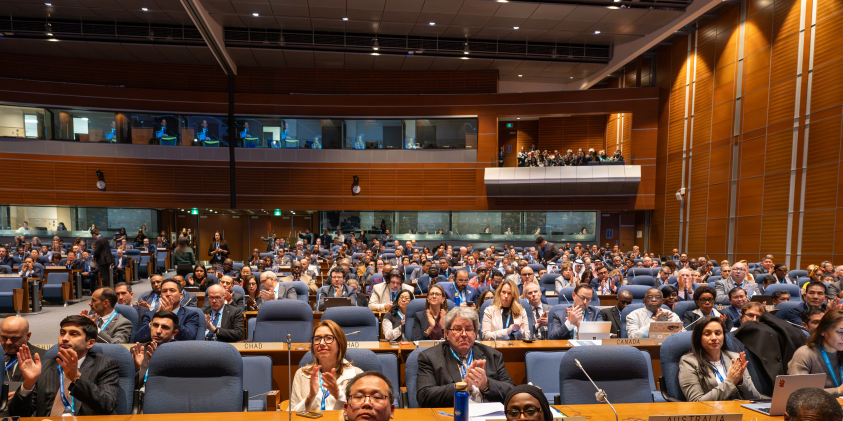
Governments have agreed on a comprehensive package of economic reforms aimed at attracting investment into global aviation, strengthening international connectivity and improving the regulatory frameworks needed to support the industry’s long-term growth.
The commitments were formalised through a Ministerial Declaration at the International Civil Aviation Organization’s (ICAO) Seventh Worldwide Air Transport Conference, establishing a shared framework for expanding air transport, mobilising investment in civil aviation infrastructure and strengthening institutional capacity and regulatory effectiveness.
The declaration reflects growing recognition among governments of the need to modernise the economic and legal structures governing international air transport while preparing the industry for significant technological and market changes.
Speaking at the closing ceremony, ICAO Secretary General Juan Carlos Salazar said: “We must unlock the full potential of air transport by committing to robust and sustainable growth.” He added that the declaration represented a commitment by member states to the development and expansion of international aviation.
More than 1,500 delegates representing 154 ICAO Member States and observer organisations attended the week-long conference, where discussions centred on reforms to strengthen the industry’s economic foundations and improve its capacity to respond to evolving global demands.
Delegates emphasised the importance of modernising regulatory frameworks, increasing investment in aviation infrastructure and developing a skilled workforce capable of supporting future industry requirements. They also called for regulatory and institutional systems to keep pace with technological innovation and emerging business models.
A major focus of the discussions was the need to create more favourable conditions for investment, particularly in emerging economies expected to generate a significant proportion of future aviation growth. Improved connectivity, stronger institutions and effective regulation were identified as critical factors in enabling these markets to maximise aviation’s contribution to trade, tourism and broader economic development.
The agreed reforms are aligned with ICAO’s long-term strategic vision for 2050, which seeks to make air transport accessible to all while achieving zero fatalities and net-zero carbon emissions.
Salazar described stronger global connectivity as essential to sustainable economic development, noting that the conference had established an economic framework to advance the organisation’s strategic ambitions.
The policy recommendations adopted at the conference will now be submitted to the ICAO Council for review and implementation through the organisation’s global policies, standards and strategic plans.
The outcome is expected to guide future international aviation policy, with governments seeking to strengthen the investment environment, improve regulatory effectiveness and ensure the sector is better positioned to deliver sustainable growth and wider economic benefits.