







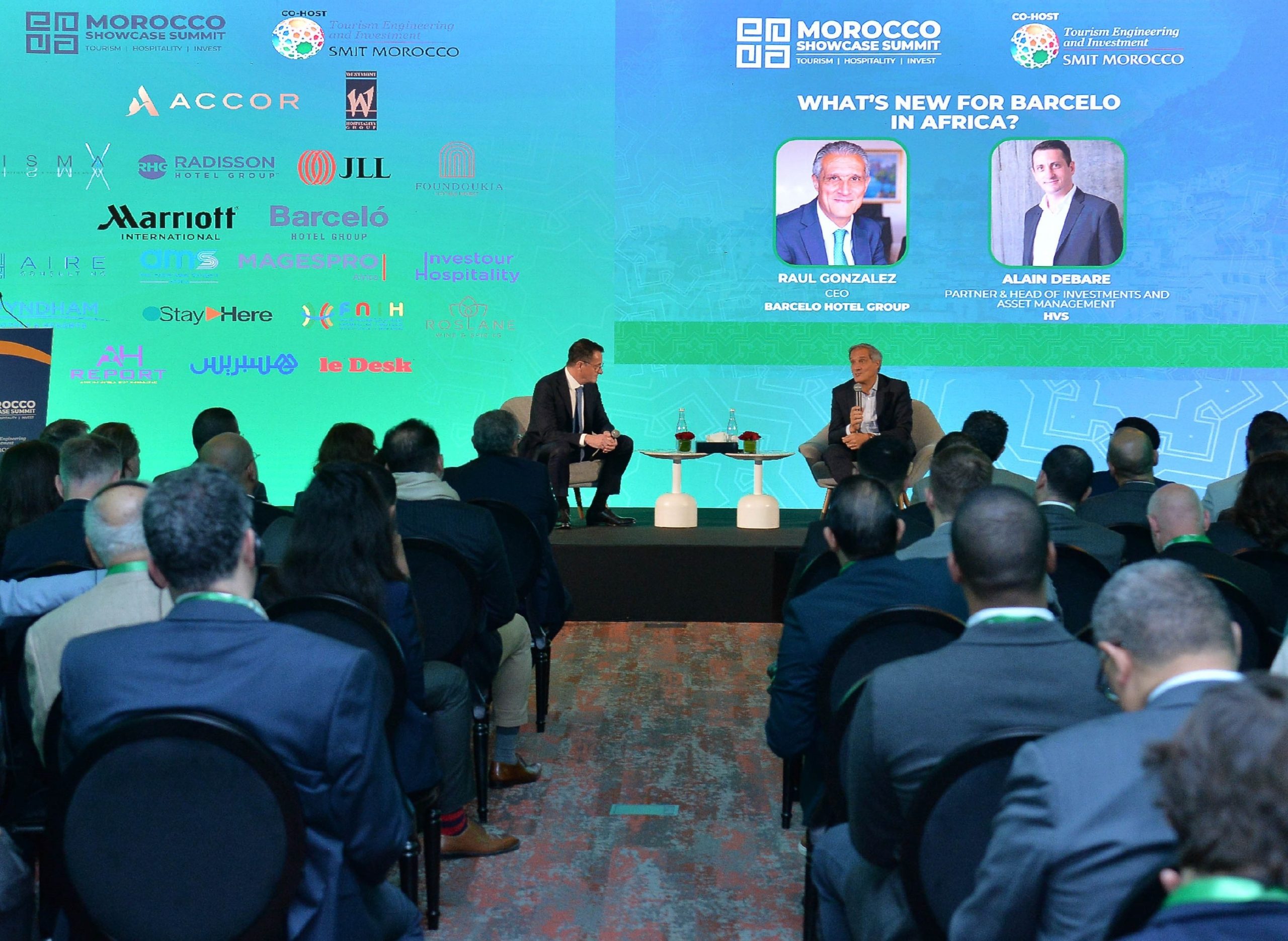
Morocco is strengthening its position as a leading destination for hospitality and real estate investment as it prepares for the 2030 FIFA World Cup, with major hotel expansions, property transactions and new sources of capital supporting the country’s tourism ambitions.
The North African kingdom, already the continent’s most-visited country, is accelerating infrastructure and hospitality development ahead of the global sporting event. The government plans to add 60,000 hotel beds before 2030, creating opportunities for international hotel groups, property developers and institutional investors.
Against this backdrop, the third annual Morocco Showcase will bring together investors, developers, hotel operators and other industry stakeholders in Casablanca on 26 November. The country’s tourism development agency, Société Marocaine d’Ingénierie Touristique (SMIT), is supporting the event as its institutional investment partner.
International hotel groups are already positioning themselves for the anticipated growth. Radisson Hotel Group, for instance, plans to expand its Moroccan portfolio from 11 to 30 hotels by 2030, reflecting confidence in the country’s tourism outlook and investment climate.
“Morocco offers a compelling opportunity for hotel development, supported by investment in infrastructure and a clear ambition to grow its tourism sector,” said Erwan Garnier, Associate Vice President, Development, Africa, at Radisson Hotel Group.
He said the group was working with property owners to identify suitable brands and operating models for different locations, from urban business centres to established leisure destinations. With preparations for the World Cup gathering pace, Garnier noted that new developments needed to deliver lasting commercial value beyond the tournament.
Morocco’s hotel development pipeline reinforces that outlook. W Hospitality Group’s 2026 Hotel Chain Development Pipelines in Africa report ranks the country second on the continent, with 75 hotels comprising 10,606 rooms in development. About 70 per cent of the planned rooms are scheduled to open in 2026 and 2027.
David Desta, Vice President, Hotels & Hospitality, Africa, at JLL, said strong visitor demand, expanding air connectivity, government-backed tourism initiatives and the growth of international hotel brands were supporting long-term investor confidence.
He expects continued interest across hospitality, mixed-use developments and the wider real estate sector, particularly in major gateways such as Casablanca and Marrakech.
Recent transactions also illustrate the scale of activity in the market. Since 2025, Casablanca-listed hotel owner and operator Risma has completed two major acquisitions: a plot on Tangier’s Corniche and the purchase of CMG, which owns Radisson Blu Marrakech Carré Eden and the adjoining shopping mall. The transactions were valued at a combined $67 million.
Risma also sold Sofitel Casablanca Tour Blanche to Pickalbatros for $46 million. In April, the company strengthened its partnership with Accor on hotel renovations and repositioning, alongside the development of the Tangier Corniche project.
Morocco’s financial markets are also evolving to support investment. The Casablanca Stock Exchange, with a market capitalisation exceeding MAD1 trillion, or approximately $103 billion, recorded its 80th listing in December 2025 before launching a futures market and clearing house in April 2026.
Institutional investors are showing interest in the country’s tourism sector as well. Kasada, the pan-African real estate private equity firm backed by the Qatar Investment Authority and Accor, has been selected by the Mohammed VI Investment Fund to manage a Moroccan tourism fund.
The country’s credit outlook has added to investor attention. In March, S&P Global affirmed Morocco’s investment-grade rating of BBB- with a stable outlook, while Moody’s affirmed its Ba1 rating with a positive outlook, citing the country’s institutional and governance strengths.
API Events Commercial Director Murray Anderson said global capital, including investment from Gulf sovereign wealth funds and development finance institutions, was increasingly supporting Morocco’s hospitality and infrastructure ambitions. He said Morocco Showcase would bring together established market players and prospective investors to explore opportunities shaping the country’s property and tourism sectors before and after the 2030 World Cup.
The conference will examine hotel performance across Morocco’s main cities, including occupancy, average daily rates and revenue per available room, alongside the potential effects of major events on visitor demand. Discussions will also cover the expansion of local and regional hotel operators, the entry of boutique and luxury brands, and opportunities in eco-tourism.
Beyond hospitality, the programme will explore how Moroccan family offices are moving towards co-investment and fund structures, how diaspora interest can translate into committed capital, and the conditions required to make mixed-use developments commercially viable. Other sessions will focus on logistics opportunities along the Tangier Med corridor, investment in special economic zones, and yields in office and retail property.
The closing plenary will give Casablanca, Tangier, Marrakech and Rabat an opportunity to present their investment propositions directly to capital providers, highlighting land availability, pricing, suitable property sectors and emerging opportunities.
The event will conclude with the Morocco Showcase Awards gala dinner, recognising achievements across commercial and residential property, hospitality, green development, innovation and lifetime achievement.
Morocco Showcase will take place on 26 November at the Marriott Hotel in Casablanca. The in-person conference will be conducted in English and French, with parallel sessions, a deals room and an awards gala.