







The Federal Government has unveiled plans to extend Lagos’ existing rail network to the domestic and international terminals of the Murtala Muhammed Airport (MMA), a move aimed at enhancing connectivity and accelerating efforts to position Lagos as a leading aviation and logistics hub in Africa.
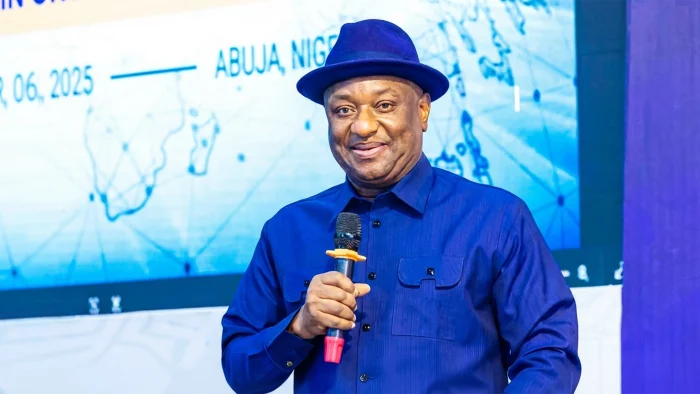
Minister of Aviation and Aerospace Development, Festus Keyamo, disclosed the plan at the opening of Invest Lagos 3.0, an investment forum organised by the Lagos State Government, where he highlighted ongoing collaborations between the Federal Ministry of Aviation and the state government on the project.
According to Keyamo, the proposed extension will link the current rail line terminating at Ikeja Bus Stop to the General Aviation Terminal (GAT), continue through the Murtala Muhammed Airport Terminal Two (MMA2) operated by Bi-Courtney Aviation Services Limited (BASL), and terminate at the international terminal.
“We are working with the Lagos State Government to extend the rail line all the way to the domestic terminal through BASL and onward to the international airport. The project is about to commence and represents the next major step in Lagos’ aviation development,” he said.
The minister noted that Lagos remains the focal point of Nigeria’s aviation industry, accounting for about 67 per cent of passenger traffic across the country’s airports. He said the state’s strategic location gives it a competitive advantage as a gateway connecting Africa with Europe, the Middle East, Southern Africa and South America.
“Within approximately six hours from Lagos, travellers can reach major destinations in Europe, the Middle East, Southern Africa and South America. That geographical advantage positions Lagos to compete effectively with established aviation hubs across the continent,” Keyamo said.
He added that the rail project forms part of a broader aviation development strategy under the administration of President Bola Tinubu, which includes significant investments in airport infrastructure and modernisation.
Keyamo revealed that the Federal Government has committed about $500 million to the reconstruction and upgrade of the ageing international terminal at the Lagos airport, with the goal of transforming it into a modern facility capable of handling increasing passenger and cargo traffic.
The minister also pointed to recent expansions in Nigeria’s international airport network, including the designation of Victor Attah International Airport and Maiduguri International Airport as international gateways, bringing the total number of international airports in the country to seven.
He further cited the resolution of the long-standing dispute between the Federal Government and Bi-Courtney Aviation Services Limited as evidence of the administration’s commitment to strengthening investor confidence and promoting private sector participation in aviation infrastructure development.
Keyamo urged local and foreign investors to take advantage of emerging opportunities within the sector, including the proposed airport project in the Lekki-Epe corridor, which is being championed by the Lagos State Government as part of its long-term transportation and economic development strategy.