










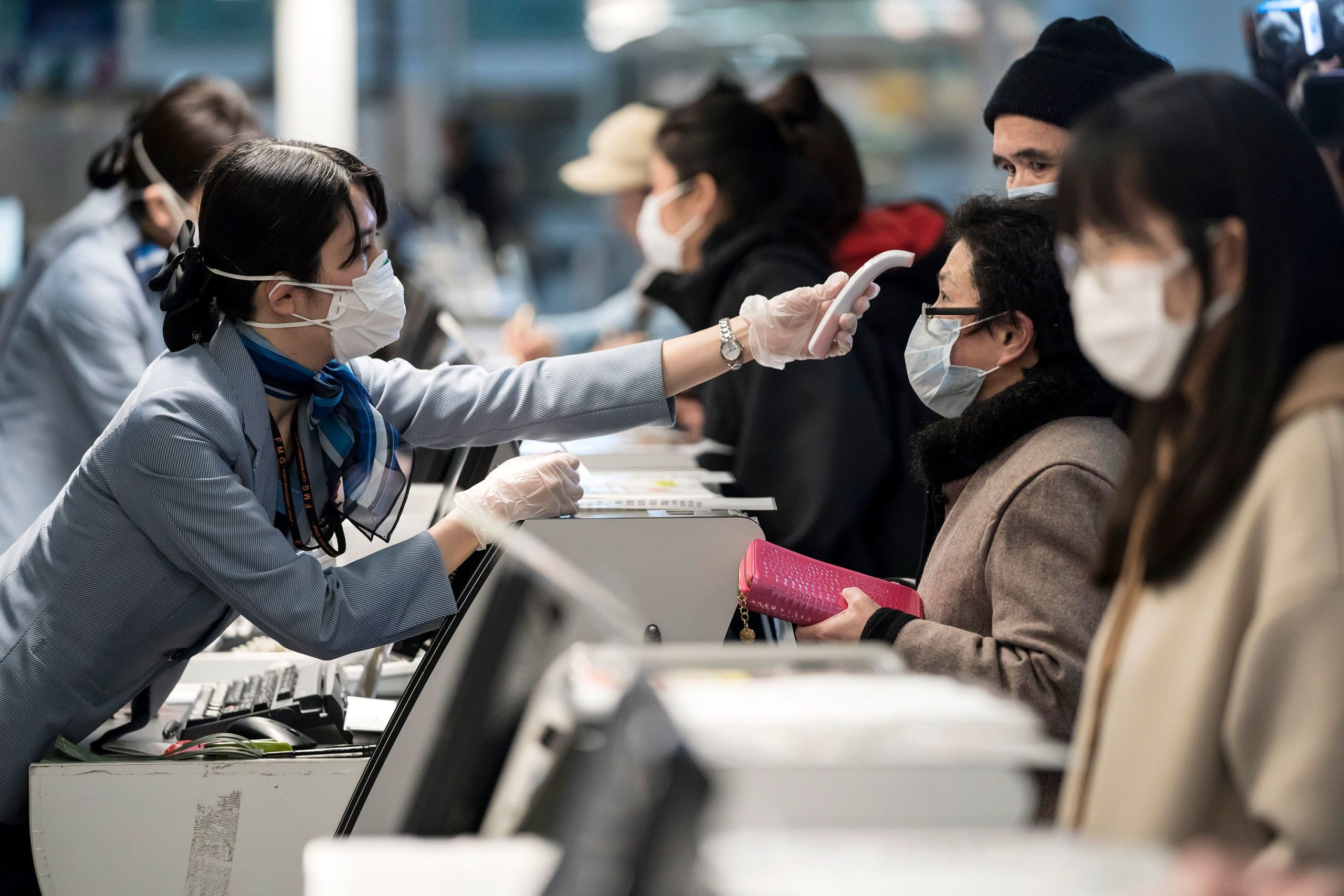
The Nigeria Civil Aviation Authority (NCAA) has directed all domestic and international airlines operating in the country to immediately strengthen health surveillance and screening procedures at airports following a fresh Ebola outbreak in parts of East and Central Africa.
The heightened alert comes after the World Health Organisation (WHO) declared the outbreak in the Democratic Republic of Congo (DRC) and Uganda a Public Health Emergency of International Concern (PHEIC), raising fears over possible cross-border transmission through regional travel networks.
According to the NCAA, the current outbreak involves the Bundibugyo ebolavirus (BVD), a rare and severe strain of the Ebola virus for which there are currently no widely licensed vaccines or specific therapeutic treatments.
Health authorities in the affected countries have reported more than 300 suspected cases and over 131 fatalities within the East and Central African corridor, prompting urgent international public health responses.
In a circular issued to airlines and aviation stakeholders, the NCAA said the directive became necessary because of the aviation sector’s critical role in preventing the international spread of infectious diseases through air travel.
Although no confirmed Ebola case linked to the outbreak has been reported in Nigeria, the authority stated that it is collaborating closely with the Federal Ministry of Health, the Nigeria Centre for Disease Control (NCDC), Port Health Services, and international health agencies to monitor developments and strengthen preventive measures.
The NCAA disclosed that health officials in the DRC recently identified clusters of severe illnesses among healthcare workers in the Bunia Health Zone in the northeastern part of the country, further heightening international concern.
The authority noted that treatment for the Bundibugyo strain remains largely supportive and symptom-based due to the absence of a specifically approved vaccine.
As part of the new directives, the NCAA instructed pilots to immediately notify Air Traffic Control of any suspected communicable disease cases onboard aircraft in line with the Nigeria Civil Aviation Regulations.
Flight crew members were also directed to complete and submit Aircraft General Declaration forms for all suspected cases, while airlines must ensure passenger locator forms are properly filled and handed over to Port Health Services upon arrival.
The regulatory authority further mandated airlines to equip aircraft with adequate first-aid kits, universal precaution kits, and emergency medical kits to manage possible onboard health emergencies.
Operators were equally advised to reinforce crew training on the identification, reporting, and management of communicable diseases, while maintaining strict adherence to infection prevention and control procedures.
The NCAA stated that airport disease surveillance systems, border screening procedures, contact tracing mechanisms, and case reporting protocols are also being strengthened nationwide as part of broader efforts to prevent any possible importation of the virus into Nigeria.
The authority listed common symptoms of Ebola Virus Disease to include sudden fever, severe weakness, intense headache, vomiting, abdominal pain, and bleeding symptoms such as nosebleeds and vomiting of blood.
It stressed that early detection, rapid reporting, and strict compliance with public health procedures remain critical to containing the spread of the disease and protecting passengers, crew members, and the wider public.
The latest directive reflects growing concerns among aviation and health authorities over the role of increasing regional mobility and interconnected flight routes in accelerating the spread of infectious diseases across borders.