








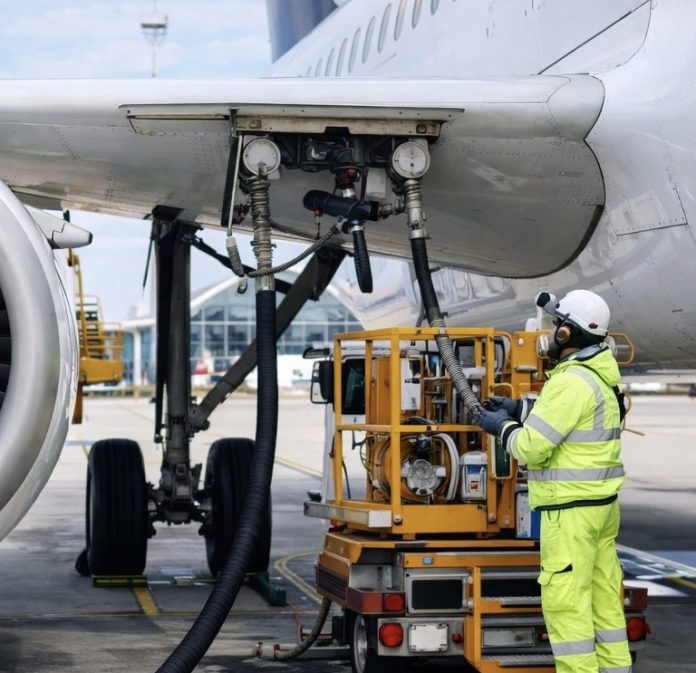
Nigeria’s government has introduced a pricing framework for aviation fuel and approved credit support for airlines in a bid to avert widespread flight disruptions triggered by soaring operational costs.
According to a government document, the Nigerian Midstream and Downstream Petroleum Regulatory Authority has set a benchmark price range for Jet A1 between ₦1,760 and ₦1,988 per litre in Lagos, while Abuja prices are slightly higher, as part of efforts to rein in volatility in the market.
The intervention follows emergency engagements with industry stakeholders after domestic airlines warned that fuel prices had surged by over 270 percent in recent weeks, pushing operating costs to unsustainable levels and raising the risk of capacity cuts or a sector-wide shutdown.
As part of the measures, airlines will also be allowed to procure fuel on a 30-day credit window, easing immediate cash flow pressures. The government has further directed the Ministry of Aviation to mediate ongoing disputes between airline operators and fuel marketers, particularly around outstanding debts.
The pricing band, based on recent international benchmarks, is expected to improve transparency and reduce excessive mark-ups within the supply chain. Regulators have also recommended that marketers sell directly to airlines to eliminate intermediaries and lower costs.
In addition, authorities plan to engage the Dangote Petroleum Refinery and Petrochemicals over premium charges applied to jet fuel pricing, amid concerns that domestic rates remain significantly higher than global trends despite substantial local supply.
Other proposals include streamlining the number of airside fuel distributors to ensure efficiency and compliance, as well as considering aviation fuel under Nigeria’s naira-for-crude initiative to reduce foreign exchange exposure for airlines.
President Bola Tinubu had earlier approved a 30 percent relief on airlines’ debts to aviation agencies and directed stakeholders to agree on a fair and sustainable fuel pricing structure within a short timeframe.
Despite the intervention, regulators warned that prices may still fluctuate due to global market dynamics, particularly ongoing geopolitical tensions affecting energy supply chains.
The measures come as airlines continue to grapple with rising costs, with some operators indicating plans to reduce flight frequencies if conditions do not improve, even as the government pushes to stabilise the sector and maintain service continuity.