








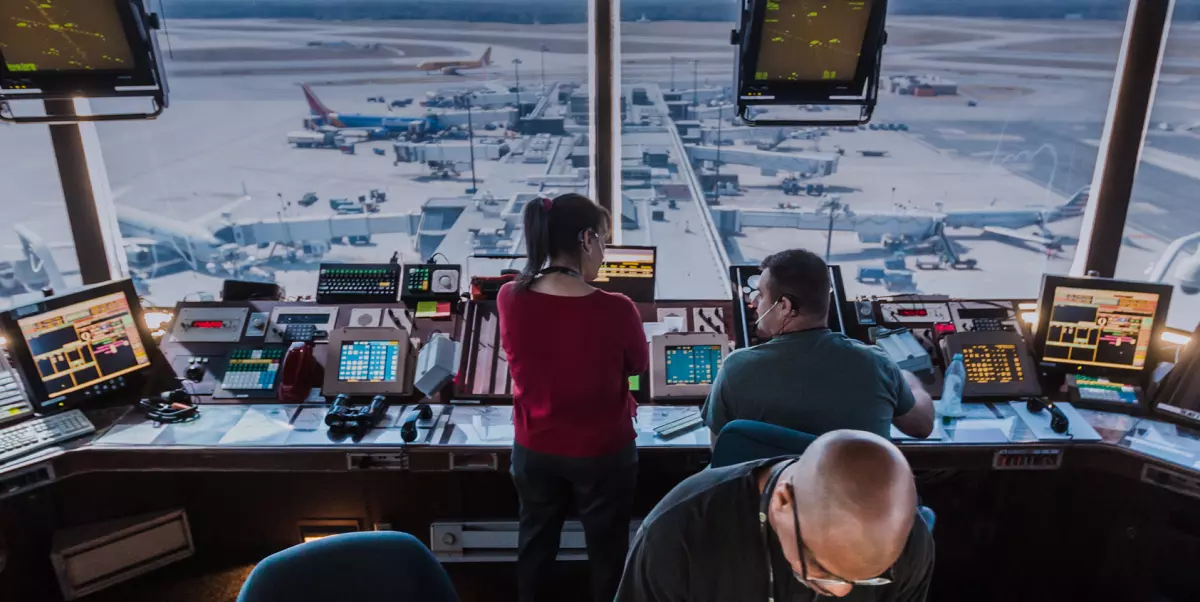
The Nigerian Air Traffic Controllers’ Association (NATCA) has raised alarm over the deteriorating state of the country’s air navigation infrastructure, warning that it may implement nationwide flow control measures to maintain safety if urgent interventions are not made.
The association said the current condition of communication, navigation, and surveillance systems has significantly weakened operational efficiency, forcing controllers to work under conditions that fall short of modern aviation standards. It stressed that the situation has reached a critical point where safety, operational stability, and the integrity of Nigeria’s airspace can no longer be guaranteed without immediate action.
Flow control, a globally recognised safety measure used to regulate aircraft movement and prevent system overload, is now being considered as a necessary step to manage increasing operational risks. NATCA explained that such a move would not amount to a strike but would instead involve controlled reductions in traffic flow to align demand with the system’s limited capacity.
According to the association, controllers are grappling with sustained operational deficiencies, inadequate tools, and mounting psychological pressure in a safety-critical environment that requires constant precision and alertness. It noted that outdated infrastructure remains a major concern, with key systems failing to meet reliability standards and lacking spare parts, thereby forcing personnel to rely on unsafe workarounds.
Beyond infrastructure, NATCA highlighted gaps in training and manpower development, warning that insufficient investment in continuous professional development is weakening the sector’s long-term resilience. The association said the absence of structured workforce planning could result in a shortage of adequately trained controllers to manage Nigeria’s growing airspace demands.
Welfare issues have further compounded the crisis, with many experienced controllers reportedly stagnating on the same grade level for years, alongside unresolved concerns around allowances and unpaid operational claims. The association described the situation as deeply demoralising, particularly in a profession that demands high levels of discipline and responsibility.
It also pointed to unsafe working conditions in some control towers, citing a recent fire incident at Murtala Muhammed International Airport where controllers were forced to evacuate under dangerous circumstances before resuming duties shortly after.
NATCA maintained that its concerns go beyond labour issues, warning that continued neglect of infrastructure, workforce development, and staff welfare poses a direct risk to passengers, airlines, and the broader aviation ecosystem. It called for urgent engagement with authorities, noting that the safety of Nigeria’s skies depends on addressing the systemic challenges confronting those responsible for managing it.