

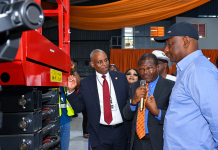








The Managing Director of the Federal Airports Authority of Nigeria, Olubunmi Kuku, has warned that persistent policy inconsistencies and delays in airport concession processes are undermining private sector investment and slowing Nigeria’s ambition to become a leading aviation hub in Africa.
Speaking at the 2026 first quarter Business Breakfast Meeting of the Aviation Safety Round Table Initiative in Lagos, Kuku said Nigeria remains in a catch-up phase after years of underinvestment, stressing that government alone cannot finance the scale of infrastructure required to compete globally. She noted that uncertainty around investment models, particularly the lack of clarity between concession frameworks and institutional financing, has created hesitation among both local and international investors.
According to her, repeated but inconclusive attempts by successive administrations to concession major airports have further weakened investor confidence, leaving critical projects stalled despite growing passenger demand. She emphasised that without a stable and predictable policy environment, Nigeria risks missing out on the capital inflows needed to modernise its aviation infrastructure.
Despite these constraints, Kuku outlined ongoing efforts to reposition Nigeria’s airports, particularly the transformation of Murtala Muhammed International Airport into a safe and economically viable hub. She said current projects are focused on upgrading ageing infrastructure, improving passenger processing systems, expanding runway and apron capacity, and addressing longstanding operational inefficiencies that have limited the airport’s performance.
She maintained that Nigeria’s hub strategy is anchored on developing dual gateways, with Lagos serving as the primary commercial hub and Nnamdi Azikiwe International Airport positioned as a complementary political and administrative hub with growing international connectivity. Together, she said, both airports form the backbone of Nigeria’s ambition to become a transit point for passengers travelling within Africa and beyond.
Kuku added that infrastructure upgrades are being supported by broader reforms, including alignment with global safety standards under the Nigerian Civil Aviation Authority, as well as efforts to expand route connectivity through regional frameworks such as the Single African Air Transport Market. She also highlighted plans to deepen cargo and logistics capabilities, develop maintenance, repair and overhaul services, and improve the overall passenger experience across Nigerian airports.
Industry stakeholders at the event echoed concerns about structural gaps within the sector. Aviation expert George Uriesi noted that true hub status depends heavily on transit traffic, warning that Nigeria’s fragmented airline ecosystem limits its ability to attract and sustain connecting passengers. Others stressed that infrastructure development must be matched with improvements in airline capacity, service delivery, and technology adoption to achieve meaningful progress.
Participants also called for stronger collaboration across operators, regulators and service providers, alongside more disciplined project execution and forward-looking expansion plans. While acknowledging ongoing improvements, stakeholders warned that high operating costs and financing constraints could continue to pressure airlines and weaken the broader aviation value chain.
Kuku, however, expressed confidence that Nigeria’s ambition remains achievable, noting that with sustained investment, policy clarity, and coordinated execution, the country can position itself as a competitive aviation gateway for Africa.