










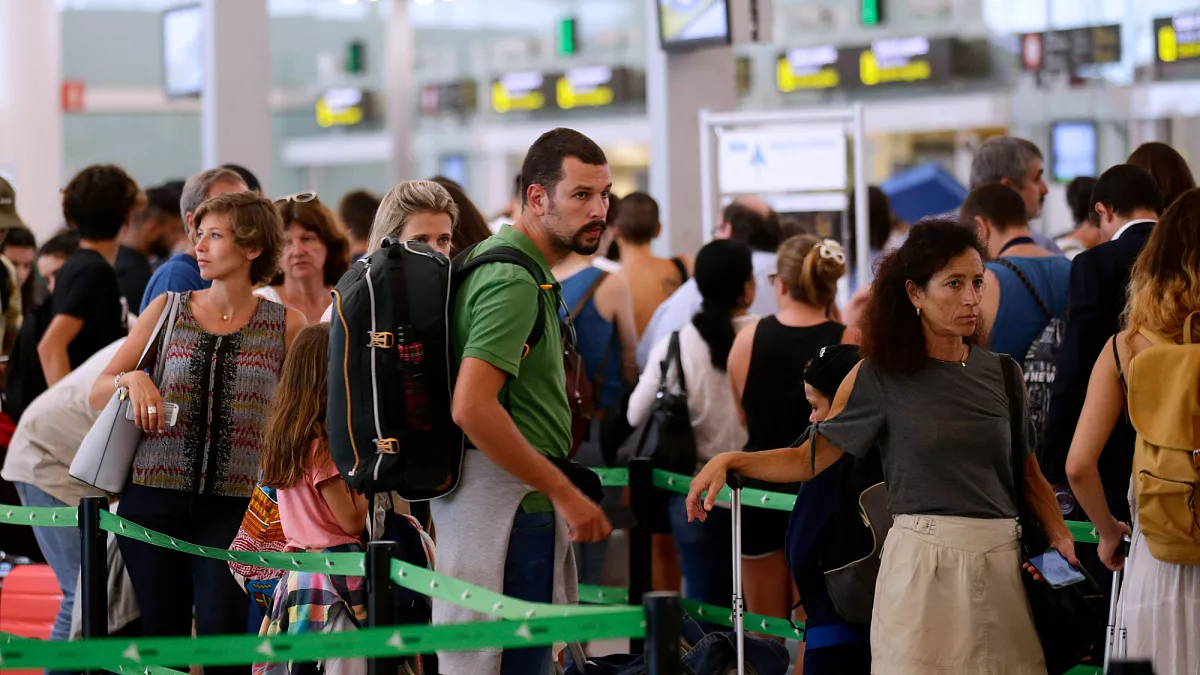
European airports and airlines have urged the European Union to urgently review the implementation of the Schengen Entry/Exit System (EES), warning that the current rollout could cause severe passenger delays during the peak summer travel season.
In a joint appeal to Magnus Brunner, three major aviation industry bodies—Airports Council International Europe, Airlines for Europe and International Air Transport Association, said the system is already causing long queues at airport border control points across the Schengen area.
The groups warned that waiting times for passengers, particularly non-European Union travellers, are already reaching up to two hours in some airports during the current phase of the EES rollout. Under the system, about 35 percent of third-country nationals entering the Schengen Area must currently be registered through the new digital border management process.
According to the aviation bodies, three key issues are worsening the delays. They include chronic understaffing at border control points, unresolved technology problems affecting automated border systems and the limited adoption by member states of the Frontex pre-registration application designed to speed up the process.
Industry leaders cautioned that if the system proceeds to full implementation during the busiest summer months without adjustments, waiting times could stretch to four hours or more at some airports. They stressed that the situation could worsen significantly in July and August when passenger traffic across European airports typically doubles.
The aviation groups therefore called on the European Commission to provide greater operational flexibility for the system during the transition period. In particular, they want confirmation that Schengen member states will still be able to partially or fully suspend the EES until October 2026 if operational pressures become too severe.
Under the current framework established by Regulation 2025/1534, the ability to suspend the system may expire in early July, creating uncertainty about whether border authorities will have the necessary flexibility to manage disruptions under the Schengen Borders Code.
Industry representatives say the situation reflects a growing gap between the expectations of European institutions and the operational realities faced at airports. They warned that the continued delays risk undermining passenger experience and damaging Europe’s reputation as an efficient and welcoming travel destination.
The aviation groups emphasised that while the digital border system has long-term benefits for security and migration management, its rollout must take into account the operational capacity of airports and border agencies. They argued that allowing flexible implementation during the transition phase is essential to ensure the system succeeds without disrupting travel across the region during one of the busiest periods of the year.