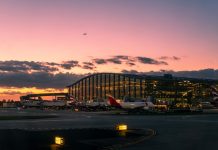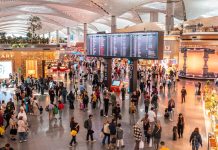

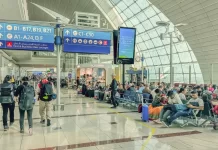









The Murtala Muhammed Airport Terminal Two (MMA2), operated by Bi-Courtney Aviation Services Limited, has closed the 2025 festive travel season with stable and efficient operations and is positioning itself for improved performance in 2026 with the planned introduction of a structured slot system designed to reduce congestion and enhance operational predictability.
Following an internal review of the high-traffic year-end period, MMA2 management said the terminal successfully handled increased passenger volumes and aircraft movements through close coordination with airlines, ground handling companies, and other critical service providers. To ensure service continuity, the terminal extended operating hours beyond scheduled shutdown periods on several occasions to accommodate late-night and delayed flights, while still carrying out essential daily maintenance without compromising safety or infrastructure standards.
Despite the pressures typically associated with festive travel peaks, MMA2 maintained operational stability, reinforcing the need for a more predictable scheduling framework going forward. Management identified the slot system as a key tool to align airline demand with available terminal and apron capacity, prevent aircraft clustering, and minimise operational bottlenecks.
According to the terminal operator, the slot system will reshape operations in 2026 by balancing demand with capacity through structured arrival and departure windows, improving aircraft movement coordination on the apron, and reducing congestion across passenger processing areas such as check-in, security screening, and boarding gates. By smoothing traffic peaks, MMA2 expects to enhance on-time performance for airline partners and enable ground handling companies to plan staffing, equipment deployment, and turnaround activities more efficiently.
Speaking on lessons from the year-end operations, Remi Jibodu, Head of Aeronautics and Cargo Services and Acting Chief Operating Officer, said the festive period underscored the importance of structured coordination among all stakeholders operating within the terminal environment.
“In 2026, MMA2 will introduce a structured slot system to balance demand and capacity across the terminal. This will improve aircraft movement coordination, reduce congestion during peak periods, enhance on-time performance for airlines, and support better planning by ground handling companies,” Jibodu said, adding that the initiative aligns with global best practices in airside and apron management.
Beyond aeronautical efficiency, MMA2 recorded strong progress across non-aeronautical services during the year under review. Kola Bamigboye, Head of Space and Premises Management and Acting Chief Operating Officer, said improvements in retail operations, concessions, and passenger amenities contributed to a better overall customer experience. He noted that steadier passenger flows expected from the slot system will further support planning and performance across customer-facing services in 2026.
Security and passenger-support systems also saw notable gains during the festive season. MMA2’s upgraded CCTV surveillance infrastructure enabled real-time monitoring of terminal activities and facilitated the prompt recovery and return of lost items, including travel documents and personal belongings, earning positive feedback from passengers. In addition, the terminal maintained an active customer experience email channel throughout the busy period, ensuring timely acknowledgement and resolution of reported issues.
As operations normalise in the new year, MMA2 said it remains focused on consolidating the gains recorded during the festive season while strengthening collaboration with airlines, ground handlers, regulators, and other stakeholders across the aviation value chain. The terminal continues to engage with the Federal Airports Authority of Nigeria and the Nigerian Civil Aviation Authority to ensure regulatory alignment ahead of the slot system rollout.
With the planned deployment of the slot system in 2026, MMA2 said it is reinforcing its position as a leading example of private-sector-led airport terminal management in Nigeria, anchored on efficiency, coordination, and a consistent passenger experience.