










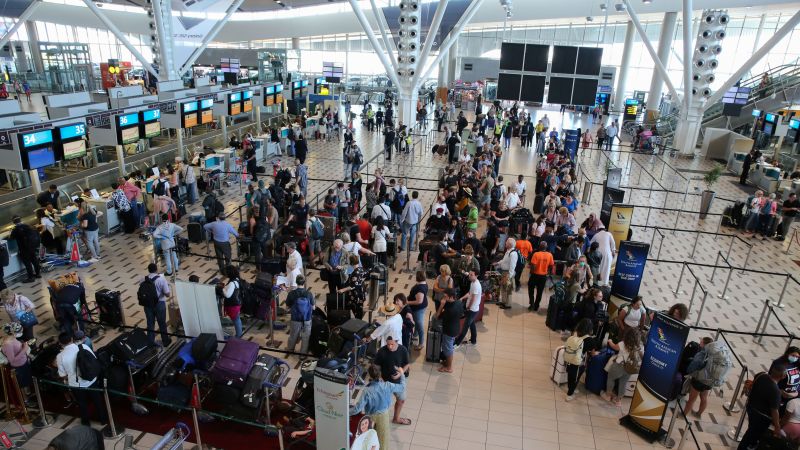
Africa’s aviation industry is recording another period of expansion, with scheduled airline seat capacity rising by 8.8 per cent year-on-year to 26.6 million seats in October 2026, reflecting growing demand for air connectivity and increased airline activity across the continent.
According to the latest African aviation market data published by global aviation intelligence provider OAG, the industry added approximately 2.2 million seats compared with the 24.4 million recorded in October 2025. The growth was supported by increases in both domestic and international operations, with international services continuing to account for the larger share of the market.
International capacity represented 77 per cent of Africa’s total scheduled seats, reaching 20.4 million in October, an increase of 7.9 per cent compared with the previous year. Domestic capacity, meanwhile, recorded a stronger growth rate of 11.9 per cent, highlighting the expanding importance of intra-country air travel across several African markets.
The figures point to a continent-wide aviation market that is gradually expanding its connectivity, although the pace of development varies considerably across regions and individual countries.
North Africa remains the largest aviation market by regional capacity, with 7.6 million seats scheduled to and from the region in October 2026. The market added approximately 748,100 seats over the preceding year, reinforcing its position as a major gateway connecting Africa with Europe, the Middle East and other international destinations.
Western Europe ranked as the second-largest destination market, with 4.8 million seats and an annual increase of 359,400 seats. However, the strongest regional growth came from Central and Western Africa, where capacity expanded by 19.6 per cent, representing an additional 582,100 seats.
The performance of Central and Western Africa is particularly significant given the region’s growing role in intra-African connectivity. Increased capacity across these markets could support regional trade, tourism, business travel and the movement of people between neighbouring economies.
A closer look at the continent’s country markets shows that Egypt continues to command the largest share of scheduled airline capacity. The North African country recorded 3.2 million seats in October, representing a 9.6 per cent increase over the corresponding period in 2025.
South Africa followed with approximately 2.44 million seats, although its growth was comparatively modest at 0.8 per cent. Morocco ranked third with 2.18 million seats, recording an 11 per cent increase, while Algeria reached 1.06 million seats, up 9.1 per cent.
Nigeria emerged as the fastest-growing market among the continent’s 10 largest aviation countries, recording a 44.5 per cent increase to approximately 1.35 million seats. Kenya followed with 921,800 seats, representing 7.8 per cent growth, while Ethiopia recorded 1.41 million seats, up 3.9 per cent. Tanzania, Tunisia and Ghana also recorded positive year-on-year growth of 8.2 per cent, 6.9 per cent and 11.6 per cent respectively.
The expansion is not limited to international operations. Domestic aviation markets are also recording increased capacity, with South Africa retaining its position as the continent’s largest domestic market at approximately 1.6 million seats in October.
Nigeria, however, recorded the strongest domestic growth among the markets highlighted by OAG, with capacity increasing by 54.6 per cent to approximately one million seats. Congo and Algeria also registered notable increases of 49.7 per cent and 19.9 per cent respectively, although their domestic markets remain considerably smaller than those of the continent’s leading aviation economies.
At the airline level, Ethiopian Airlines continues to dominate the African aviation landscape, retaining its position as the continent’s largest carrier with approximately 2.1 million scheduled seats in October 2026. The airline increased its capacity by six per cent compared with the previous year, adding approximately 118,000 seats.
Safair ranked second with 1.02 million seats, although its capacity declined by 1.8 per cent. Egyptair followed with 911,407 seats, representing an increase of 3.5 per cent, while Royal Air Maroc recorded one of the strongest performances among the continent’s leading carriers, expanding capacity by 20.6 per cent to 817,323 seats.
Air Algerie and Airlink also recorded positive growth, with capacity increasing by 12.4 per cent and 9.5 per cent respectively. Other international operators featured in the top 10 include Ryanair, Emirates and Air Cairo.
One of the notable developments in the airline rankings was the entry of easyJet into the top 10. The British low-cost carrier recorded the highest growth rate among the leading airlines, increasing its scheduled capacity by 23.2 per cent to 385,484 seats. Its expansion reflects the growing presence of low-cost operators in Africa’s broader aviation market, although its inclusion in the continental ranking should not be interpreted as evidence of an extensive African domestic network.
OAG’s data further highlights the growing contribution of low-cost carriers to the continent’s aviation market. Mainline airlines continued to dominate, accounting for 79 per cent of total capacity, with 21.1 million seats and an annual increase of 8.1 per cent. Low-cost carriers, however, recorded a faster growth rate of 11.4 per cent, reaching approximately 5.5 million seats.
The development suggests that although traditional full-service airlines remain the backbone of African aviation, the low-cost segment is expanding at a faster pace. This could create additional opportunities for price-sensitive travellers, particularly in markets where increased competition and improved operating conditions support more affordable air travel.
At the airport level, Cairo International Airport maintained its position as Africa’s busiest airport by scheduled seat capacity, recording approximately 1.78 million seats in October 2026, an increase of 8.2 per cent year-on-year.
Addis Ababa followed with 1.19 million seats, while Johannesburg recorded 1.16 million. Casablanca ranked fourth with approximately 730,000 seats, followed by Marrakech and Cape Town, which each recorded about 620,000 seats.
Lagos was the fastest-growing airport among the continent’s 10 largest, with capacity increasing by 29.7 per cent to approximately 520,000 seats. Casablanca followed with 13.6 per cent growth, while Hurghada recorded a 12.8 per cent increase.
The performance of Lagos is particularly noteworthy, reflecting the continued importance of Nigeria’s commercial centre as an aviation gateway for domestic and international travel.
In terms of international connectivity, Europe remains the largest destination region for African airline capacity, with 10.4 million scheduled seats in October 2026. The market added 791,200 seats compared with October 2025, maintaining Europe’s position as the most significant international destination region for African aviation.
The Middle East ranked second with approximately 4.54 million seats, closely followed by international services within Africa, which accounted for 4.35 million seats. The relatively narrow difference between these two markets highlights the growing significance of both intercontinental and intra-African connectivity.
Overall, the October 2026 figures present an African aviation industry characterised by expanding capacity, stronger domestic markets and increasing participation from different airline business models. While Egypt maintains its lead in overall country capacity and Ethiopian Airlines continues to dominate the airline rankings, the rapid growth recorded by Nigeria and Central and Western Africa points to emerging opportunities beyond the continent’s traditional aviation centres.
However, the expansion of scheduled capacity remains only one measure of the industry’s performance. Sustaining this growth will require continued investment in airport infrastructure, access to aircraft financing, improved regulatory frameworks, competitive operating costs and stronger regional air service connectivity.
As African countries pursue greater economic integration and seek to strengthen their positions in global trade and tourism, the ability of their aviation markets to accommodate rising demand will remain central to the continent’s broader development ambitions.
Source: OAG African Aviation Market Data, October 2026.