








Boeing’s production of its 777 freighter has remained suspended for nearly two months following a dispute with a key supplier, creating uncertainty for cargo operators awaiting new aircraft and disrupting work on other military and commercial programmes.
The disruption followed a dispute with Florida-based supplier Vaero over a critical wing component known as the trailing-edge rib kit, which Boeing identified as essential to manufacturing the 777 freighter and 767 aircraft.
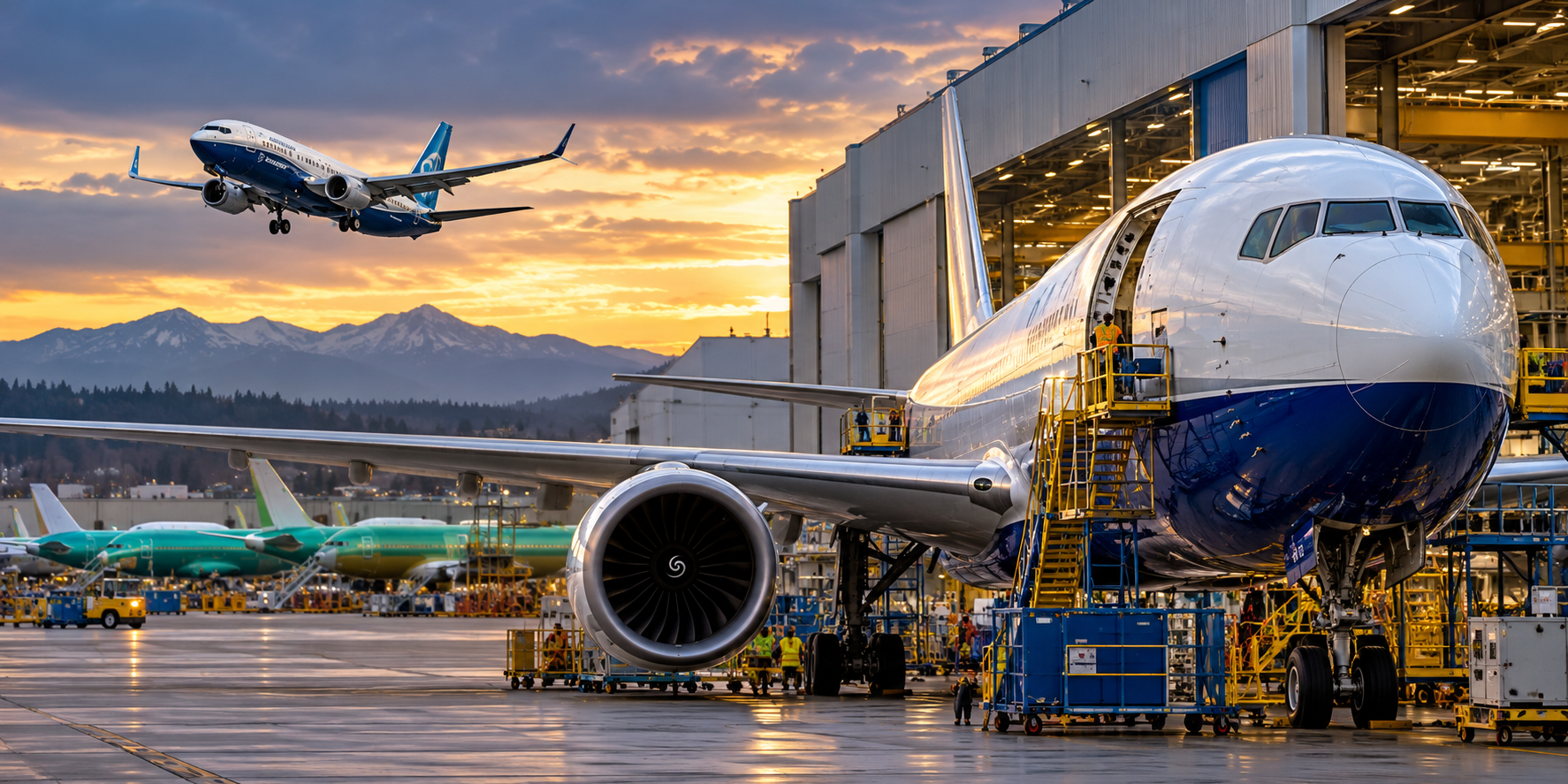
In a legal complaint filed in August, Boeing alleged that Vaero had stopped delivering the components, leaving its wing-production facility in Everett, Washington, unable to complete the affected sections. The manufacturer estimated that the disruption was costing it as much as $6.5 million daily.
Although the companies reached a settlement in late September, production of the 777 freighter had not resumed as of October 23, according to three Boeing workers familiar with the matter, cited by Reuters. Boeing and Vaero had not publicly commented on the reported production delay.
The dispute also affected the 767 programme, which includes commercial freighters and the KC-46 Pegasus aerial refuelling tanker. Some parts for the 767 production line have reportedly arrived since the settlement, but the wider disruption highlights the vulnerability of aircraft manufacturing to shortages involving a single supplier.
Boeing has reportedly removed two partially assembled 777 freighters from its final assembly line because of the component shortage. One of the aircraft was identified as destined for FedEx, although the cargo operator did not respond to a request for comment.
The manufacturer has begun efforts to bring production of the rib kits in-house to reduce its reliance on Vaero, which Boeing had identified as its sole supplier of the component. The production halt has not affected the 777X programme, which uses composite wings.
Boeing had delivered 21 777 freighters in 2026 by the time of the report, according to company data. Further deliveries may still be possible using aircraft whose wings were assembled before the supply disruption.
The production setback comes as cargo operators continue to await deliveries of the current-generation 777 freighter. Boeing’s order book at the end of September listed 38 unfilled orders for the aircraft, although some were linked to Russian operators and may face delivery restrictions.
Airlines and cargo companies awaiting aircraft include FedEx, Saudia, Emirates, China Airlines, China Southern Cargo, Silk Way West Airlines and Ethiopian Airlines Cargo.
The disruption adds uncertainty to delivery schedules at a time when operators are planning fleet capacity around the availability of long-haul freighters. Boeing’s next-generation 777-8 Freighter is not expected to enter service until around 2029, leaving customers dependent on existing production programmes in the interim.
The prolonged stoppage underscores the risks associated with concentrated aerospace supply chains, where a dispute over a single component can delay aircraft assembly and affect manufacturers, airlines and freight operators.