










Africa remains outside the world’s largest passenger aviation markets despite growing regional connectivity, with the latest 2025 World Air Transport Statistics (WATS) from the International Air Transport Association (IATA) showing that no African country ranked among the world’s ten busiest passenger markets.
The report, compiled from operational data provided by 1,315 airlines, including more than 250 international carriers, offers one of the aviation industry’s most comprehensive assessments of passenger traffic, airline operations, fleet utilisation and market performance.
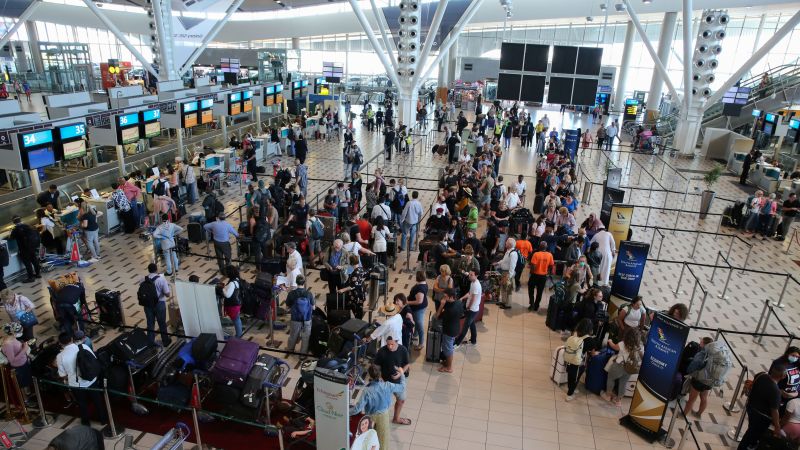
While the continent failed to secure a place among the global leaders by passenger volume, it continued to demonstrate the importance of intra-African air travel. The Cape Town–Johannesburg route emerged as Africa’s busiest airport pair in 2025, carrying 3.4 million passengers and reinforcing its role as the continent’s most heavily travelled domestic air corridor.
Globally, however, the world’s largest passenger markets remained concentrated in North America, Europe and Asia. The United States retained its position as the largest aviation market with 890.1 million passengers, although it recorded the slowest growth among the top ten, expanding by 1.6 per cent over 2024. China followed with 776.1 million passengers and a stronger growth rate of 4.8 per cent.
The United Kingdom, Spain, Japan, India, Italy, Germany, France and Türkiye completed the list of the world’s ten largest passenger markets, leaving Africa without representation despite continued improvements in regional air connectivity.
The report also highlighted the dominance of domestic travel in global aviation. South Korea’s Jeju–Gimpo route remained the world’s busiest airport pair, handling 13.3 million passengers during the year. Notably, all ten of the world’s busiest airport pairs were domestic services, with only Saudi Arabia’s Jeddah–Riyadh route appearing outside the Asia-Pacific region.
Elsewhere, Bogotá–Medellín ranked as Latin America’s busiest airport connection, while Barcelona–Palma de Mallorca led Europe. In North America, New York JFK–Los Angeles remained the busiest domestic route, with JFK–London Heathrow retaining its position as the region’s busiest international city pair.
Beyond passenger traffic, the WATS report showed sustained growth in premium travel. International business and first-class traffic rose 4.5 per cent to 109.7 million passengers, accounting for 5.5 per cent of all international travellers. Europe remained the largest premium travel market, while Latin America recorded the fastest growth, with premium traffic increasing by 22.1 per cent.
The report also highlighted continued fleet modernisation across the industry. The Boeing 737 remained the world’s most frequently operated aircraft type, recording 10.8 million flights in 2025, ahead of the Airbus A320 with 8.7 million flights and the Airbus A321 with 4.2 million.
Among wide-body aircraft, Boeing 787 operations increased significantly compared with pre-pandemic levels, while Airbus A350 flights more than doubled. Conversely, Airbus A380 utilisation continued to decline as airlines accelerated the transition toward newer, more fuel-efficient aircraft.
Although Africa remains a comparatively small player in global passenger volumes, the sustained strength of the Cape Town–Johannesburg corridor underscores the growing importance of regional connectivity. The latest figures also highlight the opportunity for African aviation to expand further through improved infrastructure, stronger airline networks and policies that support greater intra-African air travel.