








Turkish Airlines began 2026 on a strong footing, carrying 7.6 million passengers in January as it recorded double-digit growth in capacity and sustained demand across its domestic and international networks.
According to the airline’s consolidated traffic results, which include figures from both its main brand and subsidiary AJet, Available Seat Kilometres (ASK), a key measure of passenger capacity, rose by 10 percent year-on-year to 23.7 billion in January 2026, up from 21.5 billion in the same period last year.
The airline attributed the increase to ongoing investments in fleet expansion and route development, aimed at strengthening its global connectivity through its hub in Istanbul.
Overall load factor for the month stood at 84 percent, reflecting healthy seat occupancy levels across the network. International routes recorded a load factor of 83.7 percent, while domestic services outperformed with 87.5 percent, underscoring strong demand in the Turkish home market alongside resilient global traffic.
A key highlight of the January performance was the growth in international-to-international transit passengers, a central pillar of the airline’s hub strategy. Transit traffic rose by 10.8 percent, increasing from 2.8 million passengers in January 2025 to 3.1 million in January 2026. The airline said the growth reinforces Istanbul’s strategic position as a major global transfer hub linking Europe, Asia, Africa and the Americas.
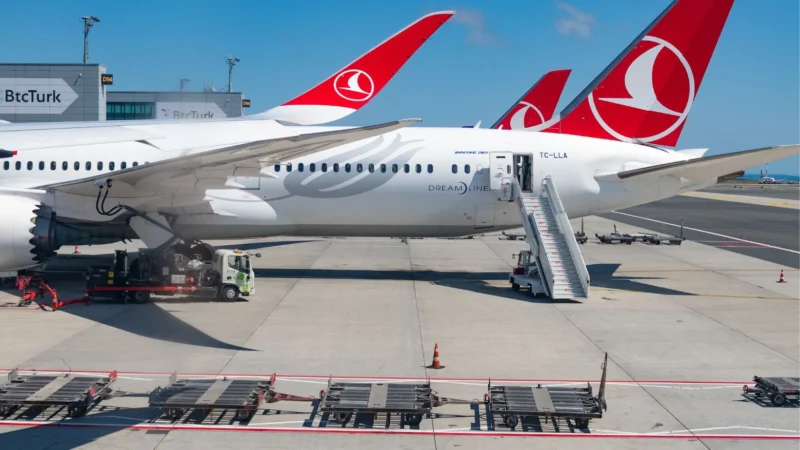
Fleet expansion continued to support network growth. As of the end of January 2026, Turkish Airlines’ fleet reached 522 aircraft, enhancing operational flexibility and enabling the carrier to increase frequencies and launch new routes.
The January results signal a strong start to the year, positioning the airline to capitalise on rising global travel demand while further consolidating its role as one of the world’s leading hub carriers.