








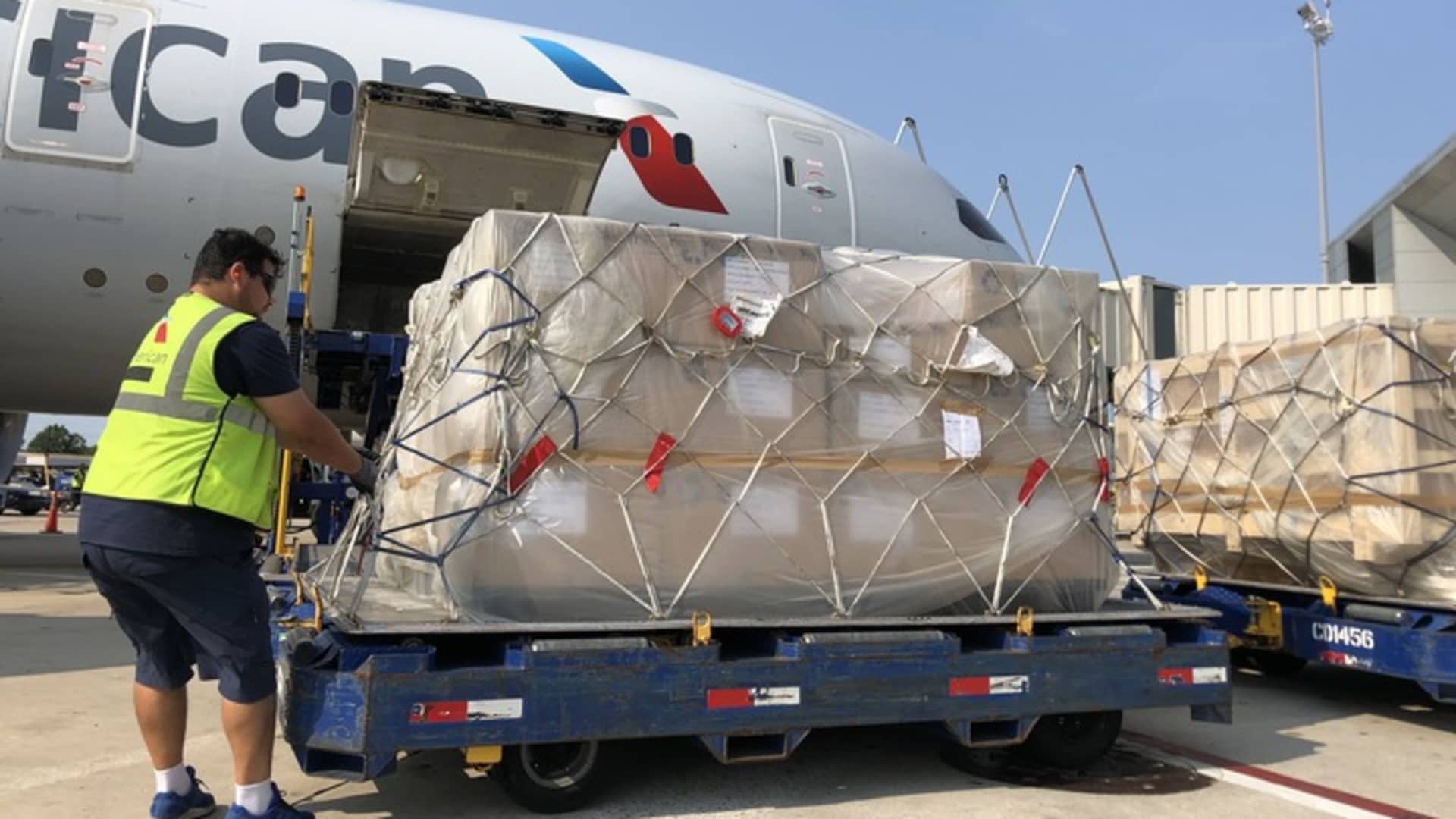
The Federal Airports Authority of Nigeria (FAAN) has confirmed that it will begin enforcing revised air cargo tariffs from February 2, 2026, ending nearly two decades without a review of its cargo-related charges, despite growing resistance from freight forwarders and cargo agents.
The new tariff regime, approved in 2025 but deliberately deferred, applies strictly to cargo operations and does not affect passenger-related charges. FAAN said the delay allowed the Authority to first overhaul internal processes, strengthen revenue controls, and block long-standing leakages that previously undermined collections.
Under the revised structure, port charges will increase from ₦7 to between ₦20 and ₦25 per kilogram, air cargo handling fees will rise from ₦5 to ₦15 per kilogram, while charges for transhipment, courier, and perishable goods will double from ₦20 to ₦40 per kilogram. The adjustment covers import and export cargo, transshipments, and cargo vehicle surcharges.
FAAN officials said implementing the increase earlier would have delivered limited gains, as weak controls meant significant revenues were still being lost. Operational reforms introduced by the Authority’s Cargo Development and Services Directorate—including the return of FAAN revenue desks into cargo warehouses and tighter monitoring of unaccompanied luggage—have since improved collection efficiency.
According to internal operational data, FAAN recorded higher cargo revenue in 2025 at major terminals operated by NAHCO and SAHCO, despite a decline in overall cargo throughput compared to 2024. The Authority said this performance validated its strategy of fixing systems before adjusting tariffs.
Justifying the increase, FAAN noted that its cargo tariffs had not been reviewed since 2006, even as other actors in the logistics chain—such as customs, ground handlers, and agents—had adjusted their charges multiple times over the same period. The Authority also said it consulted the International Air Transport Association (IATA), trade associations, and other industry stakeholders before finalising the review.
However, the planned implementation has triggered tension within the sector. Cargo agents and freight forwarders have warned that the hike could further depress cargo volumes, raise the cost of imports and exports, and worsen the cost of doing business. Some groups have threatened protests, particularly at the Murtala Muhammed International Airport, Lagos, which handles a significant share of Nigeria’s air cargo.
The Africa Association of Professional Freight Forwarders and Logistics of Nigeria described the increase as ill-timed and insensitive, arguing that it could destabilise an already fragile cargo market. Other industry groups said they would continue engagements with FAAN, warning that failure to reconsider the policy could disrupt airport operations.
FAAN, however, insists it is prepared to proceed, stating that the revised tariffs are necessary to reflect the true cost of maintaining runways, aprons, cargo terminals, security, lighting, and access infrastructure that enable cargo operators to function.
The Authority said it will continue discussions with airlines, ground handlers, customs agents, and regulators to manage the transition, while maintaining that the new tariff regime is essential for sustainable airport operations and improved service delivery.