









The United Arab Emirates has begun operating what authorities described as “exceptional” flights to help stranded passengers leave the country, as regional airspace closures triggered by escalating hostilities involving Iran, Israel and the United States continue to disrupt global travel.
The General Civil Aviation Authority announced that exceptional flight operations had commenced across UAE airports to enable passengers affected by recent developments to depart. The move follows the temporary closure of UAE airspace after Iran launched retaliatory missile attacks on US military bases in parts of the Gulf region, prompting widespread suspensions and cancellations by international carriers.
In a statement, the authority said the flights would operate according to schedules communicated directly to affected passengers by their respective airlines. It urged travellers not to proceed to airports unless they had received confirmation of their departure times, warning that doing otherwise could cause congestion and operational challenges.
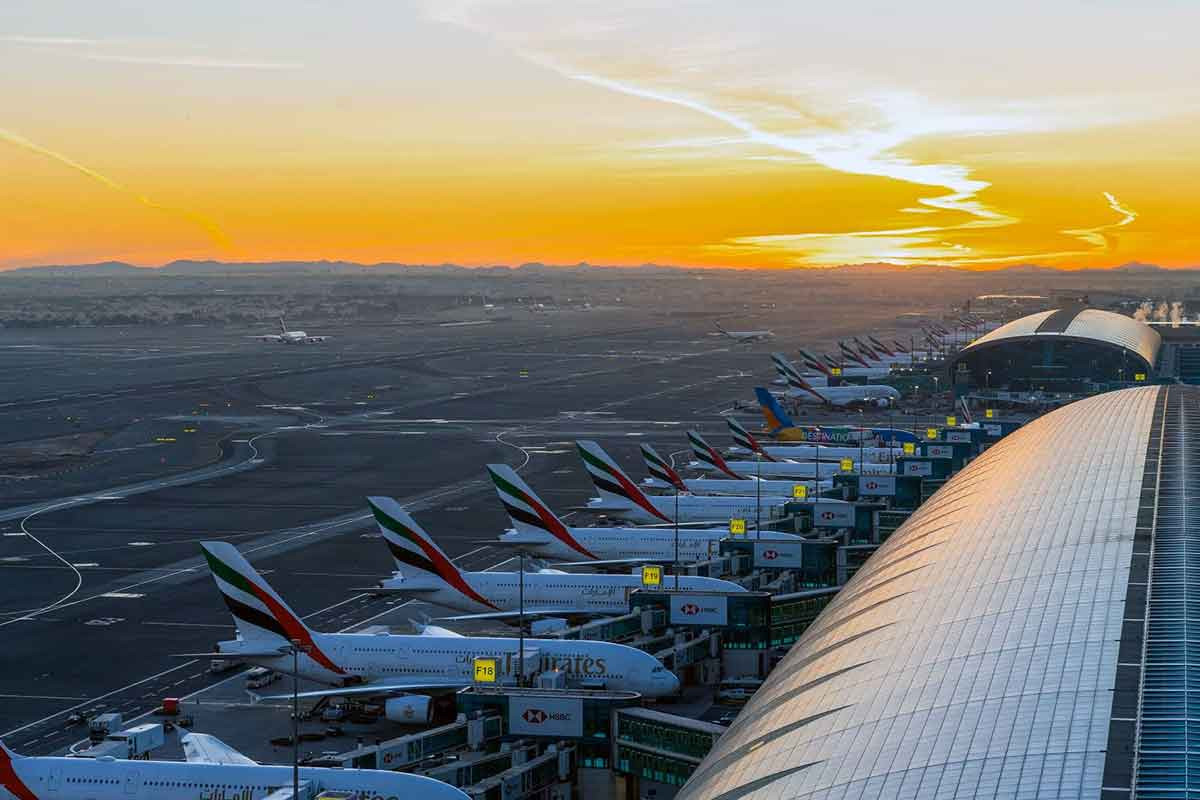
Operations have partially resumed at key hubs. Dubai Airports confirmed a limited number of departures from Dubai International (DXB) and Dubai World Central – Al Maktoum International (DWC), while Abu Dhabi Airports said services had partially resumed at Zayed International Airport (AUH) in coordination with aviation authorities and airline partners.
Flag carriers have begun limited outbound services under tightly controlled arrangements. Emirates said it would prioritise customers with earlier bookings and contact rebooked passengers directly, stressing that no one should travel to the airport without notification. Etihad Airways operated several flights to destinations including London, Paris, Amsterdam, Mumbai and Islamabad, though its regular commercial schedule remains largely suspended. Flydubai also confirmed a limited number of outbound and inbound flights.
The disruption has been extensive across the region. Airspace closures over Iran, Iraq and Israel, alongside partial or temporary restrictions in countries such as Qatar, Bahrain and Kuwait, have led to thousands of cancellations. Aviation analytics firm Cirium estimates that roughly 13,000 of the 32,000 flights scheduled in and out of the Middle East since the escalation began have been cancelled.
The ripple effects have been global, given the Gulf’s role as a major transit corridor linking Europe, Africa and Asia. Dubai International Airport, the world’s busiest hub for international passengers, handled a record 95.2 million travellers last year, underscoring the scale of disruption caused by the current crisis.
While some governments have begun advising their citizens to depart the region via commercial means where possible, aviation analysts note that airlines are unlikely to fully resume normal operations until security risks are deemed minimal. For now, the exceptional flights offer limited relief to passengers stranded in the UAE, even as broader uncertainty continues to cloud Middle East air travel.