







Nigeria is moving toward establishing itself as West and Central Africa’s aviation powerhouse, with President Bola Ahmed Tinubu announcing that preparations are underway to commence local manufacturing of aircraft components.
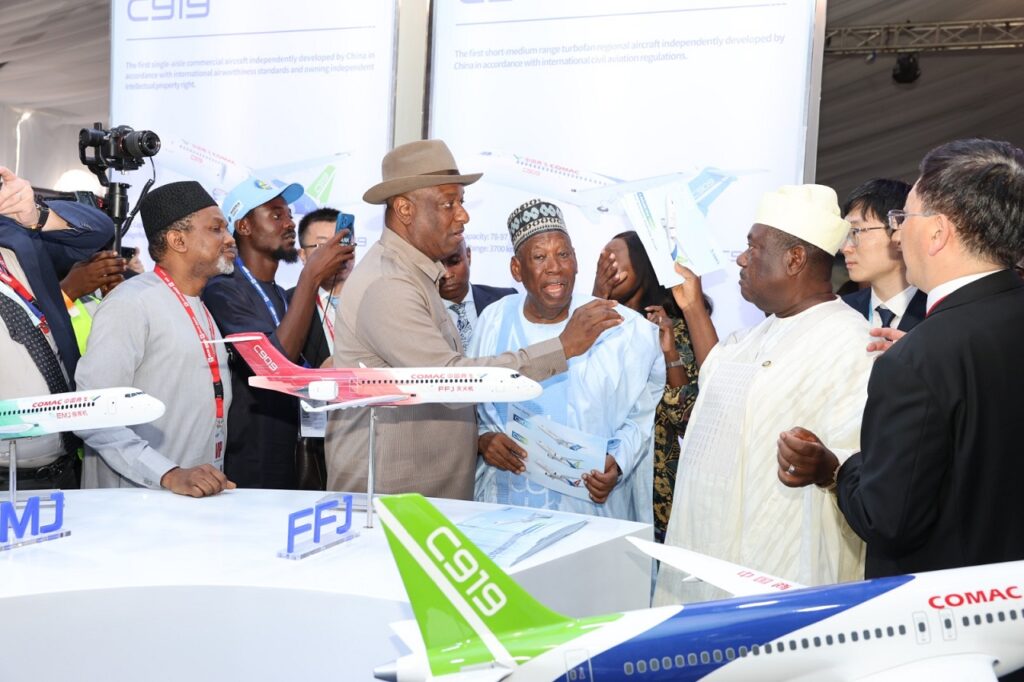
Speaking at the Nigeria International Airshow in Abuja, represented by the Secretary to the Government of the Federation, Senator George Akume, Tinubu said the initiative forms part of a broader strategy to build a self-sustaining aviation ecosystem driven by innovation, investment, and skilled manpower.
Describing the airshow as a major turning point, the President said the event signals Nigeria’s arrival among nations capable of hosting large-scale aerospace exhibitions similar to Paris, Farnborough and Dubai. According to him, the sector has evolved from modest beginnings to becoming a credible driver of economic growth.
Passenger traffic reached 15.89 million in 2023 and is projected to soar to 25.7 million by 2029, backed by expanding operations across 20 airports and 23 domestic airlines. Annual aviation revenue is also expected to grow to $2.58 billion within the same period.
To support this growth, Tinubu said the Federal Government is investing heavily in infrastructure upgrades, including a ₦712 billion modernisation of the Lagos Murtala Muhammed Airport and improvement works across six airports and multiple runways.
He added that achieving a 75.5% score on the Cape Town Convention, up from 49.5%, has solidified Nigeria’s position as Africa’s most compliant country in aircraft leasing frameworks, enabling airlines to access cheaper financing.
Tinubu emphasised that plans for component manufacturing, expanded training centres, and deeper private-sector collaboration are all geared toward building “a sustainable aviation ecosystem that creates jobs and strengthens the national economy.”