









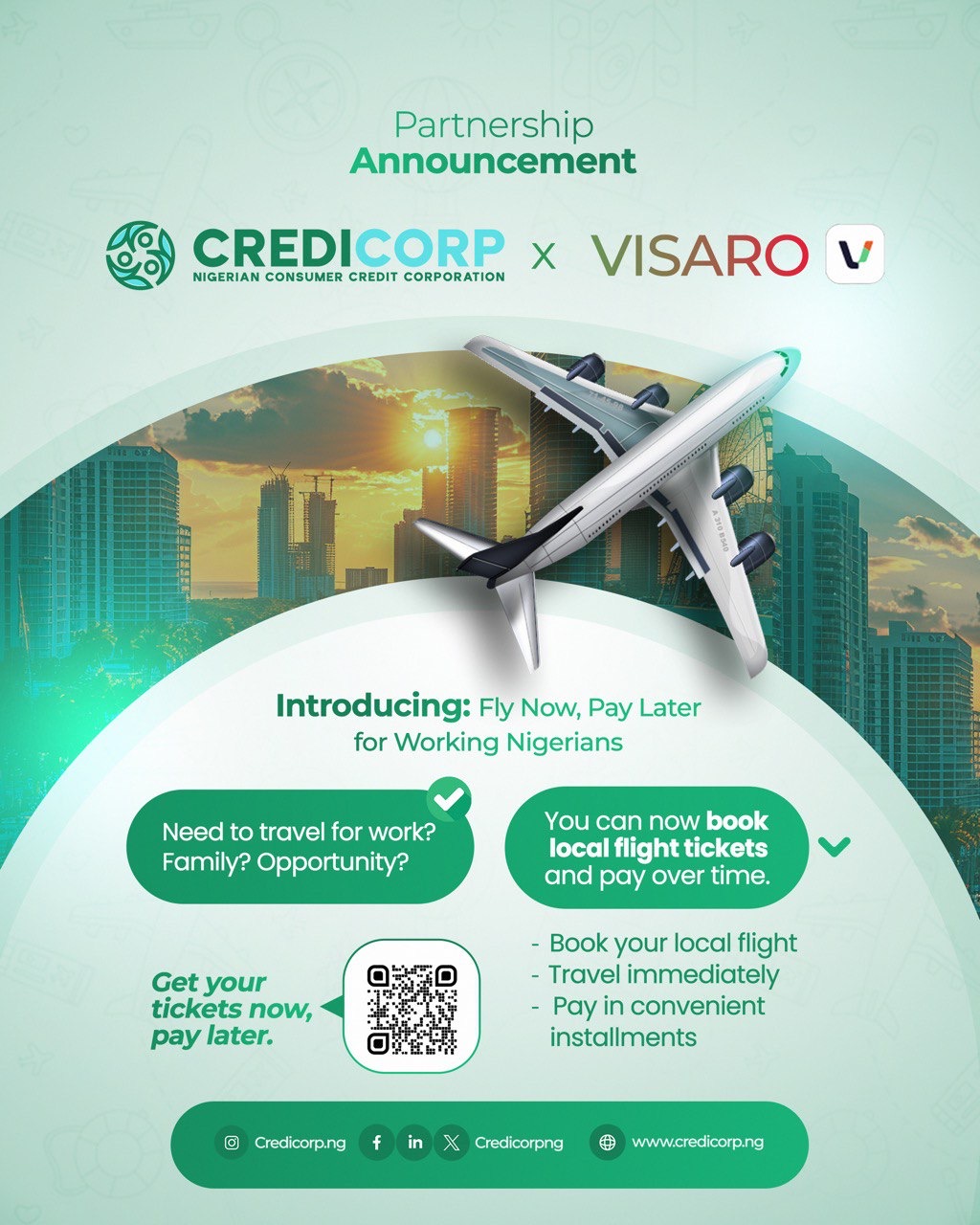
The Federal Government has introduced a consumer credit initiative aimed at making domestic air travel more accessible to Nigerians amid persistently high ticket prices.
The programme, launched by the Nigerian Consumer Credit Corporation, allows eligible passengers to book flights within the country and spread payments over time through structured financing arrangements. The scheme is designed to ease the burden of upfront ticket costs, which have surged in recent months and priced many travellers out of the market.
Implemented in partnership with MyVisaro and Alert Microfinance Bank, the initiative enables prospective users to access credit through the Visaro platform and pay for flights in instalments.
The move comes as domestic airfares continue to rise sharply, driven by high aviation fuel costs, foreign exchange volatility and broader operational challenges within the aviation sector. During the 2025 festive season, ticket prices on some routes surged by as much as 150 percent, with one-way fares exceeding ₦300,000.
With road travel increasingly seen as risky due to insecurity concerns across parts of the country, demand for air travel has grown significantly. However, the rising cost of flights has made it less accessible for a large segment of the population, turning what was once considered a luxury into an essential but unaffordable service for many.
CREDICORP said the scheme aligns with its broader mandate to expand access to consumer credit and promote financial inclusion by enabling Nigerians to access essential services without immediate financial strain. The agency noted that the initiative is intended to remove the upfront payment barrier that often disrupts urgent or necessary travel plans.
While the policy has been welcomed as a potential relief measure, analysts say its long-term impact will depend on how sustainably it is implemented, particularly in an environment where inflation remains high and household incomes are under pressure. Concerns have also been raised about the risk of increased consumer debt if repayment structures are not carefully managed.
Even so, the introduction of structured credit for air travel marks a significant shift in how Nigerians may access aviation services, as the government explores new financial models to bridge affordability gaps in a challenging economic climate.