








Nigeria and Ghana have signed a Memorandum of Understanding aimed at strengthening cooperation in aeronautical search and rescue operations for aircraft in distress across their respective airspace and maritime regions.
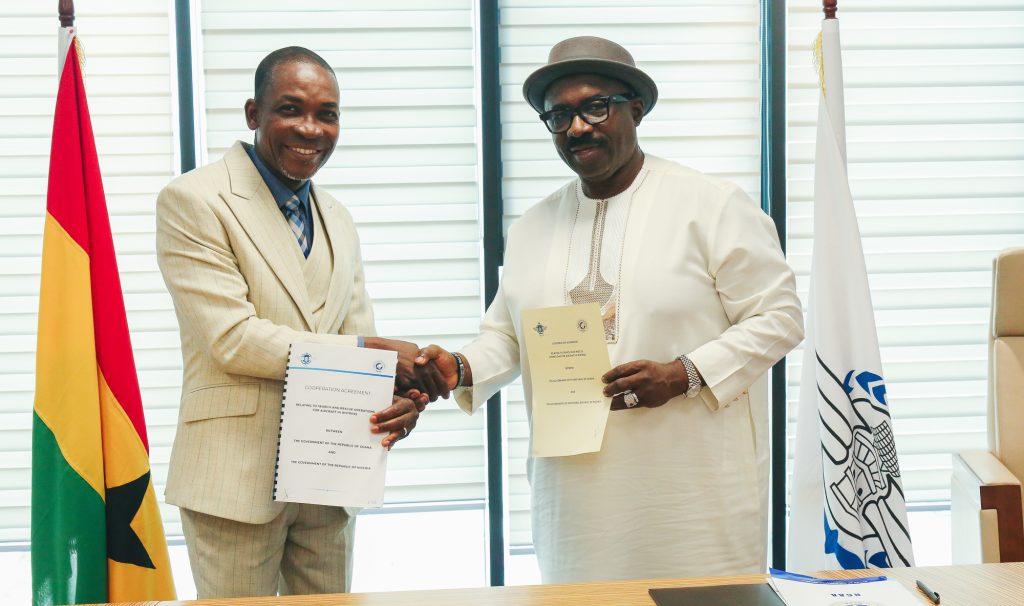
The agreement was signed on March 9, 2026, at the headquarters of the Ghana Civil Aviation Authority in Accra. The Director-General of the authority, Stephen Wilfred Arthur, signed on behalf of Ghana, while Chris Najomo, Director-General of the Nigeria Civil Aviation Authority, signed on behalf of Nigeria.
The agreement establishes a framework for closer coordination between the two countries in responding to aviation emergencies, including procedures for alerts, notifications and operational collaboration between their respective rescue coordination centres. It also provides for mutual assistance during search and rescue missions within their designated search and rescue regions.
Officials from both aviation authorities said the framework is designed to operationalise provisions of the standards and recommended practices of the International Civil Aviation Organization, particularly those contained in Annex 12, which governs global aeronautical search and rescue operations.
Speaking at the signing ceremony, Arthur described the agreement as an important operational guide that would help both countries respond more effectively to aviation incidents and emergencies. He noted that while aviation regulators work continuously to maintain safe and secure skies, cooperation becomes critical when unforeseen incidents occur.
He emphasised that pooling technical expertise, personnel and technological resources would strengthen the capacity of both nations to respond swiftly and effectively to accidents, ultimately helping to protect human life.
Najomo described the agreement as a significant milestone in strengthening aeronautical search and rescue systems in West Africa. According to him, effective search and rescue capability is not only a regulatory requirement under international aviation standards but also a humanitarian responsibility shared by all states involved in global aviation.
He stressed that when an aircraft is in distress, rapid response becomes the most critical factor in saving lives, making strong cross-border cooperation essential. The new framework, he said, will improve communication channels, enhance emergency preparedness and enable faster, coordinated responses to aircraft incidents across shared airspace corridors, particularly within the Gulf of Guinea region.
Najomo added that the partnership reflects the spirit of African solidarity and good neighbourliness while reinforcing the commitment of both countries to maintaining high aviation safety standards across the West African sub-region. He also expressed appreciation to the Government of Ghana and the Ghana Civil Aviation Authority for their cooperation and professionalism throughout the process, noting that aviation safety can only be sustained through sustained partnerships and collective responsibility.