










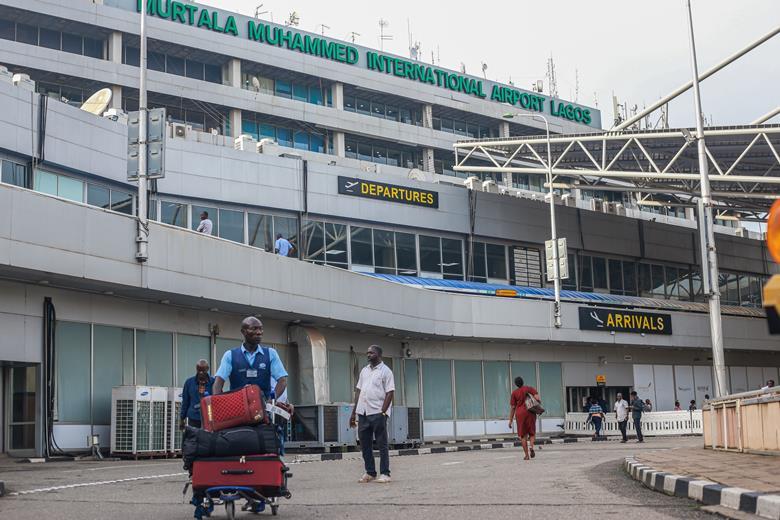
After weeks of consultations and initial resistance over a proposed increase in cargo handling fees, the Federal Airports Authority of Nigeria (FAAN) has reached a consensus with Customs Licensed Cargo Agents operating at the Murtala Muhammed International Airport (MMIA), Lagos, on a revised cargo port charge tariff.
The agreement was sealed at a stakeholders’ meeting held on Monday, 9 February 2026, at the MMIA Terminal 2 Conference Room, chaired by FAAN’s Director of Cargo Development and Services, Mr Lekan Thomas.
The meeting followed concerns raised by cargo agents when FAAN earlier proposed an upward review of port charges to ₦20.00 per kilogram, a move the agents argued would significantly increase the cost of doing business and further strain the already challenged air cargo value chain. The existing tariff of ₦7.00/kg, which had been in place for several years, was considered by FAAN to be no longer sustainable in the face of rising operational costs, infrastructure maintenance needs, and ongoing investments in cargo terminal modernisation.
After extensive deliberations and negotiations, both parties agreed on a revised port charge of ₦15.00 per kilogram. The figure represents a compromise—lower than FAAN’s initial proposal but significantly higher than the previous tariff—reflecting what both sides described as a balanced outcome achieved through dialogue and mutual understanding.
FAAN said the resolution underscores its commitment to stakeholder engagement and collaborative problem-solving. The Authority believes the agreed tariff will support sustainable development of airport cargo infrastructure while preserving the ease of doing business at MMIA, Nigeria’s busiest international gateway.
In a statement issued by Henry Agbebire, Director of Public Affairs and Consumer Protection, FAAN reaffirmed that the review was driven by the need to align cargo operations with current economic realities, enhance service delivery, and fund critical upgrades across cargo terminal facilities.
FAAN also reiterated its adherence to its SEDI framework—Safety, Efficiency, Development and Innovation, stressing that continuous engagement with industry stakeholders remains central to its operational philosophy.
The Authority commended the Customs Licensed Cargo Agents for their cooperation and constructive engagement throughout the process and expressed optimism that the agreement would strengthen collaboration and contribute to the long-term growth of Nigeria’s air cargo sector.