









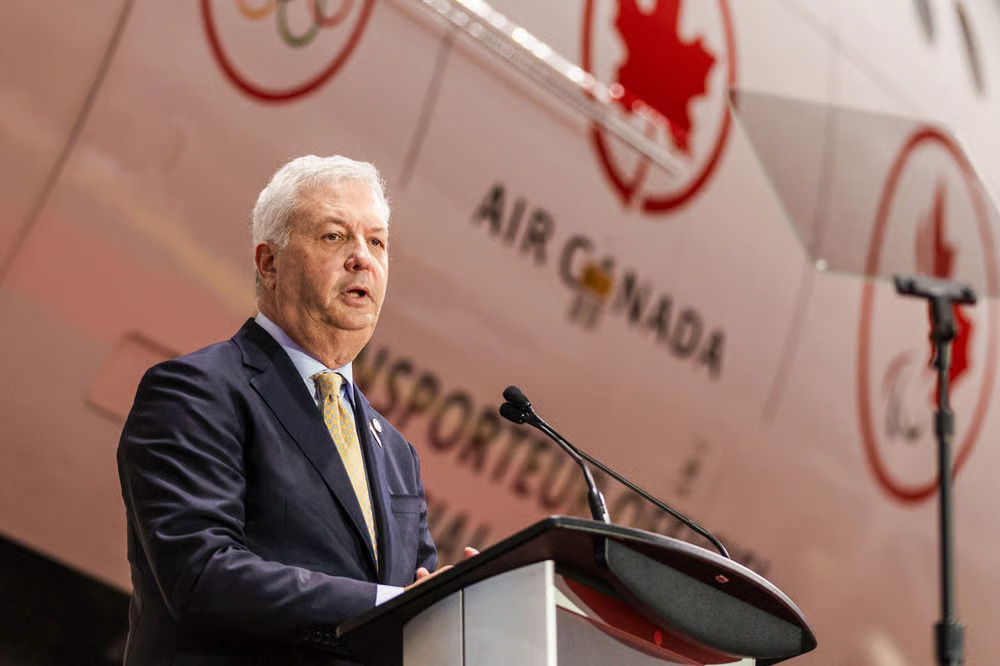
Air Canada has announced that its Chief Executive Officer, Michael Rousseau, will step down by the end of the third quarter of 2026 following intense backlash over an English-only condolence message after a fatal aviation incident.
The airline said Rousseau will remain in his role and continue to serve on the board until his departure, as it begins the search for a successor with the ability to communicate in both of Canada’s official languages.
The controversy stems from a video tribute released after an Air Canada Jazz flight collided with a fire and rescue vehicle on the runway at LaGuardia Airport, killing both pilots, Antoine Forest and Mackenzie Gunther. The pilots were widely praised for actions that helped save passengers on board.
Rousseau’s four-minute condolence message, delivered almost entirely in English with only brief French phrases, triggered widespread criticism in Quebec, where French is the dominant language and a key part of cultural identity. The backlash quickly escalated, drawing reactions from political leaders and the public.
Prime Minister Mark Carney described the message as disappointing and lacking compassion, while officials noted that the airline is legally required to communicate in both English and French under national language laws. The Office of the Commissioner of Official Languages reportedly received thousands of complaints in the days following the video.
Rousseau later issued an apology, acknowledging that his limited French proficiency had shifted attention away from the victims and their families. He admitted that despite years of effort, he was still unable to communicate effectively in French, and said he would continue working to improve.
The incident reignited longstanding concerns in Quebec over the protection of the French language, particularly in major institutions headquartered in the province. Rousseau had previously faced criticism in 2021 for delivering a high-profile speech in English despite living in Montreal for over a decade.
Air Canada said the leadership transition comes at a critical time for the airline, as it seeks to rebuild public trust while maintaining compliance with bilingual service requirements and strengthening its operational reputation following the fatal accident.