






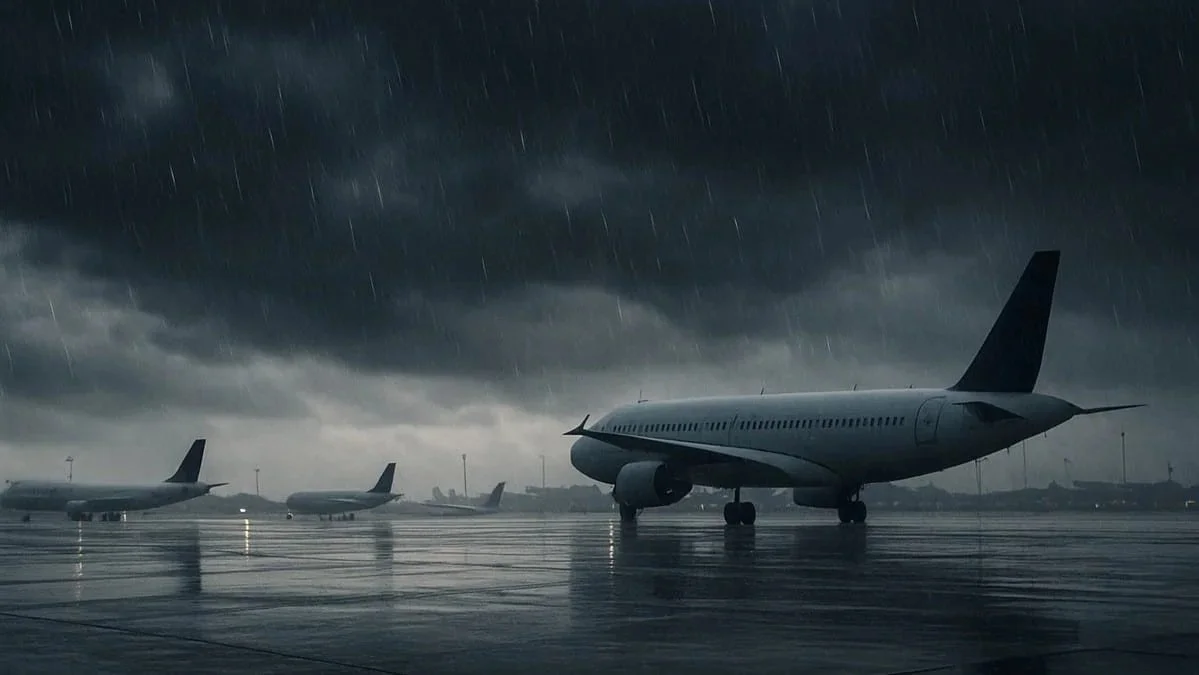
The Nigeria Civil Aviation Authority has cautioned that the onset of the rainy season could trigger a rise in flight delays and cancellations across the country, as adverse weather conditions begin to impact airline operations.
Speaking in Lagos, NCAA’s Director of Public Affairs and Consumer Protection, Mike Achimugu, noted that while airlines had recorded improved on-time performance in recent months, seasonal weather patterns are expected to test those gains. He explained that heavy rainfall, thunderstorms, and poor visibility, common during this period, pose significant operational challenges, often making delays and cancellations unavoidable under established aviation safety standards.
Achimugu acknowledged that disruptions are a routine part of aviation during unstable weather, citing personal travel experiences to illustrate the reality of cancellations and rescheduling. He stressed that such outcomes are primarily driven by safety considerations, as airlines must operate within strict weather-related limits.
Beyond weather concerns, the regulator highlighted ongoing structural issues within the sector, including gaps in communication between airlines and passengers. Achimugu said poor information flow often worsens passenger frustration during disruptions, urging operators to improve transparency and provide timely updates to travelers.
The NCAA also referenced broader regulatory developments, including the unresolved investigation by the Federal Competition and Consumer Protection Commission into airfare pricing, noting that clarity on such issues remains important for strengthening consumer confidence in the sector.
Despite near-term challenges, the authority expressed optimism about the industry’s outlook, pointing to ongoing fleet expansion by domestic airlines following agreements reached at the Nigerian Aircraft Acquisition and Investment Summit. Additional aircraft are expected to improve capacity, enhance operational flexibility, and help airlines better manage disruptions over time.
However, the regulator maintained that these long-term gains may not immediately offset the impact of seasonal weather volatility, particularly during peak rainfall periods. It emphasised that sustained improvements in infrastructure, regulatory clarity, and passenger communication will be critical to building resilience and maintaining service reliability in Nigeria’s aviation industry.